
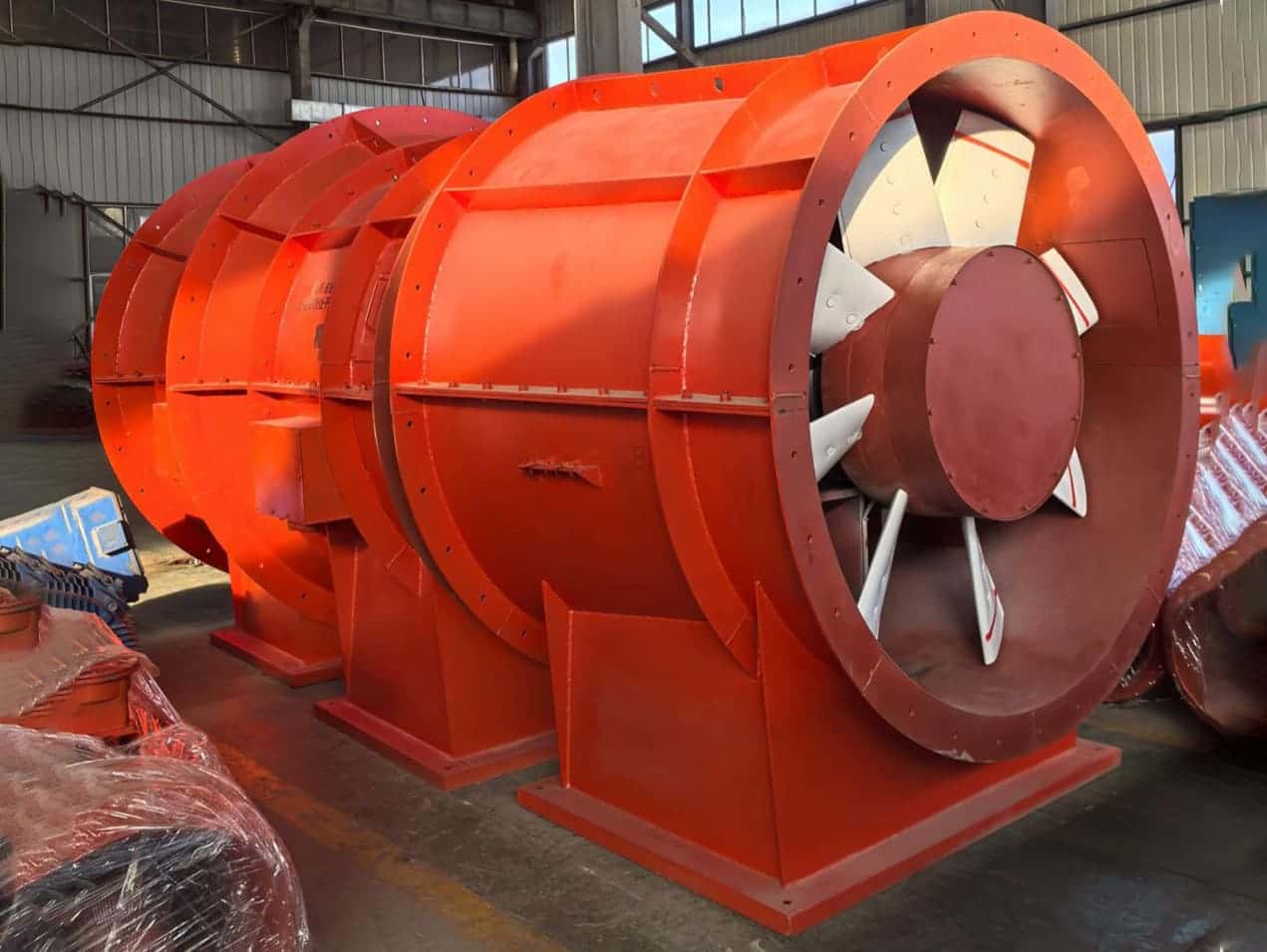
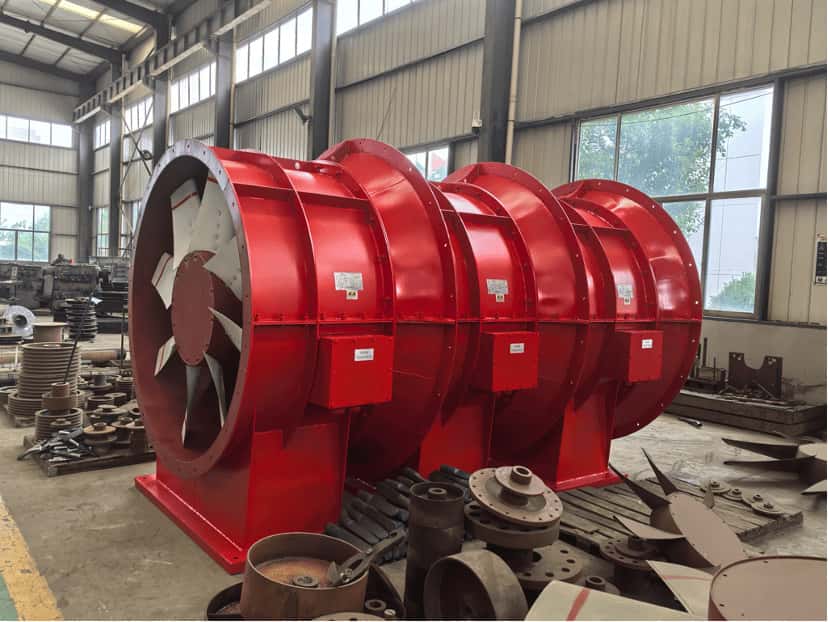
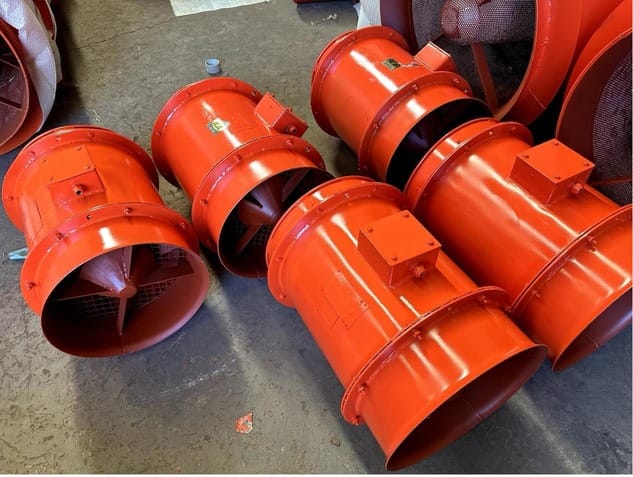
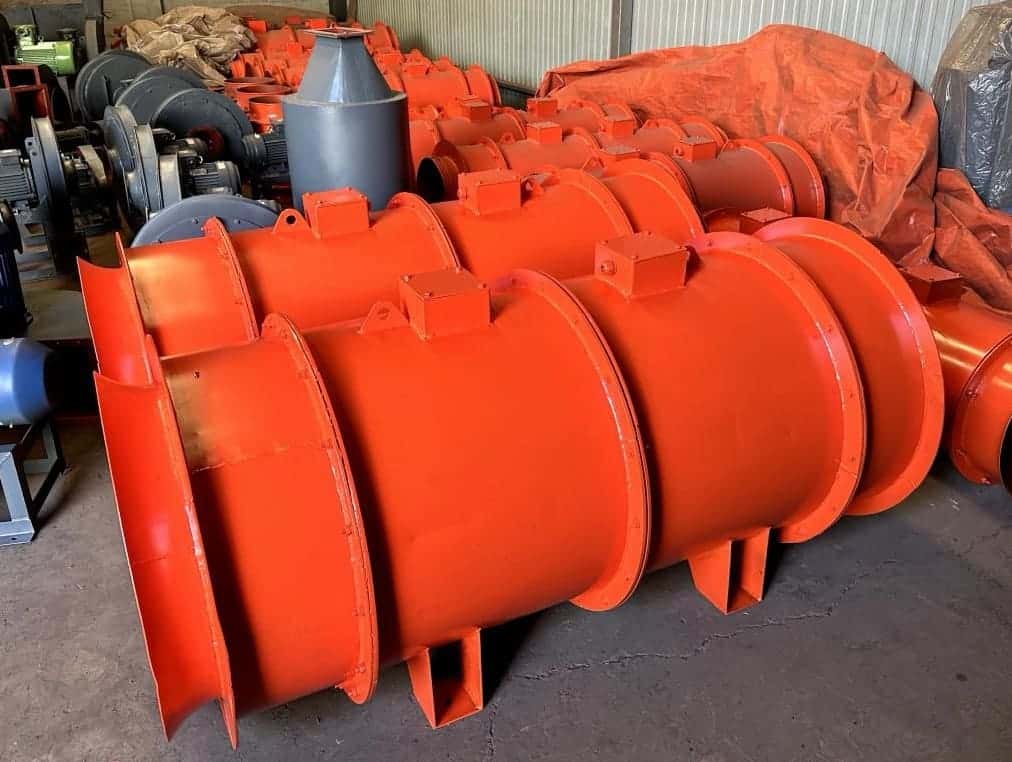
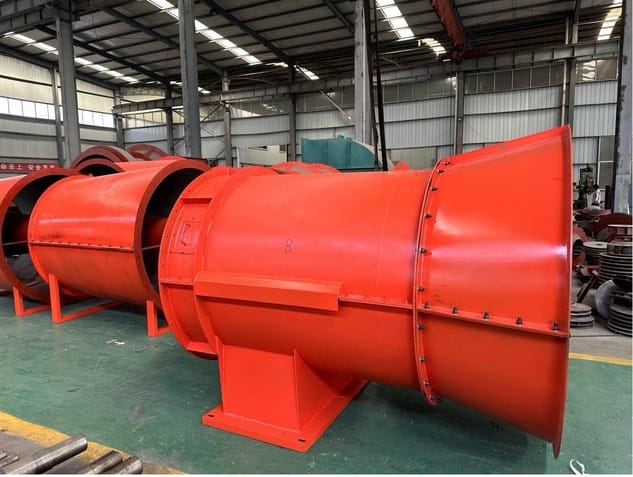
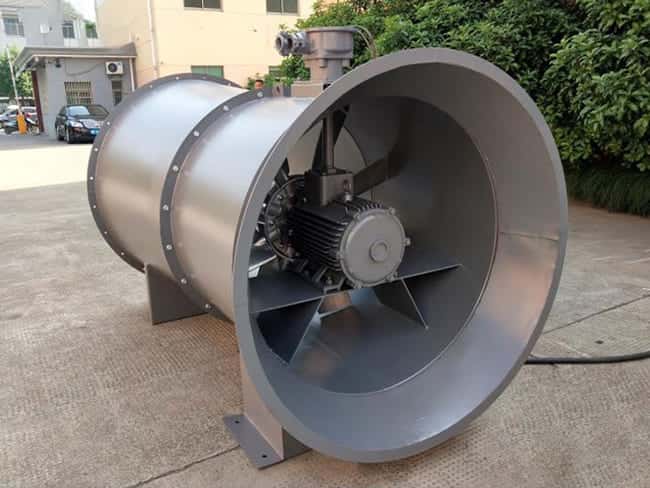
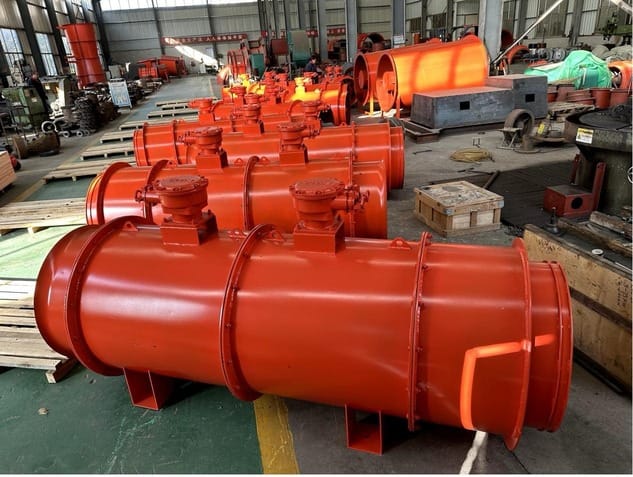
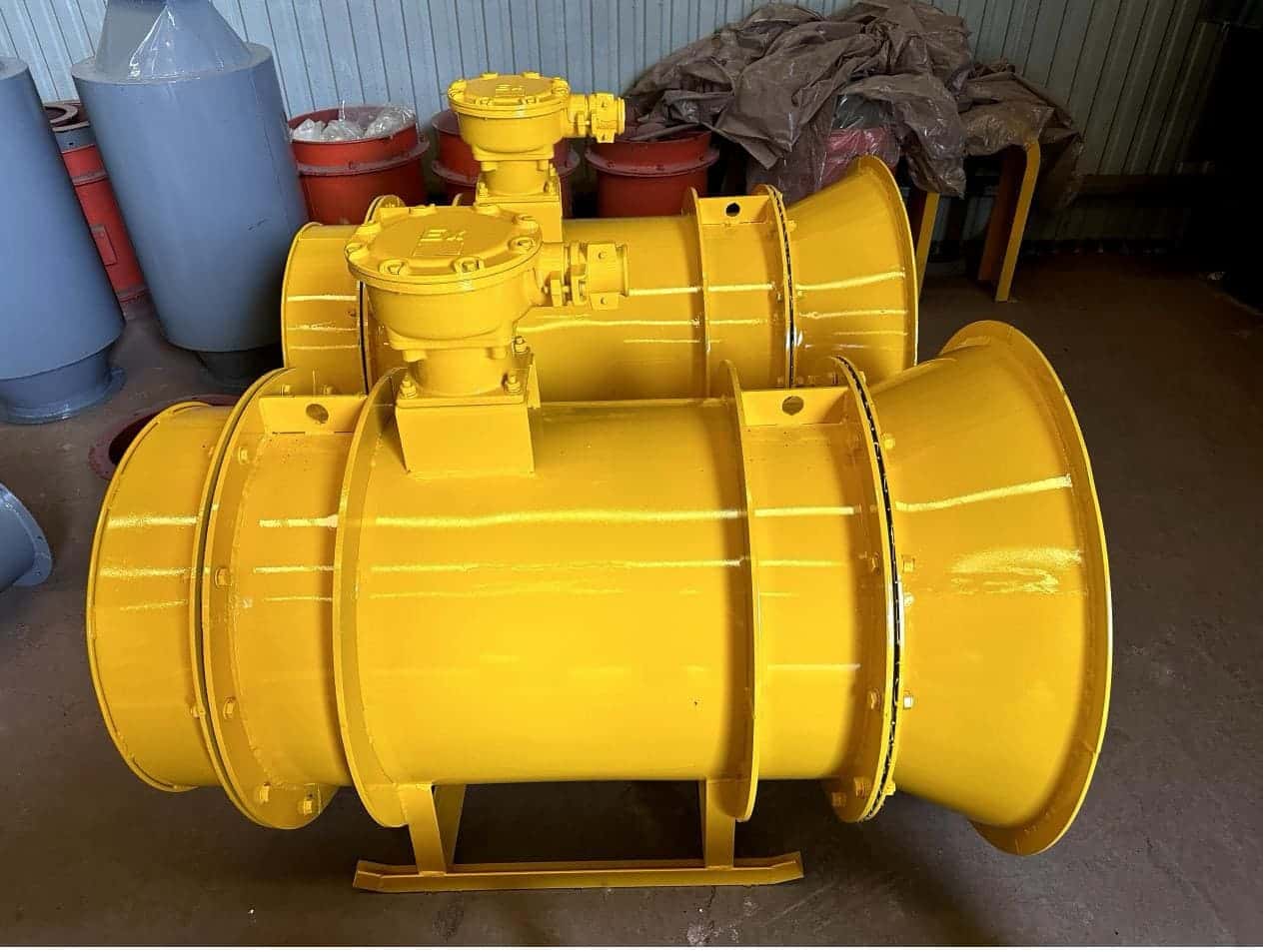
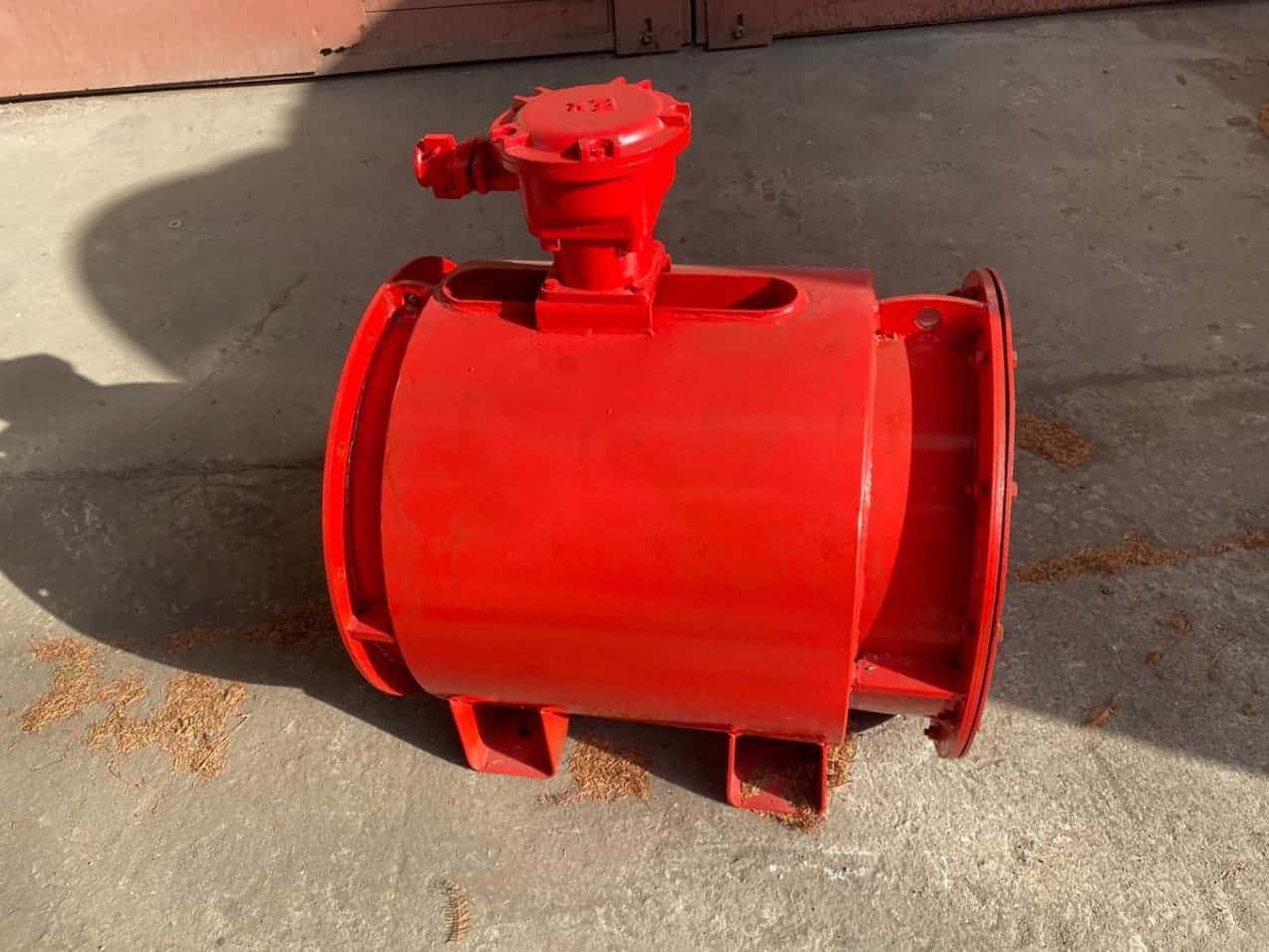
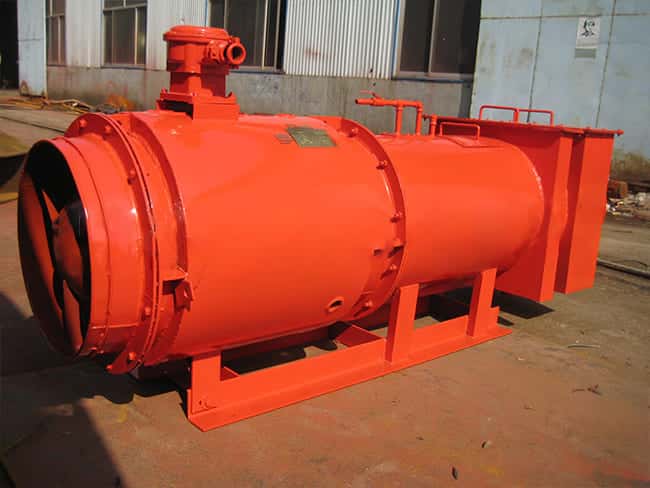
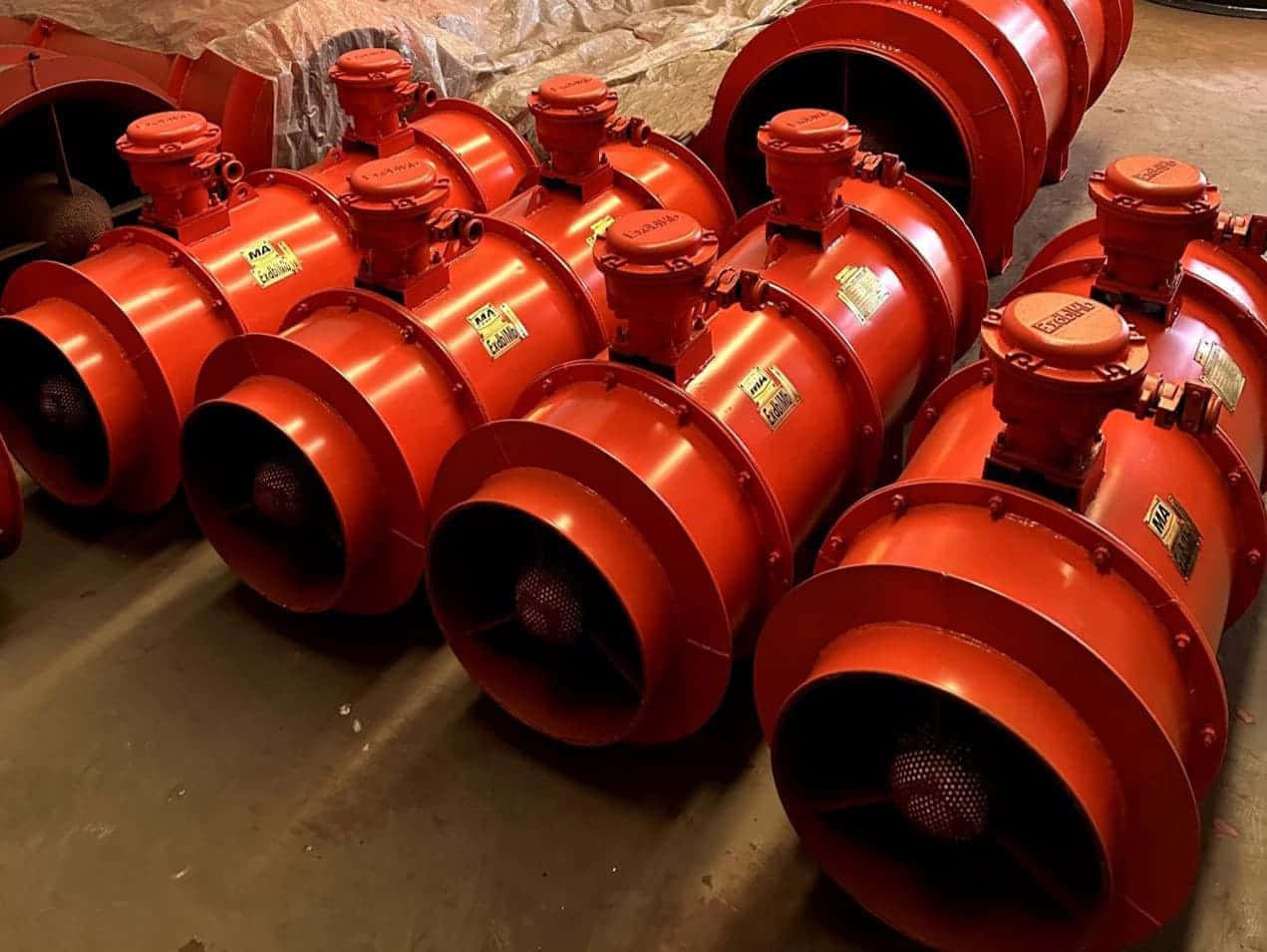
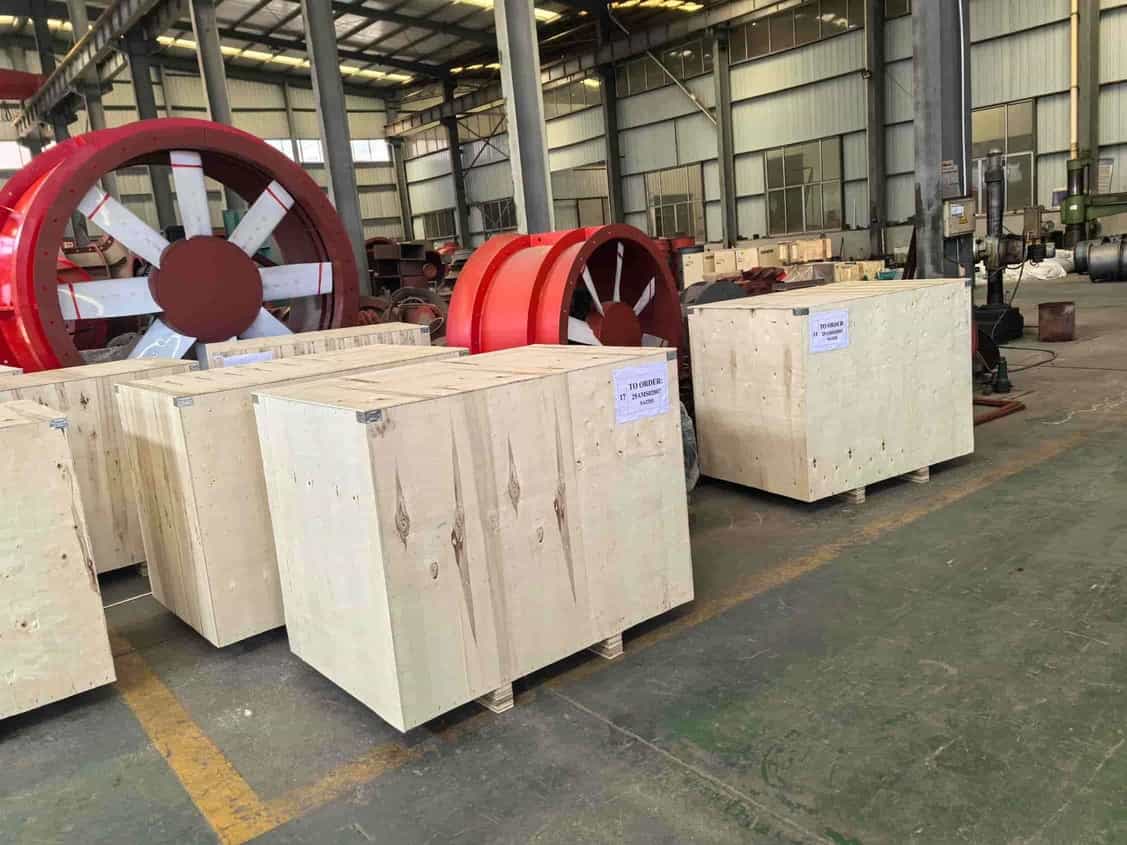
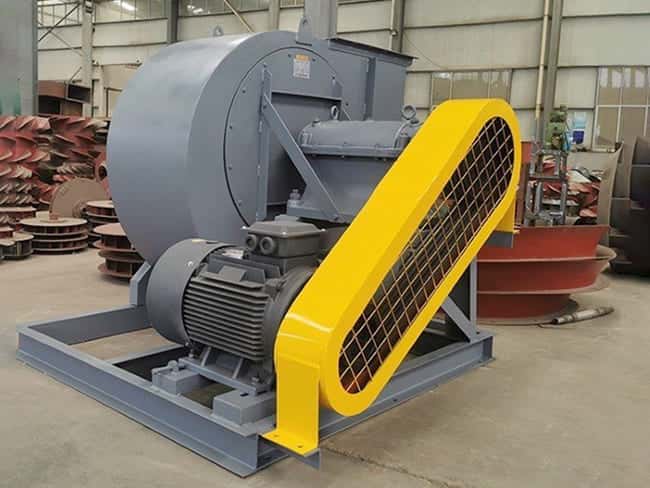
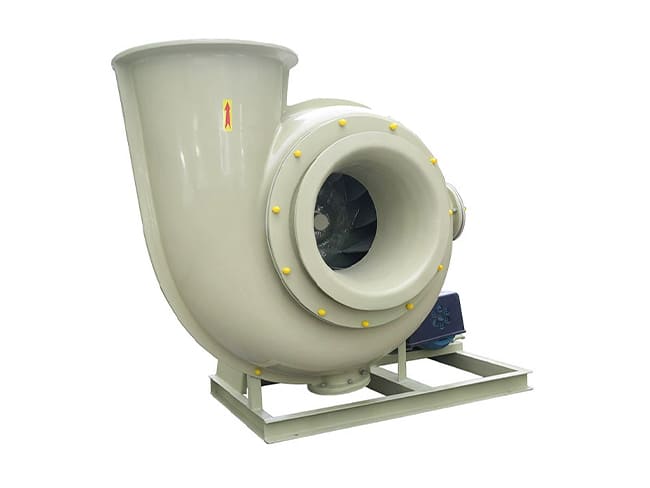
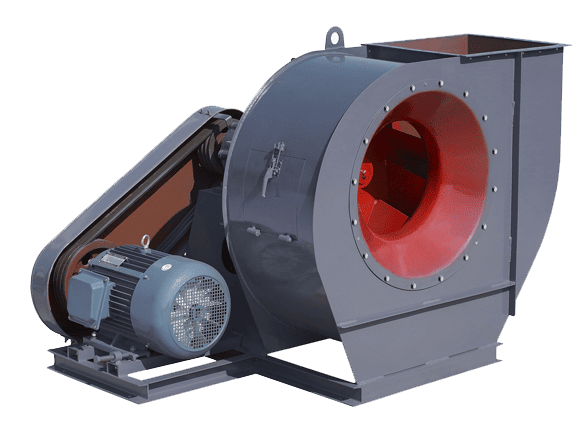
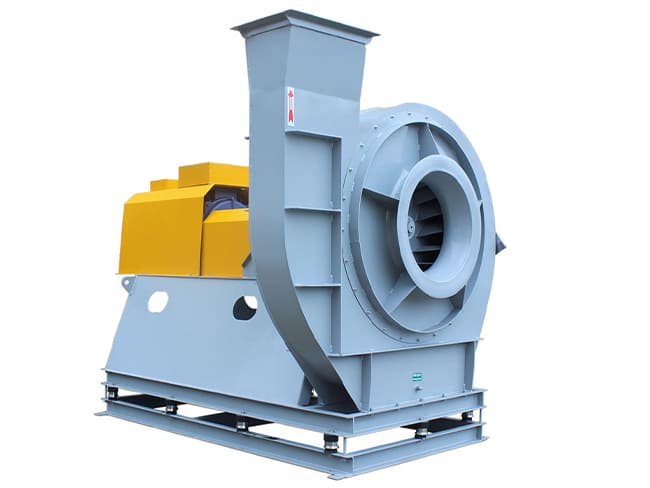
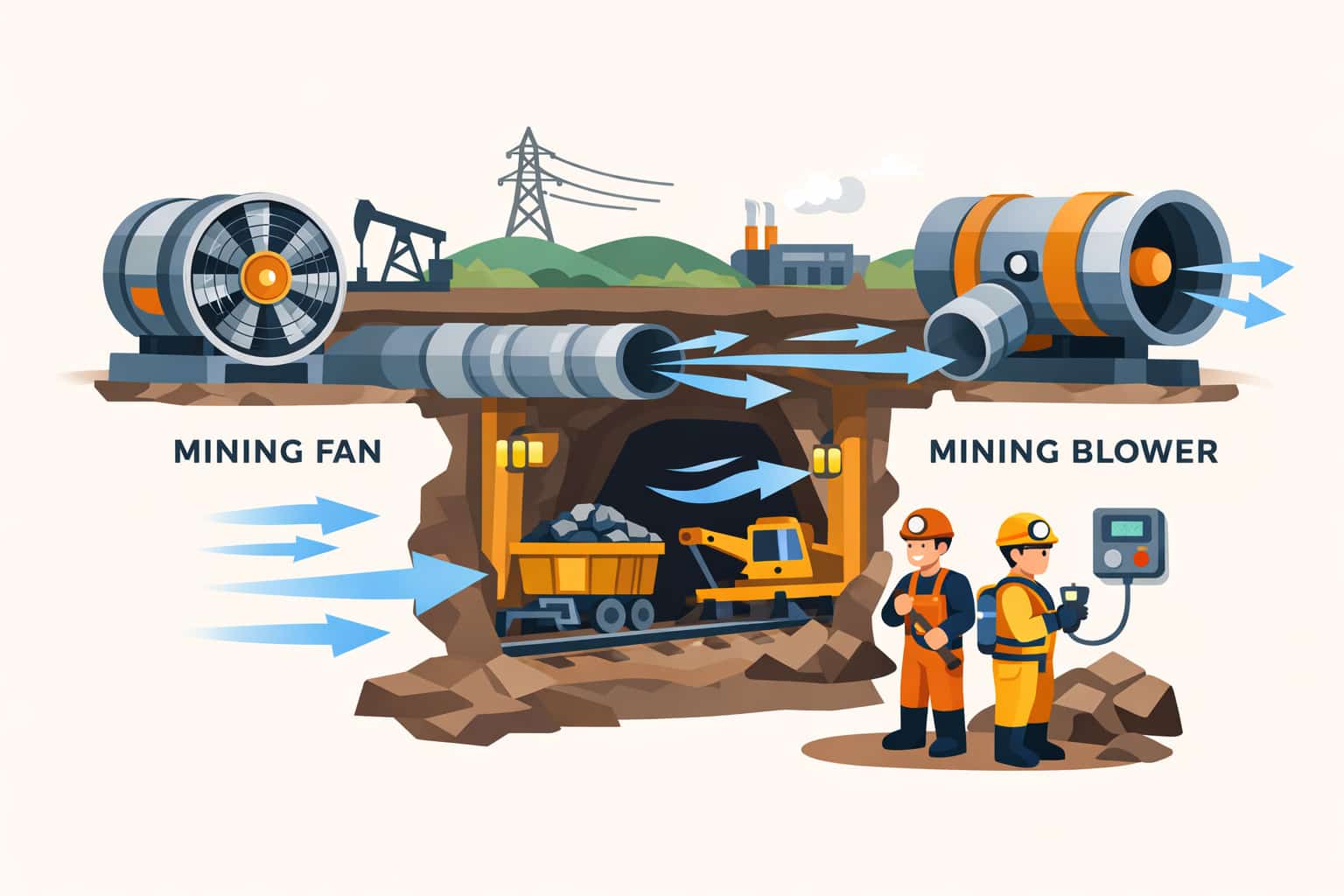
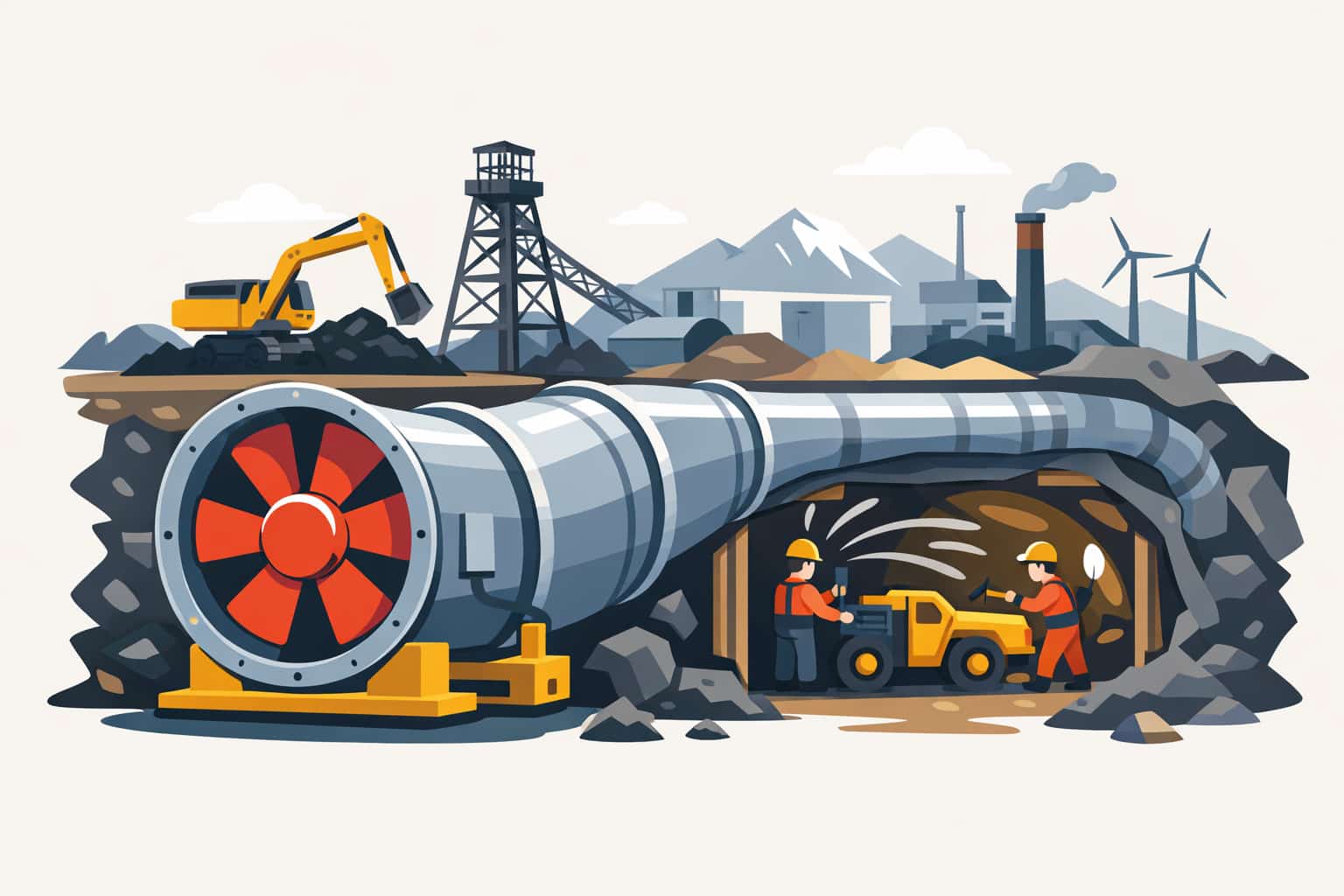
The purpose of mine ventilation is to turn a confined underground excavation into a safe and workable environment. Without a planned ventilation system, underground mines would quickly fill with dust, gases, and heat, making it impossible for people and equipment to operate safely. Industrial mine ventilation fans, airways, and control devices are therefore as fundamental to mining as drilling or hauling equipment.
The first purpose of mine ventilation is to supply breathable air. Underground workings are isolated from the open atmosphere, and natural air exchange is limited. Ventilation systems bring in oxygen-rich fresh air from the surface and distribute it to all workplaces, stopping points, and travelways so that miners can breathe safely and equipment with combustion engines can operate correctly.
A second critical purpose is to dilute and remove harmful gases. Many ore bodies release methane, carbon dioxide, or other gases. Diesel-powered vehicles and blasting activities add carbon monoxide and nitrogen oxides. Ventilation maintains gas levels well below their regulatory limits by continuously sweeping fresh air through intake airways, across working areas, and out through returns to exhaust fans at the surface.
Mine ventilation also plays a major role in dust control. Cutting, drilling, mucking, and crushing rock generate clouds of fine particles, including respirable crystalline silica and coal dust. Ventilation works together with water sprays, scrubbers, and filters to move dust away from breathing zones and out of the mine, reducing both immediate vision problems and long-term health risks for workers.
Another key purpose is heat and humidity management. As mines go deeper, rock temperature increases and powerful machinery adds more heat to the air. High temperatures and humidity can cause heat stress, fatigue, and dehydration. Ventilation carries heat away from equipment and faces, distributes cooled air from refrigeration plants where installed, and helps maintain acceptable thermal conditions as defined by regulations and company standards.
Ventilation also supports safe equipment operation and infrastructure reliability. Clean, cool air extends the life of electrical components, cables, and control systems. It reduces corrosion, prevents condensation on sensitive instruments, and improves visibility for vehicle operators, all of which contribute to fewer failures and accidents.
Finally, mine ventilation is essential for emergency response. During fires, explosions, or gas incidents, the way air and smoke move through the mine determines which escape routes remain usable. A well-designed ventilation system helps direct smoke away from refuge chambers and escape ways, giving miners more time to evacuate and allowing rescue teams to enter more safely.
In short, the purpose of mine ventilation is not only to move air, but to actively control air quality, dust, temperature, and smoke so that underground mining can be carried out safely, legally, and efficiently.