
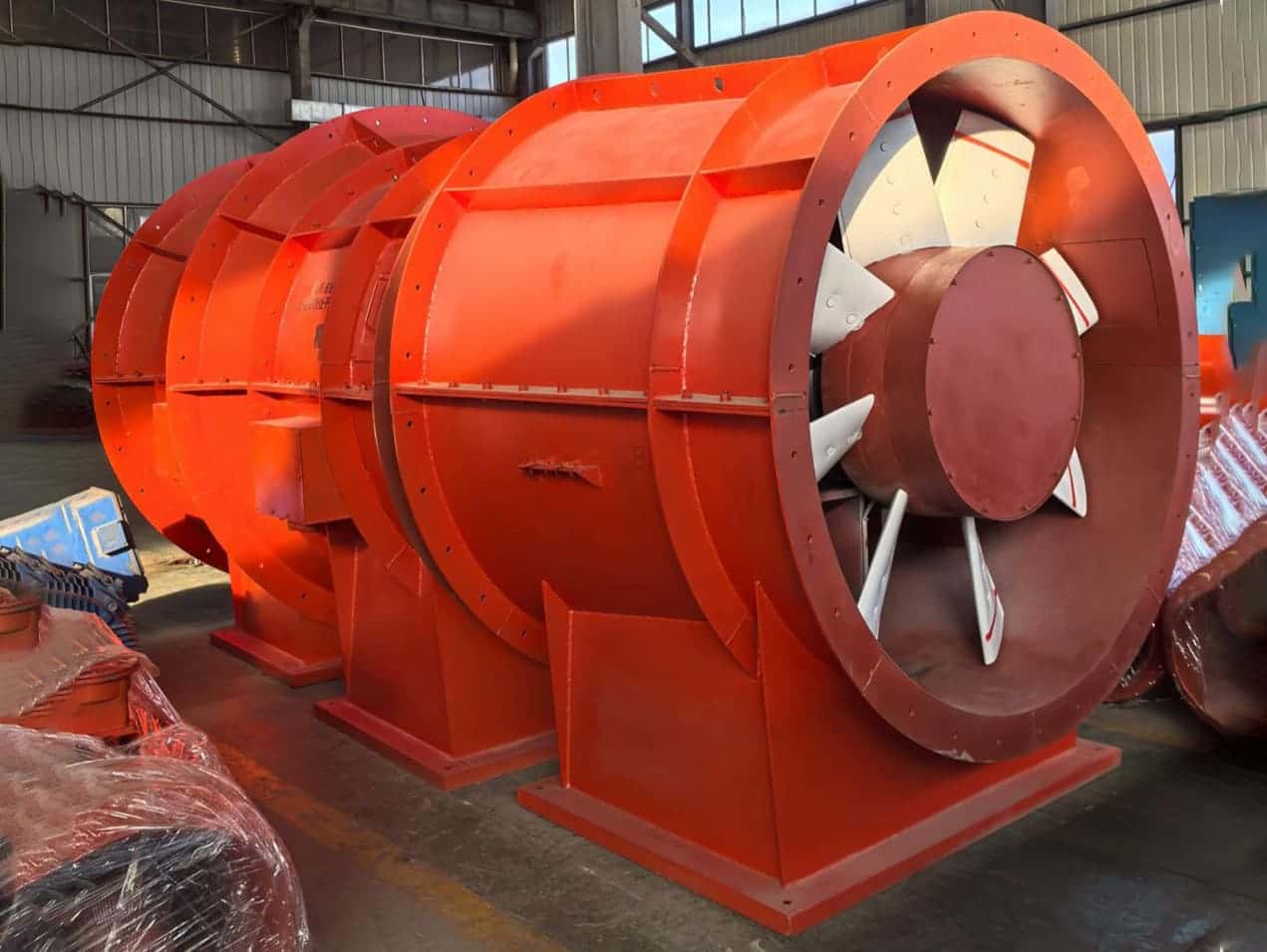
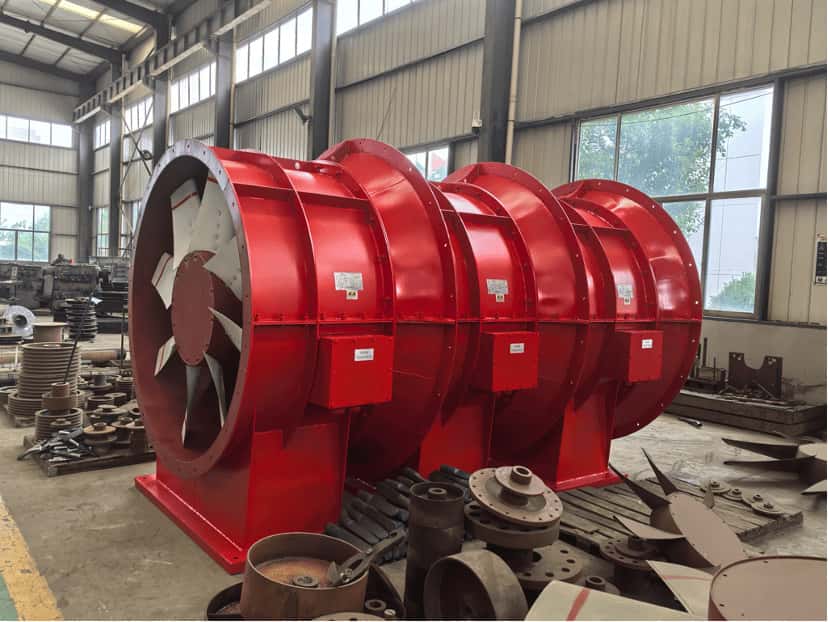
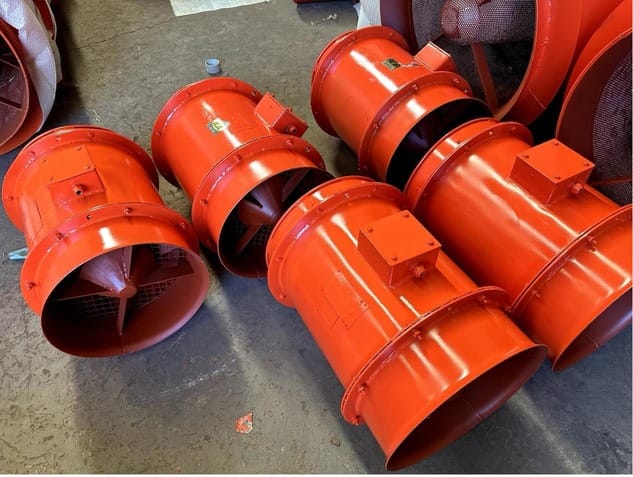
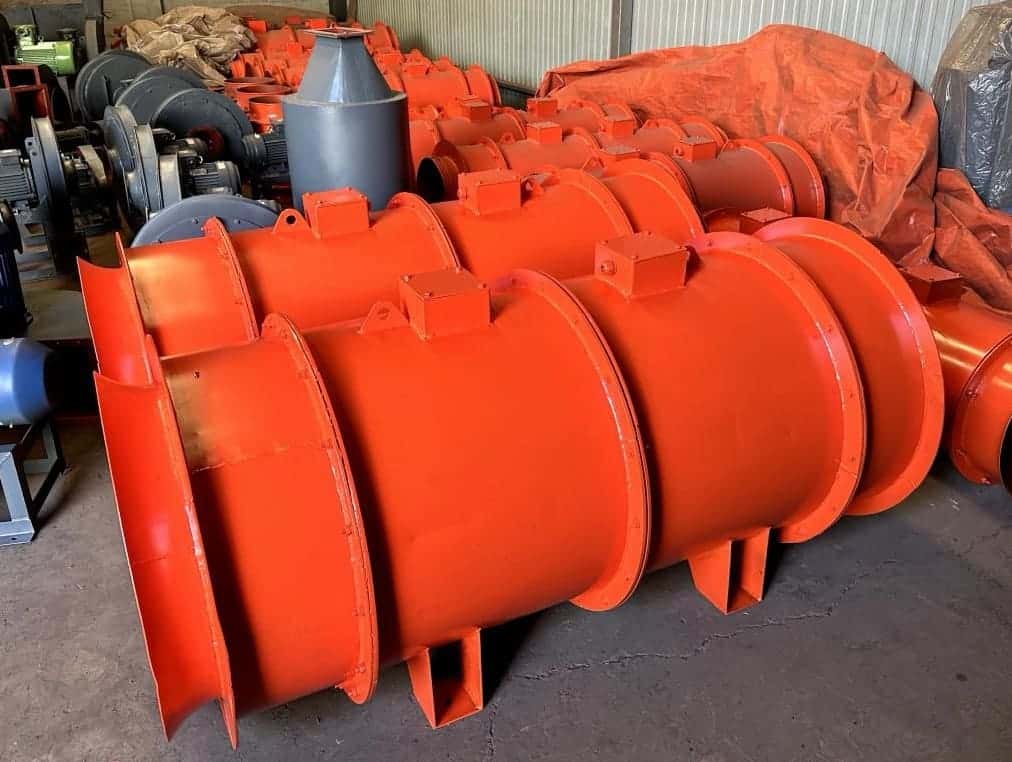
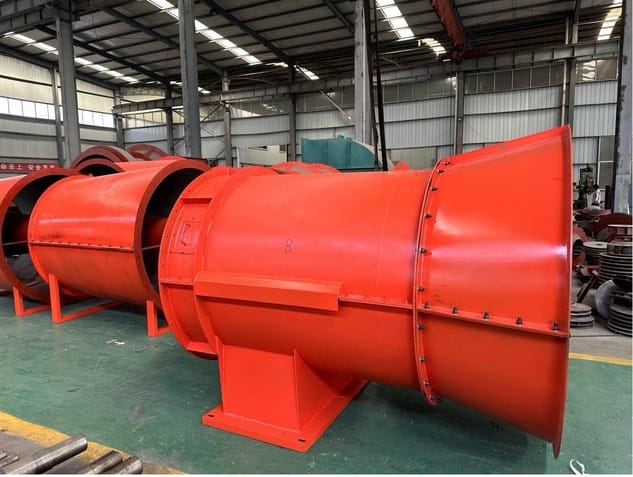
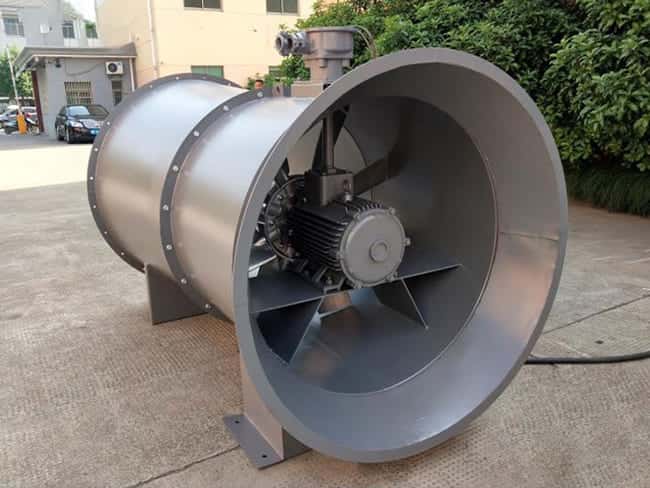
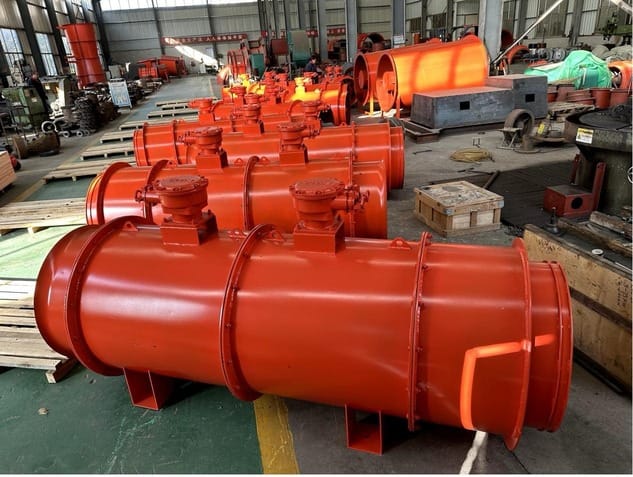
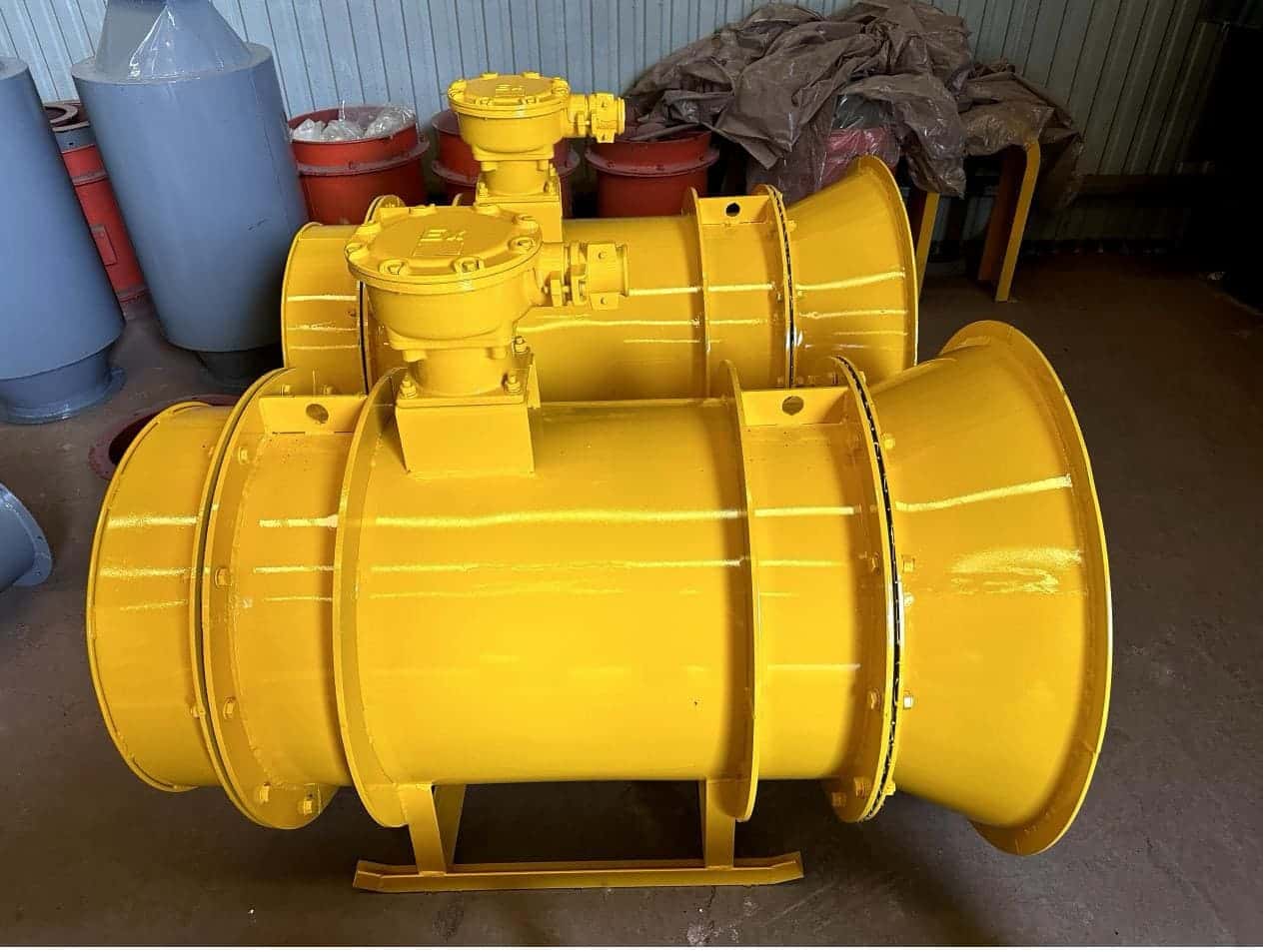
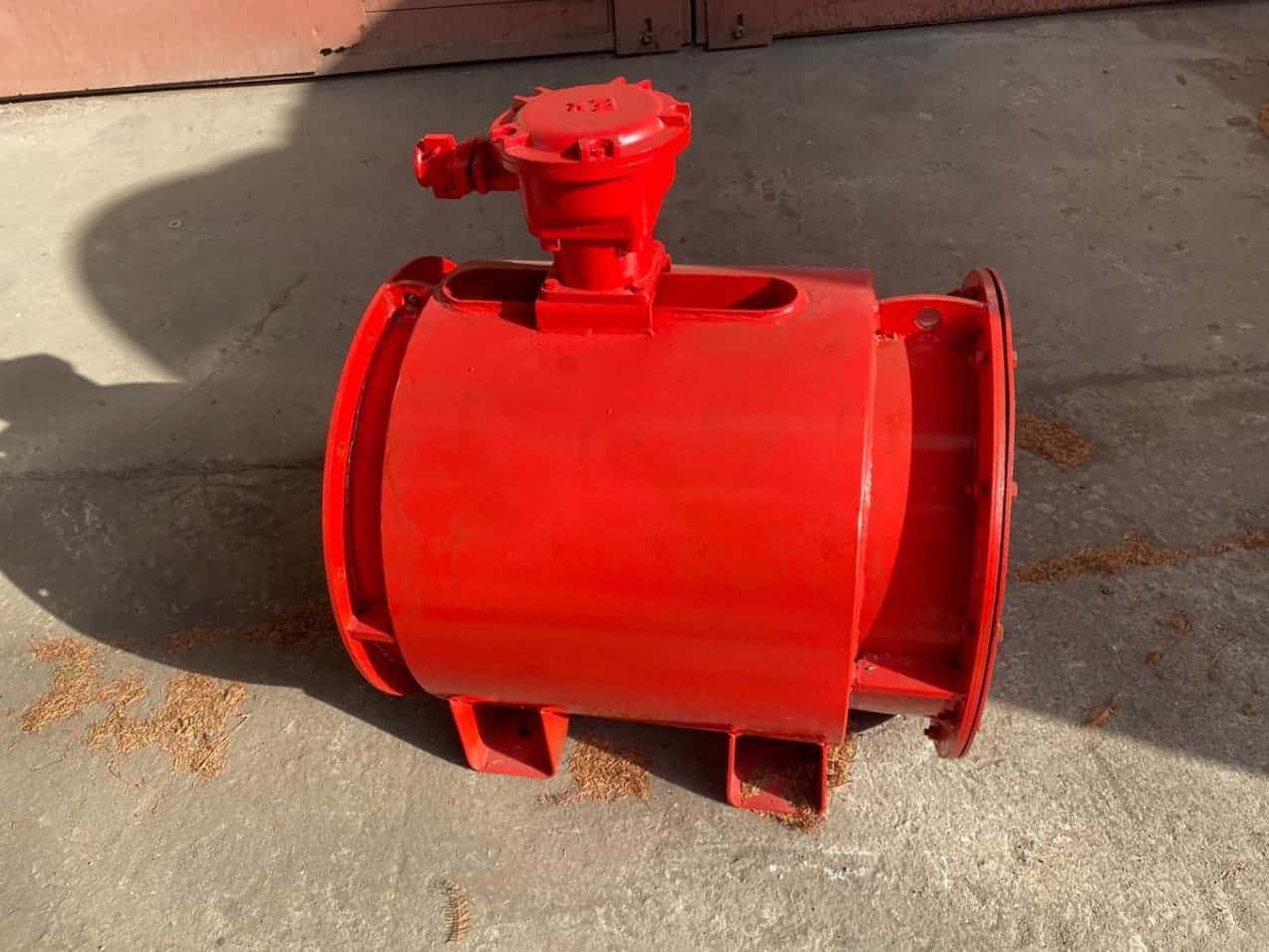
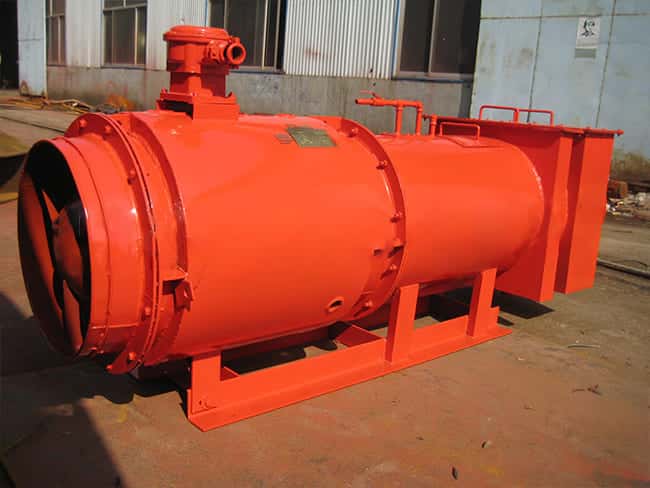
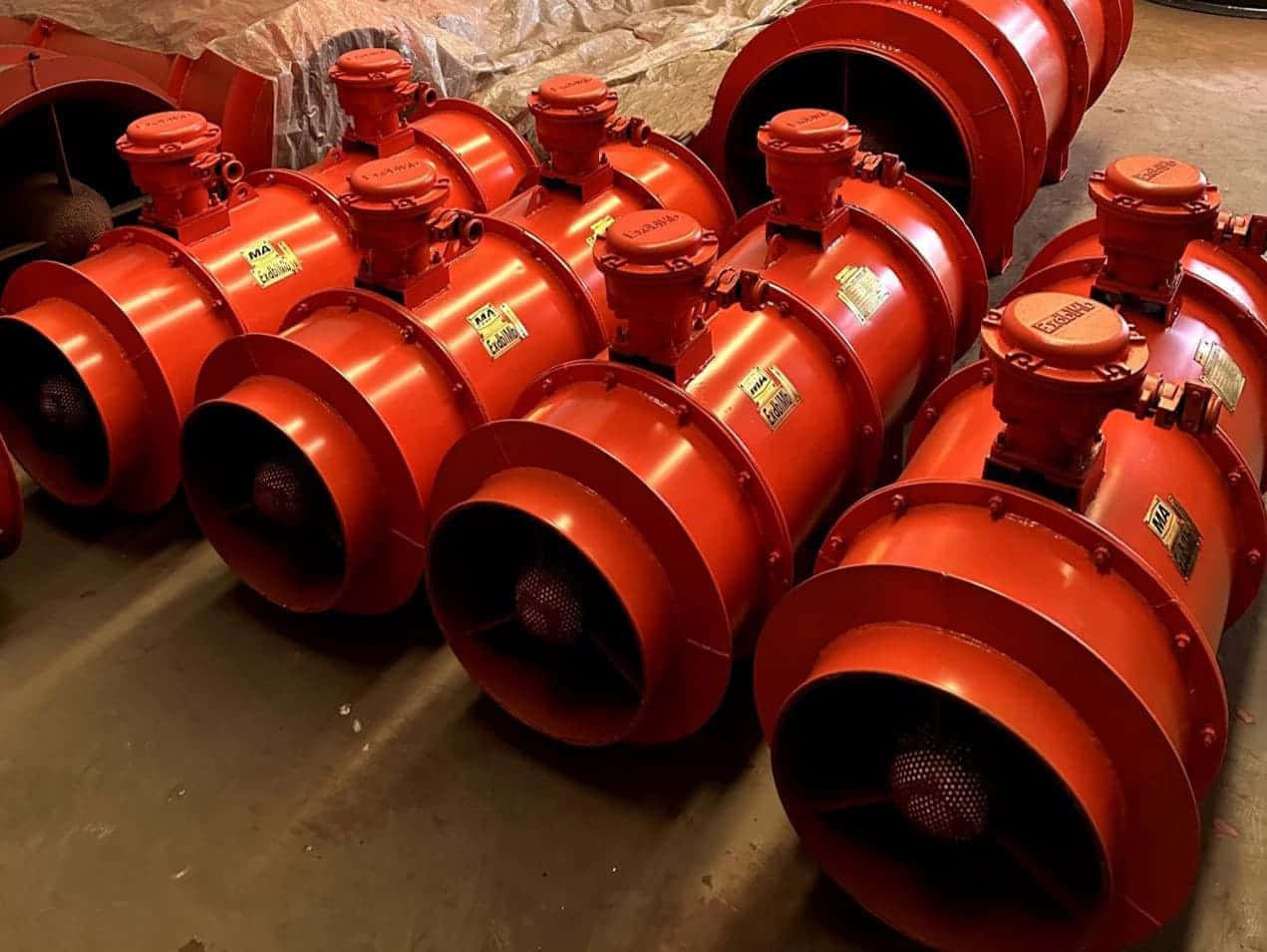
The purpose of an auxiliary fan is to provide local or secondary ventilation in areas that the main ventilation system cannot reach effectively. In everyday language, auxiliary means “helping” or “supporting”, and that is exactly what these fans do: they support the main fans by pushing or pulling air into dead ends, small rooms, enclosed spaces or temporary workings.
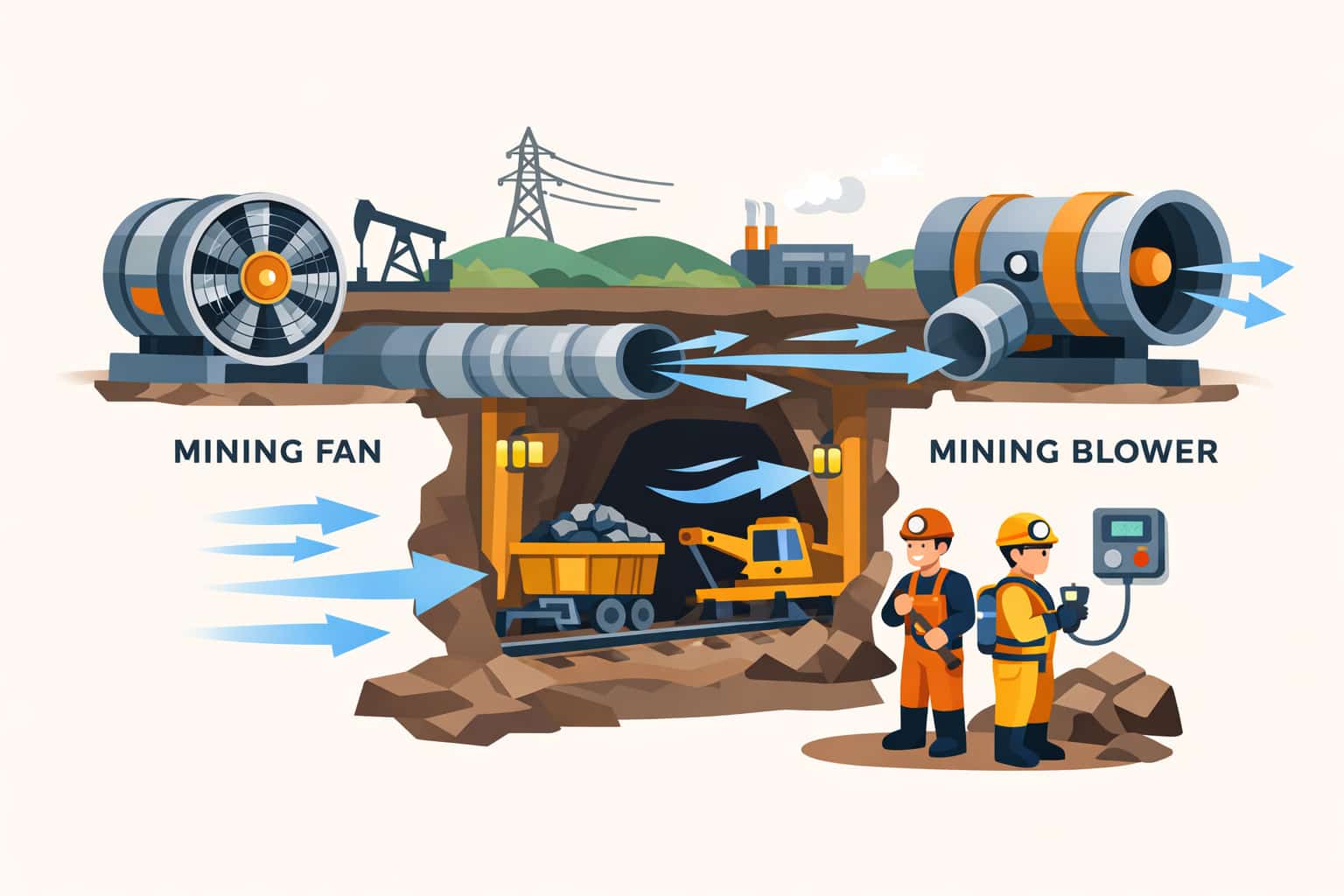
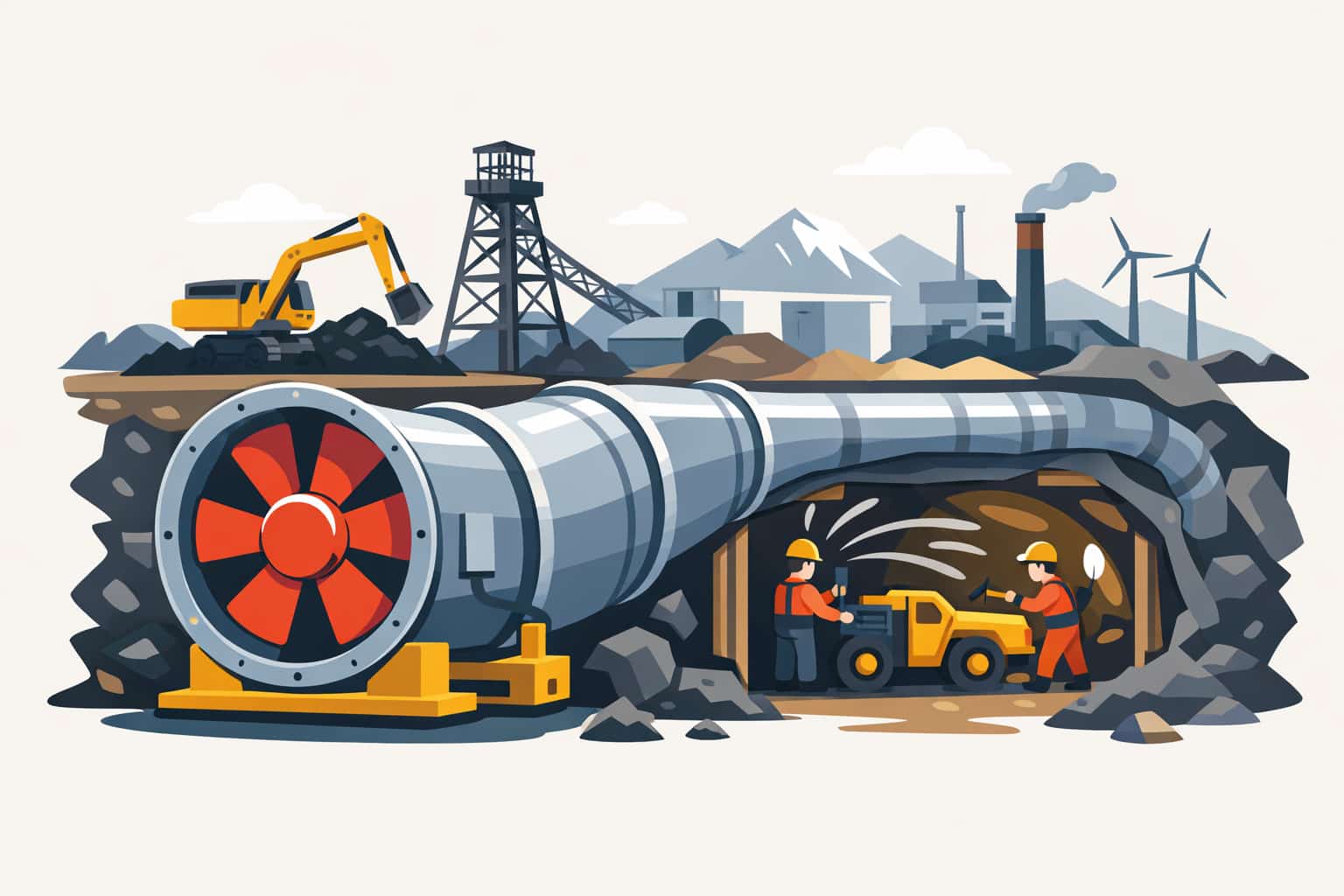
In underground mining, auxiliary fans are critical components of the ventilation system. Main fans move large volumes of air through the primary intake and exhaust airways, but they cannot directly supply fresh air to every blind heading, crosscut or development drive. Auxiliary fans, often mounted on the ground or suspended from the roof and connected to flexible ducts, push clean intake air from the main airway into these remote headings. This secondary ventilation dilutes diesel fumes, blasting gases and dust at the face, providing safe breathing conditions for miners and equipment.
Auxiliary fans can also be used in a exhaust configuration, pulling contaminated air out of a confined zone and discharging it into a return airway. Whether they are used in forcing (push) or exhausting (pull) mode, their purpose is the same: to create adequate airflow where natural or main fan-driven movement is insufficient. They are chosen based on air quantity, pressure requirement, duct length and safety standards for the mine.
In industrial plants and tunnels, auxiliary fans play similar roles. They may provide temporary ventilation during construction or maintenance, cool hot work areas, ventilate tanks and confined spaces, or support local exhaust systems around welding, blasting or painting operations. Portable axial auxiliary fans with flexible ducts are common on construction sites, shipyards and industrial shutdowns, where work locations move frequently and permanent ventilation is not yet in place.
Auxiliary fans differ from main fans in scale and function. Main fans are usually large, fixed installations designed for long-term continuous operation, forming the backbone of the ventilation network. Auxiliary fans are smaller, more mobile and easier to relocate as headings advance or work zones change. They are used where the need for airflow is temporary or localised, even though their role in protecting workers is just as important.
Effective use of auxiliary fans requires careful planning. Ducts must be properly sized and maintained to minimise leakage and resistance, fans must be started and stopped in the correct sequence with main fans, and monitoring equipment should confirm that airflow at the workplace meets regulatory requirements. Poorly positioned or undersized auxiliary fans can leave dead zones with inadequate ventilation.
In summary, the purpose of an auxiliary fan is to extend and reinforce the main ventilation system by delivering fresh air or removing contaminated air in locations that would otherwise be poorly ventilated, especially in underground mines, tunnels and industrial confined spaces.