




There is no single magic formula for natural ventilation, but in practice engineers use several rules of thumb for natural ventilation when designing industrial buildings, workshops and some shallow underground spaces. These guidelines help estimate opening sizes and expected air change rates before more detailed analysis is done, and they remind us of the limitations of relying on wind and temperature differences instead of fans.
One basic rule of thumb is that effective natural ventilation needs both inlets and outlets. Fresh air should enter at lower levels, while warm or contaminated air should escape at higher points. For simple industrial sheds, designers may aim for total unobstructed inlet and outlet areas of at least 2–5% of the floor area, divided between sides and roof, depending on climate and internal heat loads. Large louvers, ridge vents, roof monitors and sidewall openings are arranged to promote cross-ventilation when the wind blows and stack effect when indoor air is warmer than outdoors.
Another commonly used rule concerns air changes per hour (ACH). For light industrial spaces with moderate heat and no significant contamination, natural ventilation might be considered acceptable if calculations or experience suggest about 3–6 air changes per hour under typical conditions. Hot processes, high occupancy or equipment with higher heat output demand more air changes and may make mechanical fans necessary. In warehouses and storage halls, designers often supplement natural ventilation with large ceiling fans to improve mixing and perceived comfort.
A further rule of thumb is to keep air paths short and unobstructed. Air should be able to flow from inlets to outlets without passing through complex mazes of equipment, tall storage racks or small internal rooms. Internal partitions should be arranged so they do not block cross-ventilation. Where natural ventilation is relied upon for safety or comfort, visual inspection of air paths is just as important as calculation.
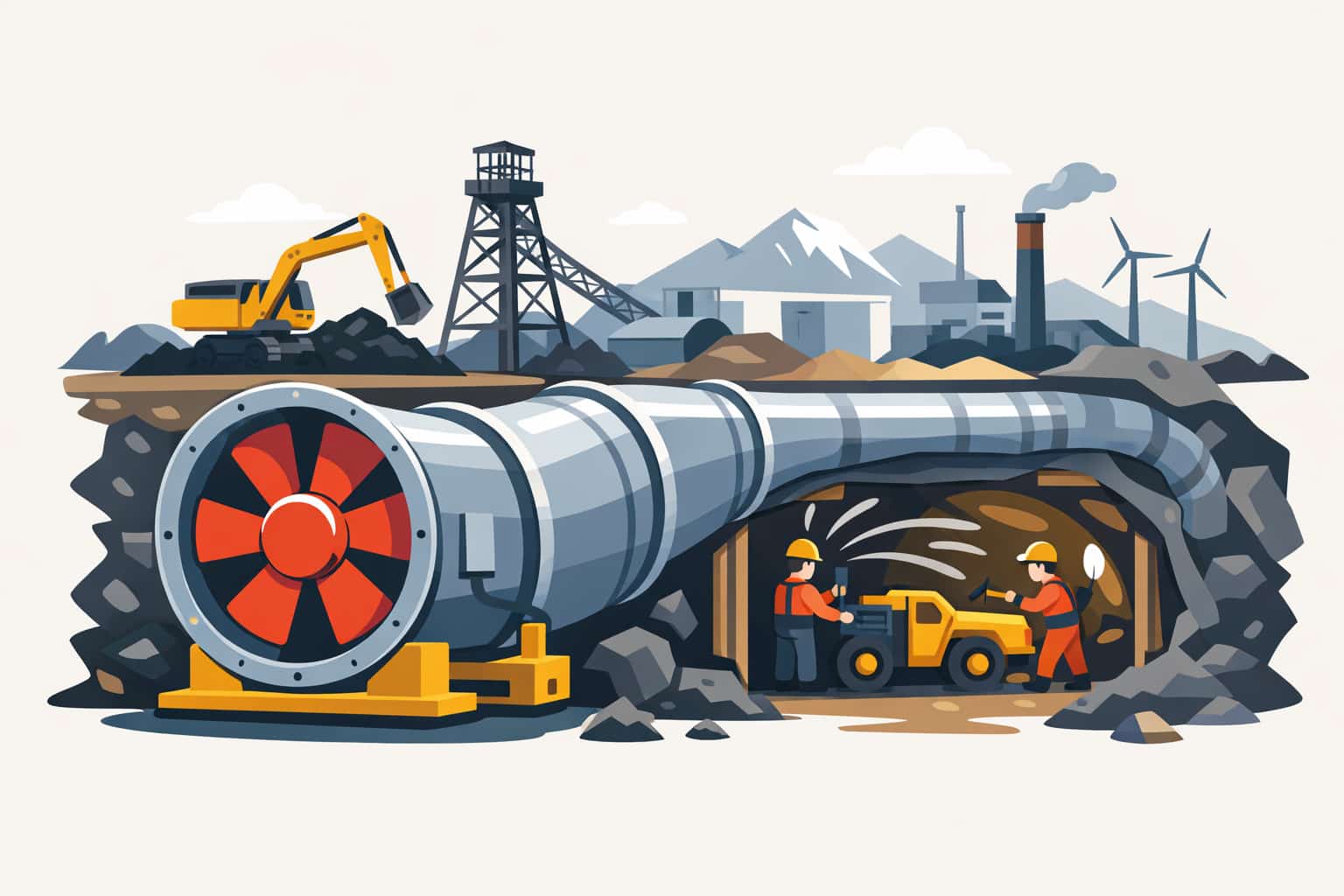
For underground mines and tunnels, natural ventilation may provide some flow when there is a temperature difference between surface and underground or between intake and return shafts, but rules of thumb always treat it as a supplement to mechanical ventilation, not a replacement. The airflow depends strongly on weather, making natural ventilation too unreliable for modern safety standards, so main fans are still required.
In summary, the rule of thumb for natural ventilation is to provide generous, well-located openings for inlets and outlets, aim for several air changes per hour, keep air paths simple and remember that natural ventilation is variable and should not be the only control measure where safety depends on reliable airflow. Mechanical fans are usually added when precise or guaranteed ventilation is required.