
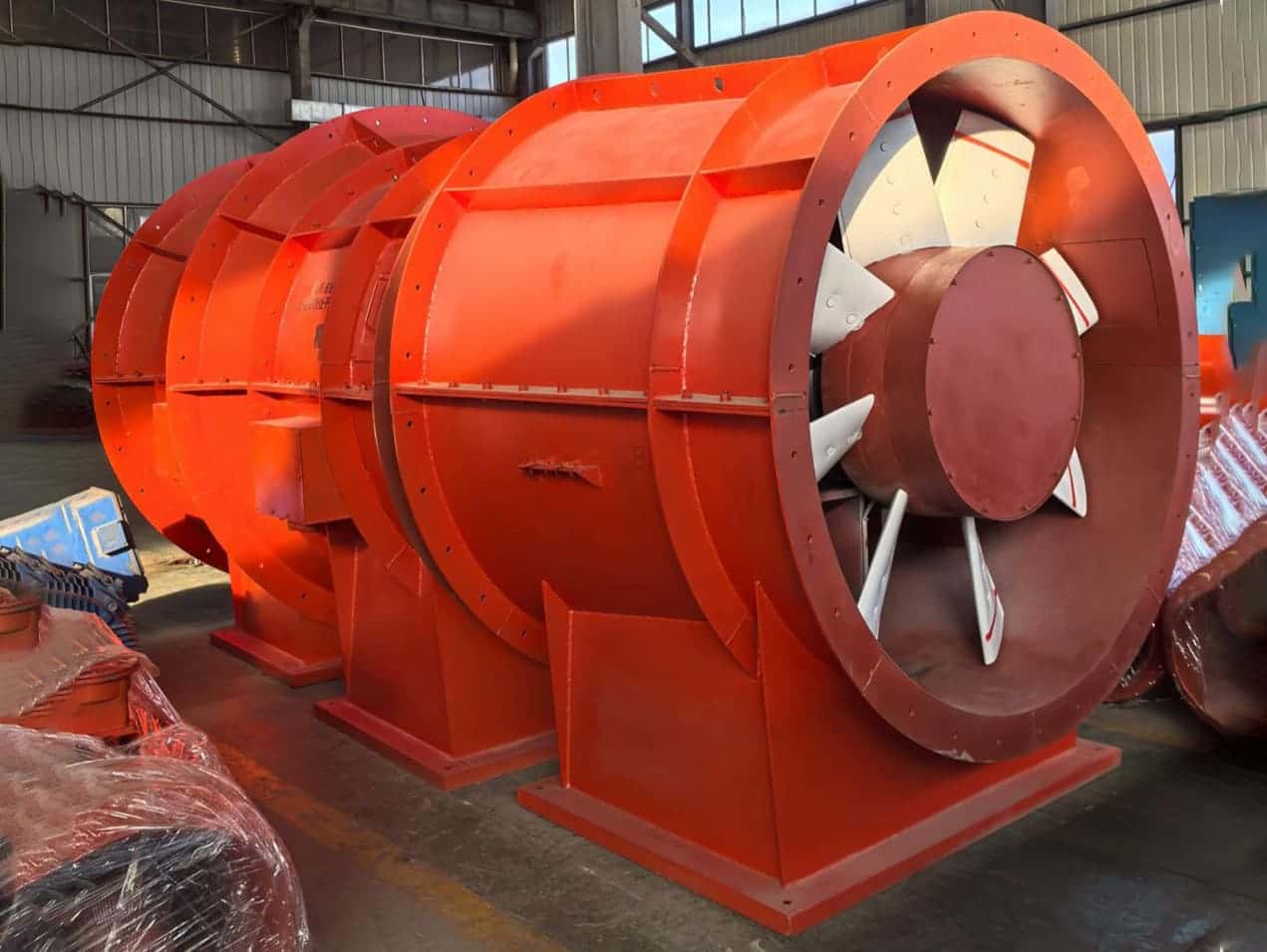
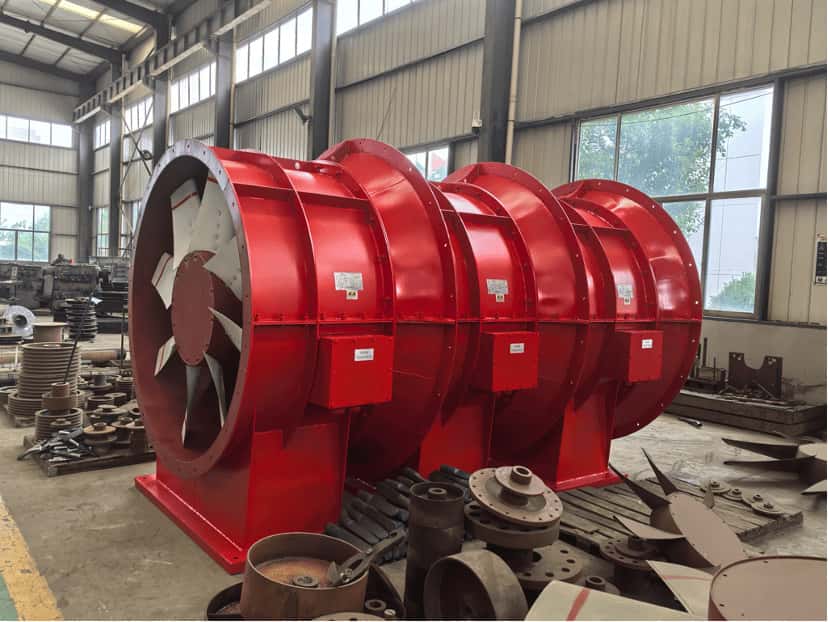
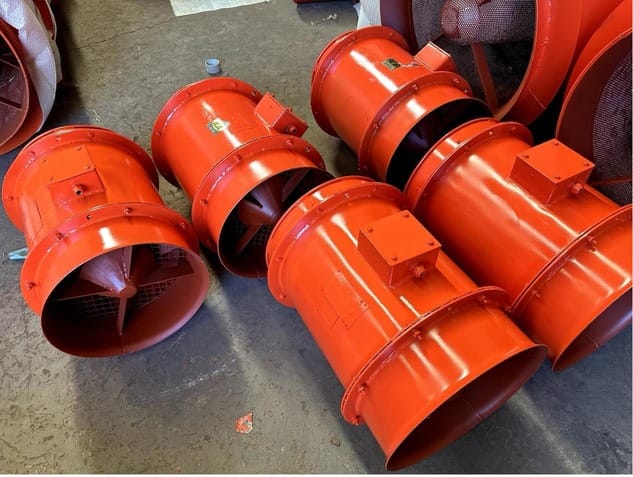
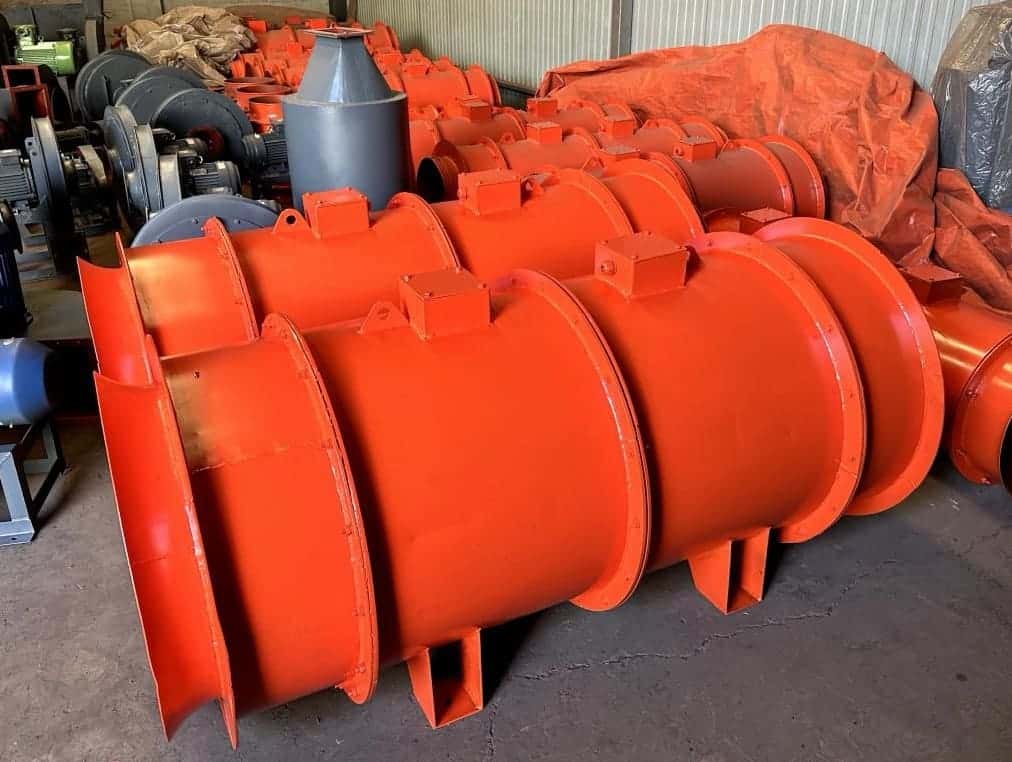
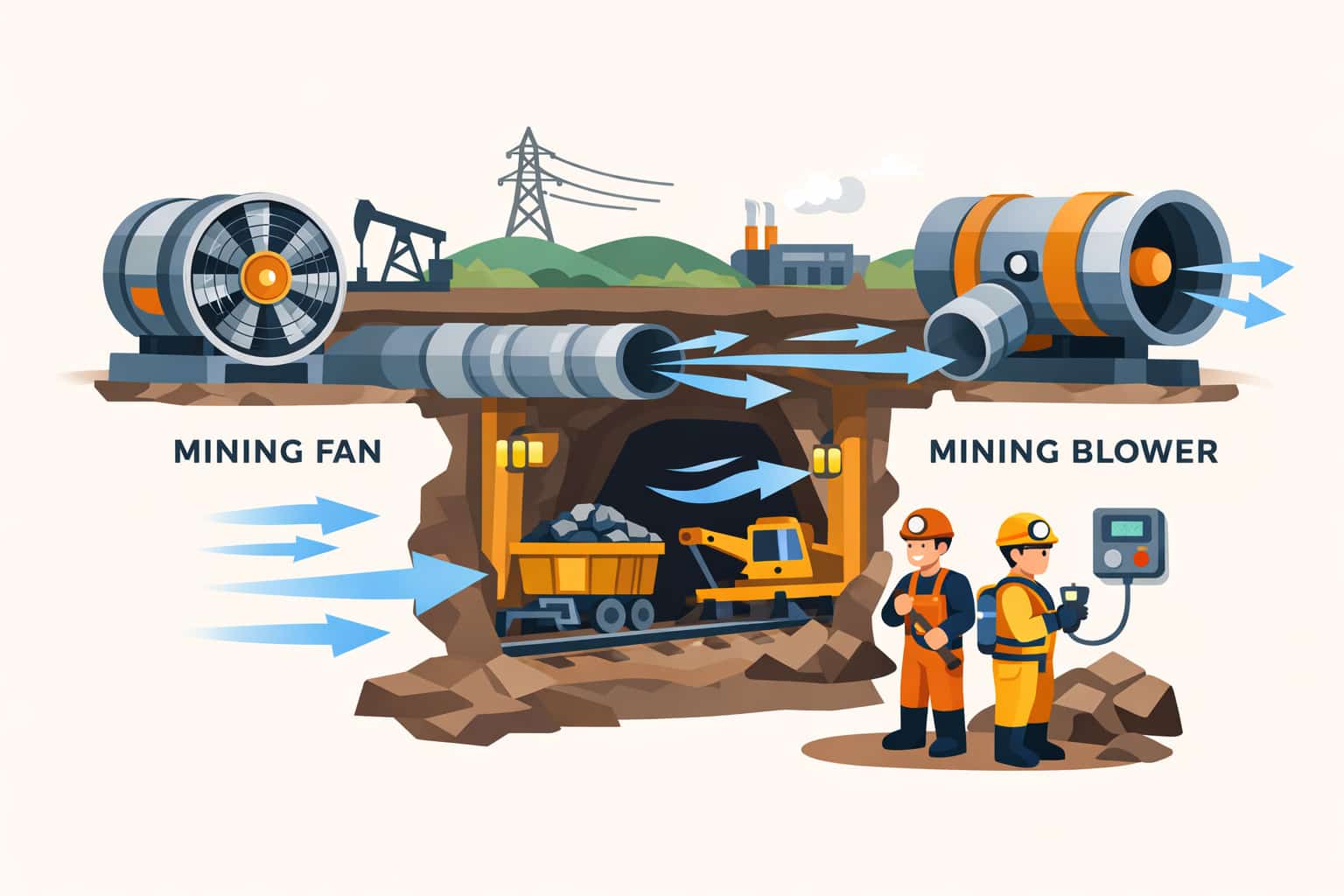
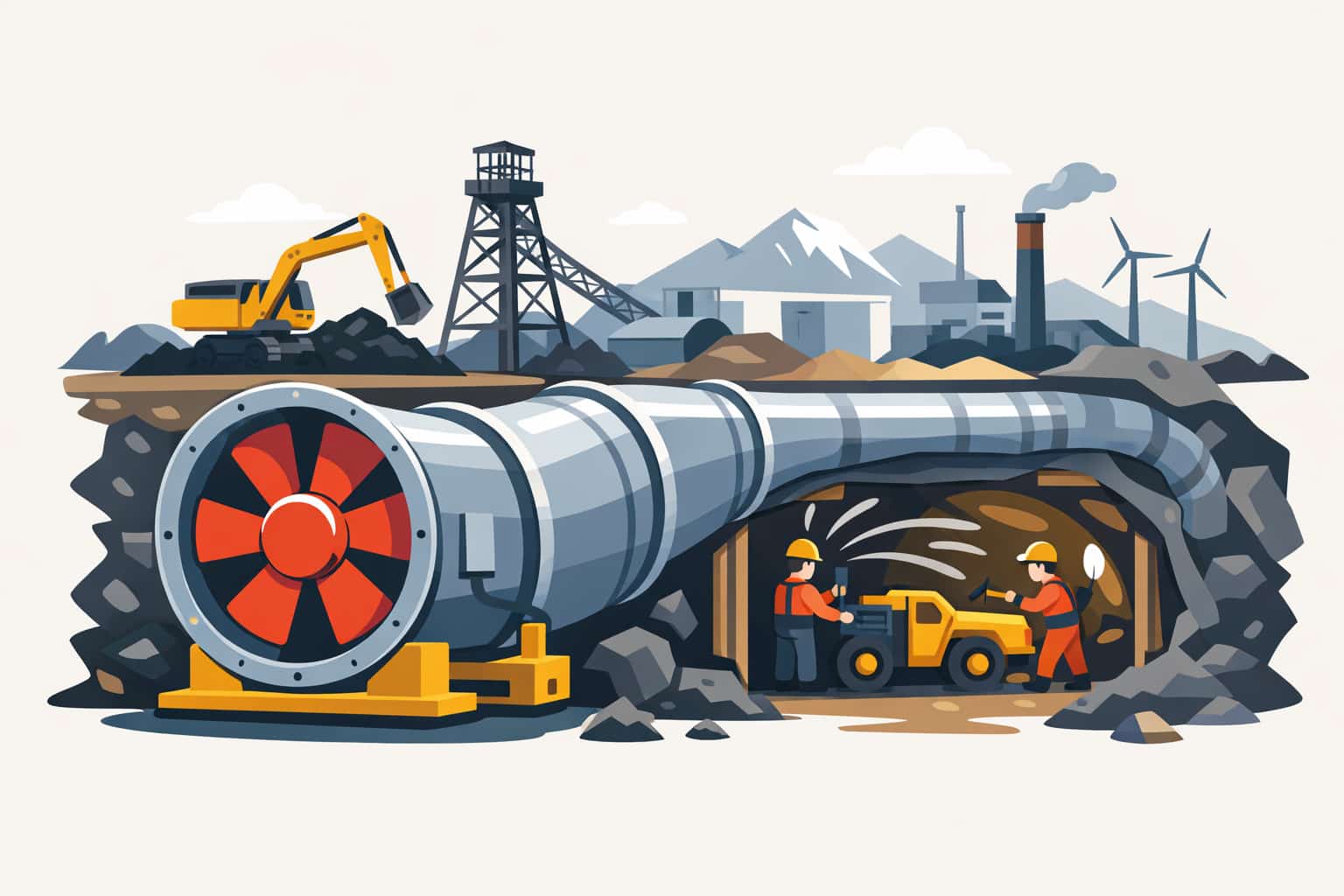
Mines use several kinds of ventilation fans, and the “right” fan depends on where it is used (main system vs local ventilation) and the required duty point (airflow and pressure). In most underground mining operations, fans are chosen to deliver reliable airflow continuously, handle harsh environments, and meet any required safety ratings.
1) Main (primary) mine ventilation fans
Main fans are installed at shafts, portals, or surface fan stations to drive airflow through the entire mine. These fans typically operate for long periods and are engineered for high reliability, efficient energy use, and stable performance over a wide range of mine resistances as the workings expand.
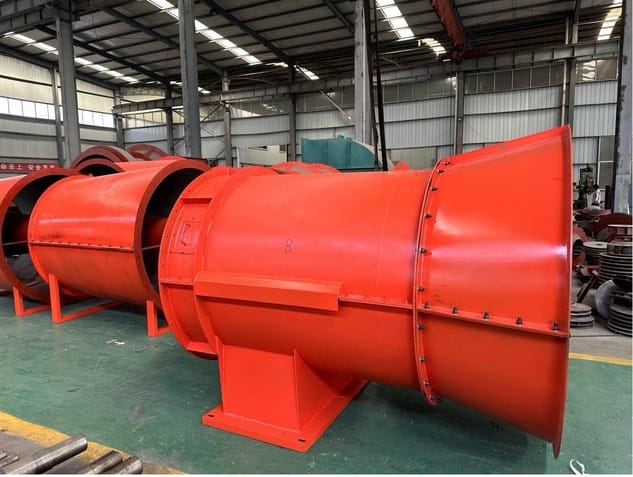
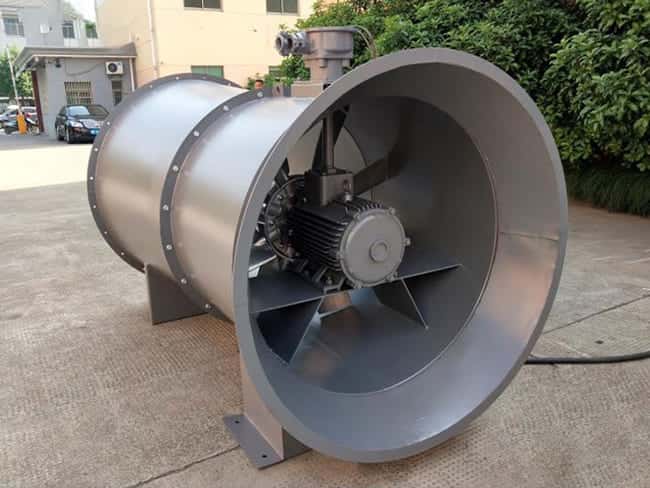
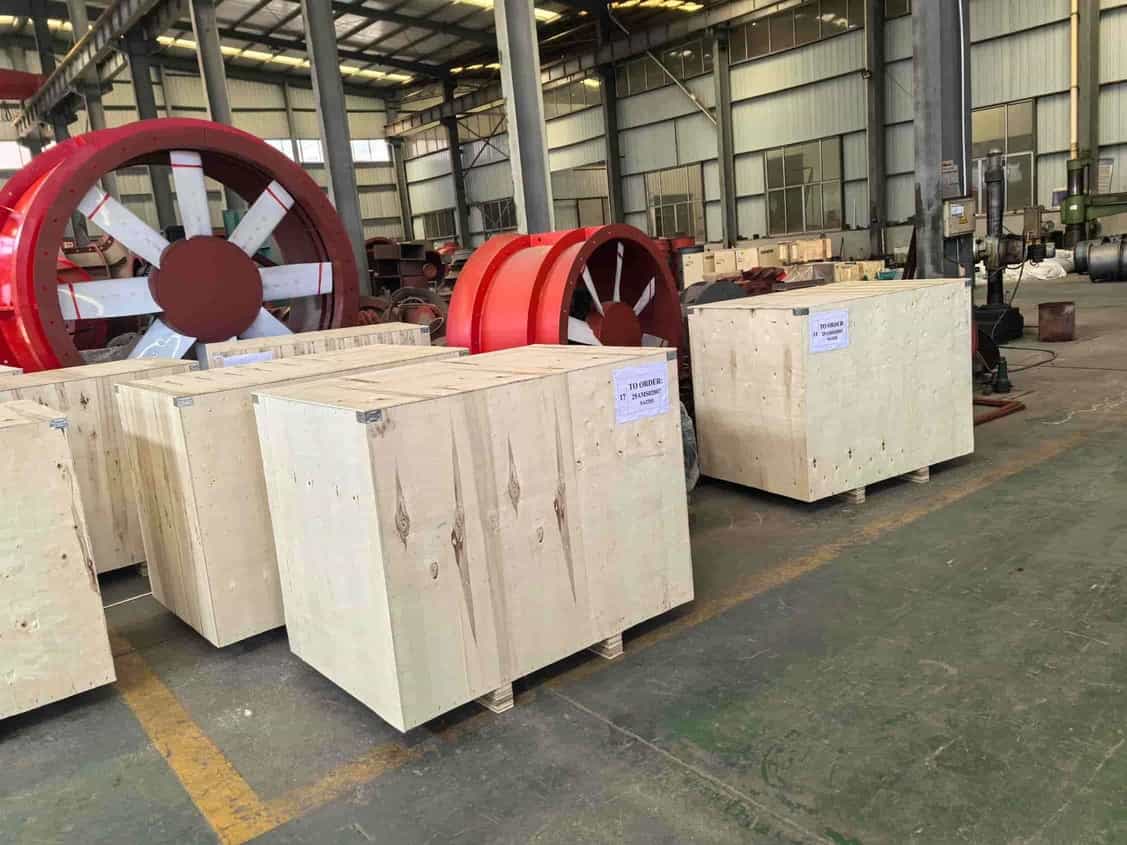
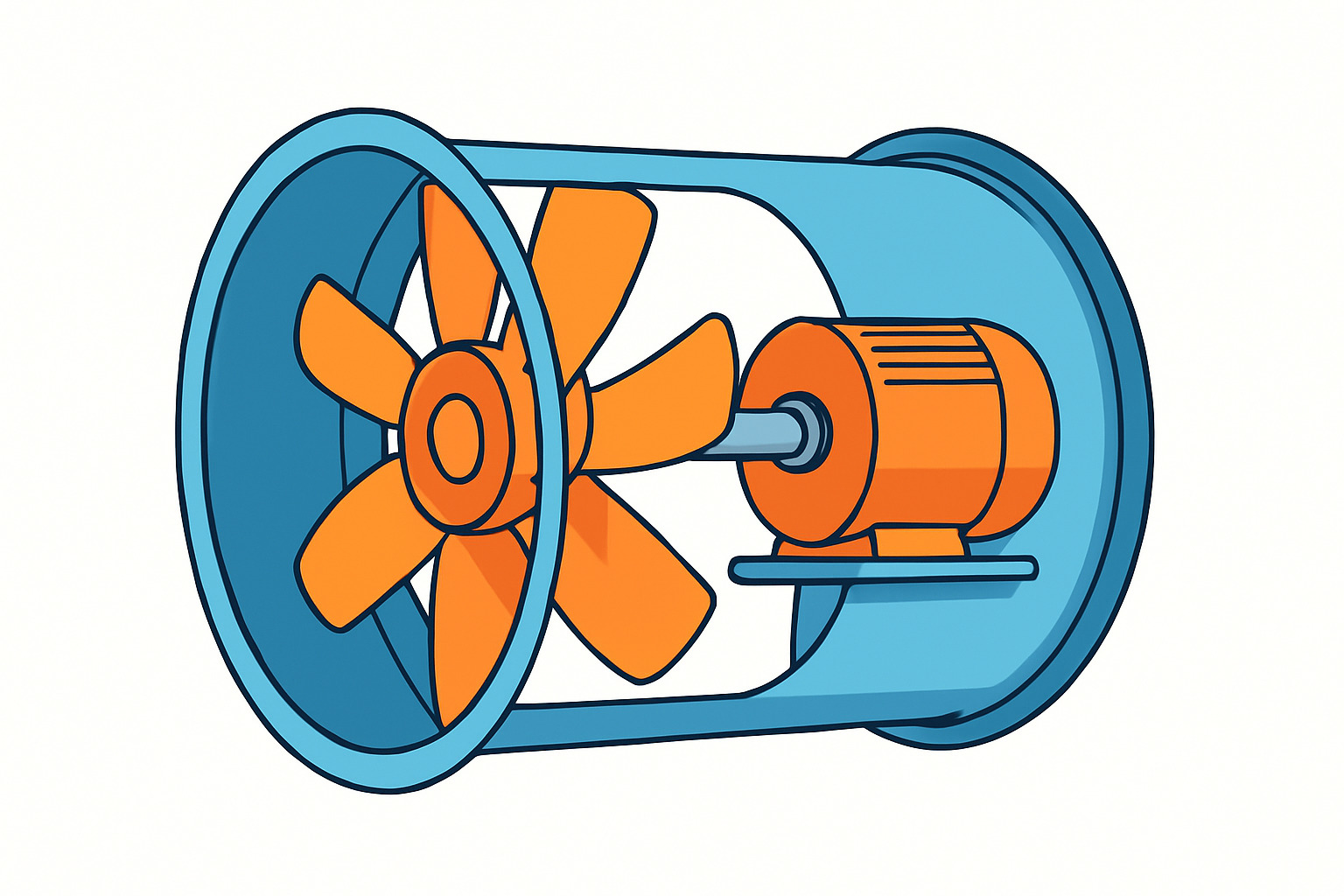
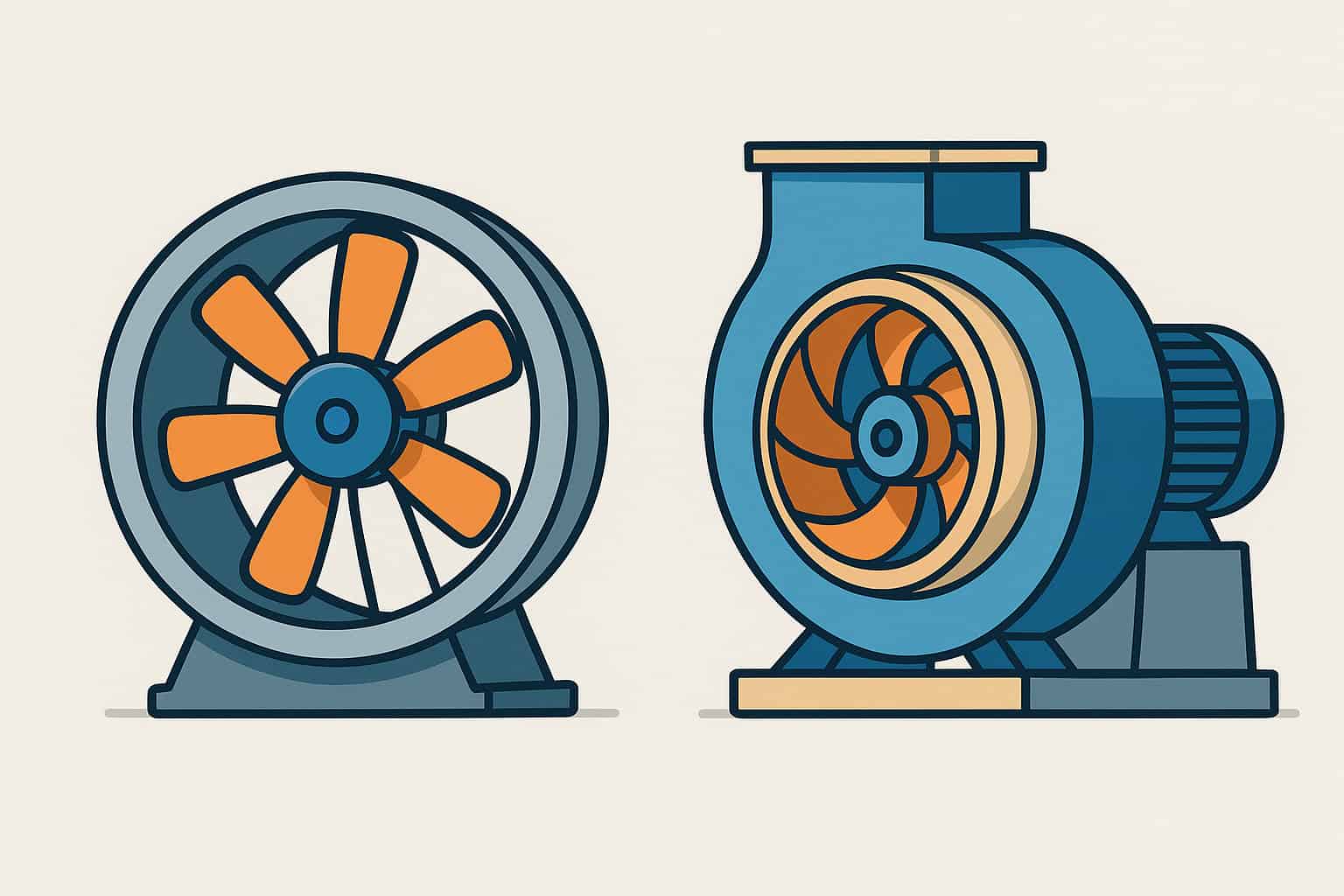
- Axial main fans: widely used because they can deliver very high airflow efficiently at moderate to high pressures, especially in large diameter installations.
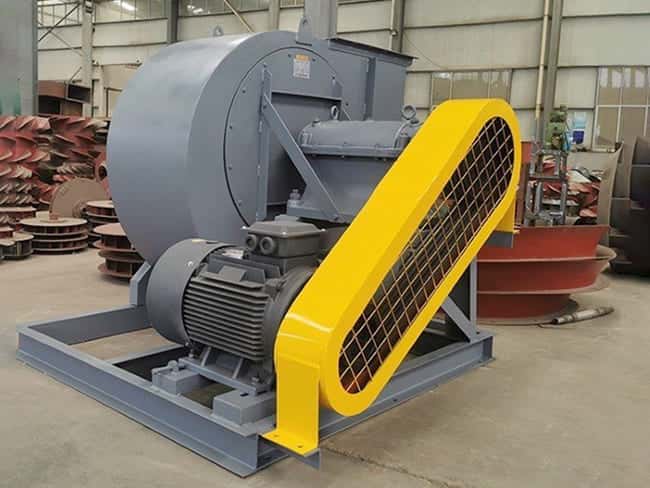
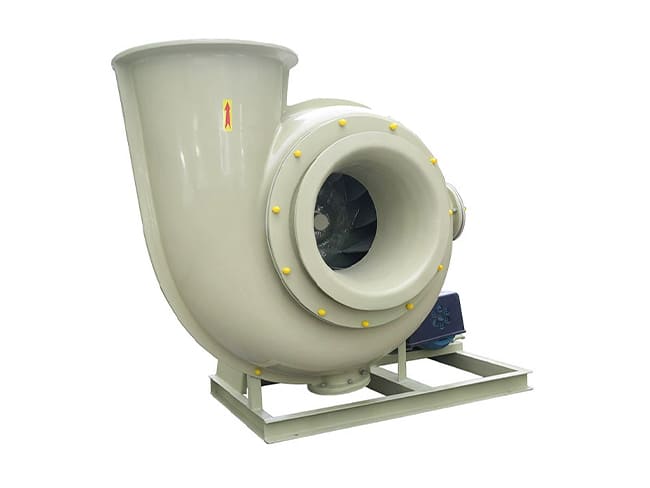
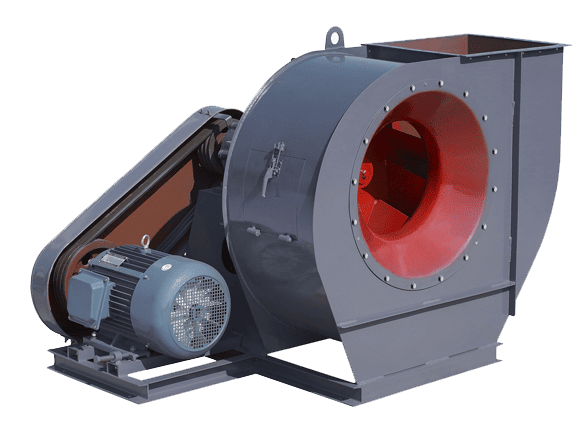
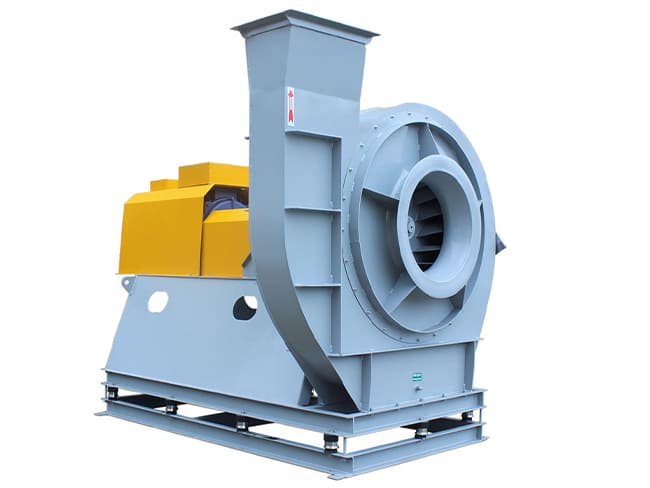
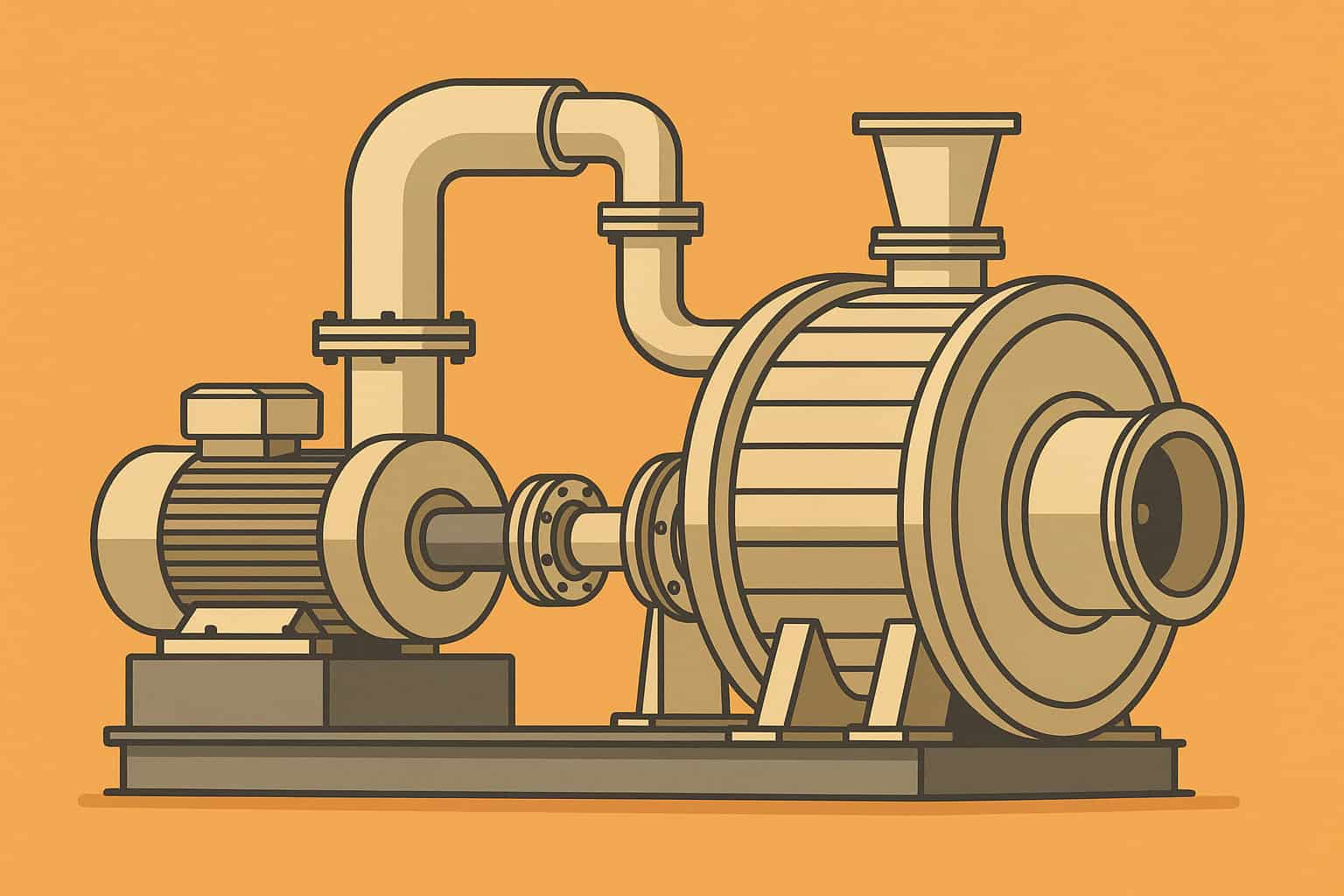
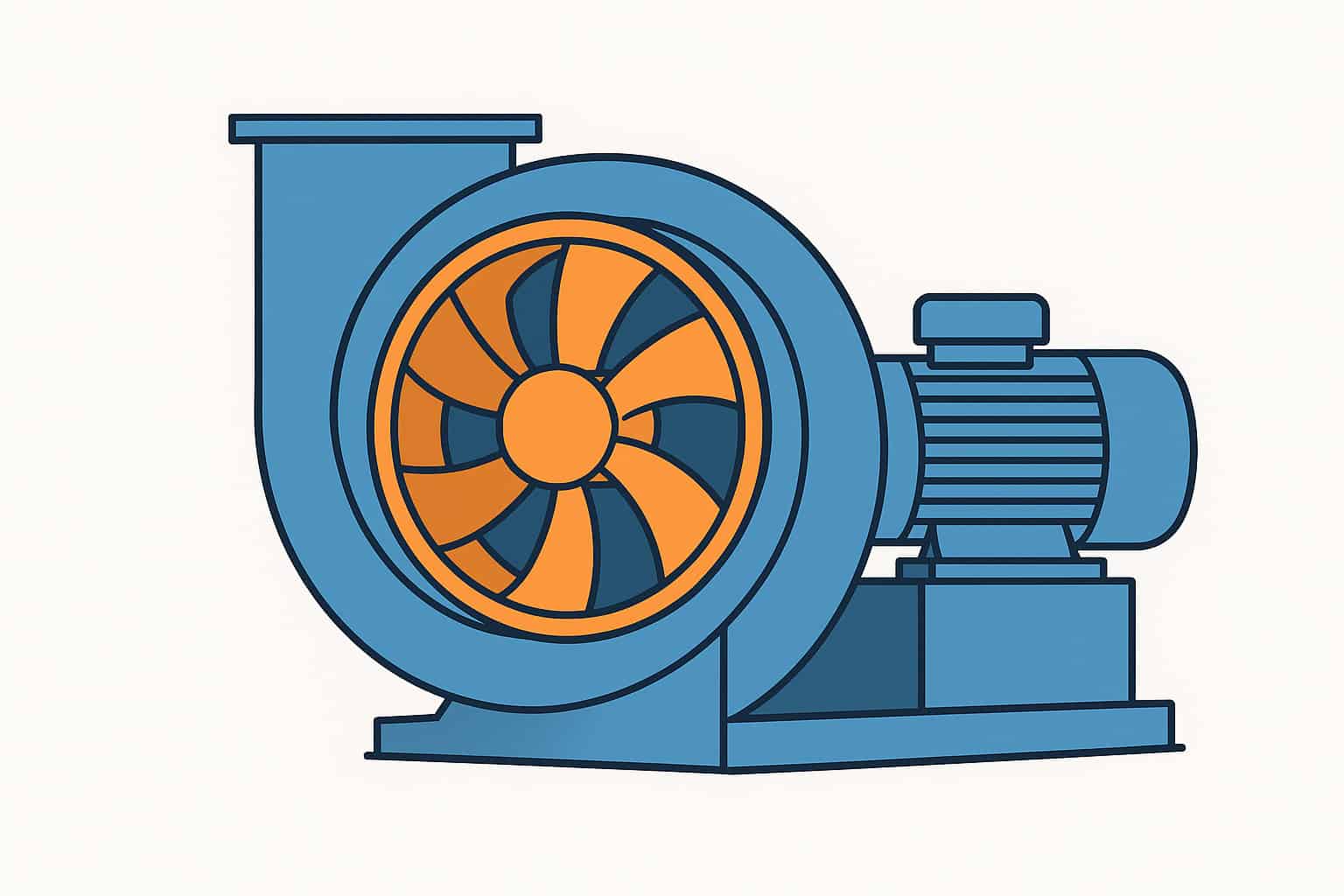
- Centrifugal main fans: used when higher static pressure is required or when site constraints and network characteristics favor centrifugal performance.
2) Booster fans
Booster fans are installed within the mine ventilation network to add pressure and increase airflow to a district, panel, or long airway branch. They are applied when depth, distance, or resistance makes it difficult for the main fan alone to supply enough air to a specific zone. Because booster fans affect pressure distribution, they require careful design, monitoring, and operational controls to prevent issues such as recirculation or unstable splits.
3) Auxiliary (local) ventilation fans
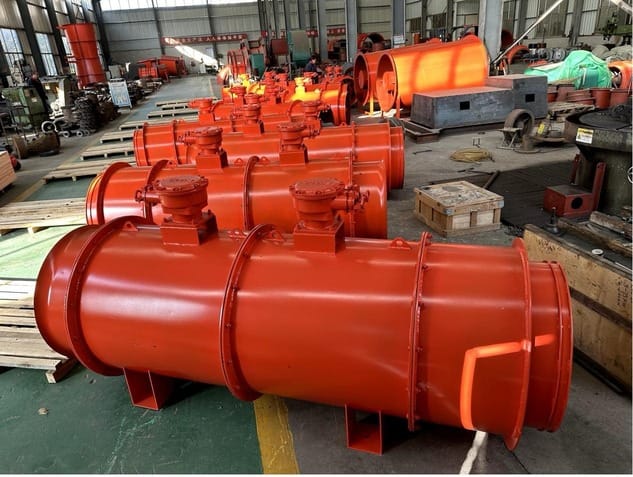
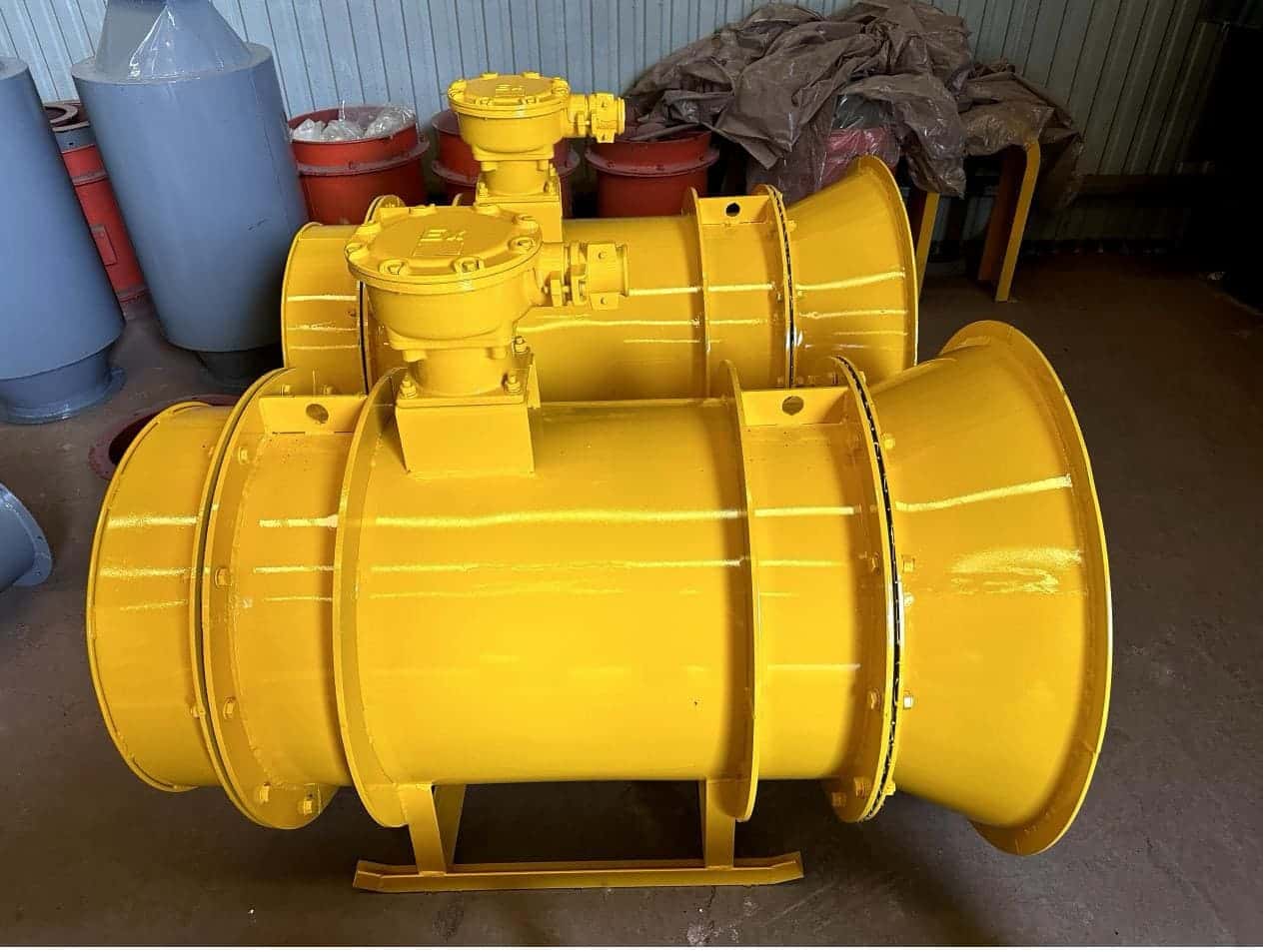
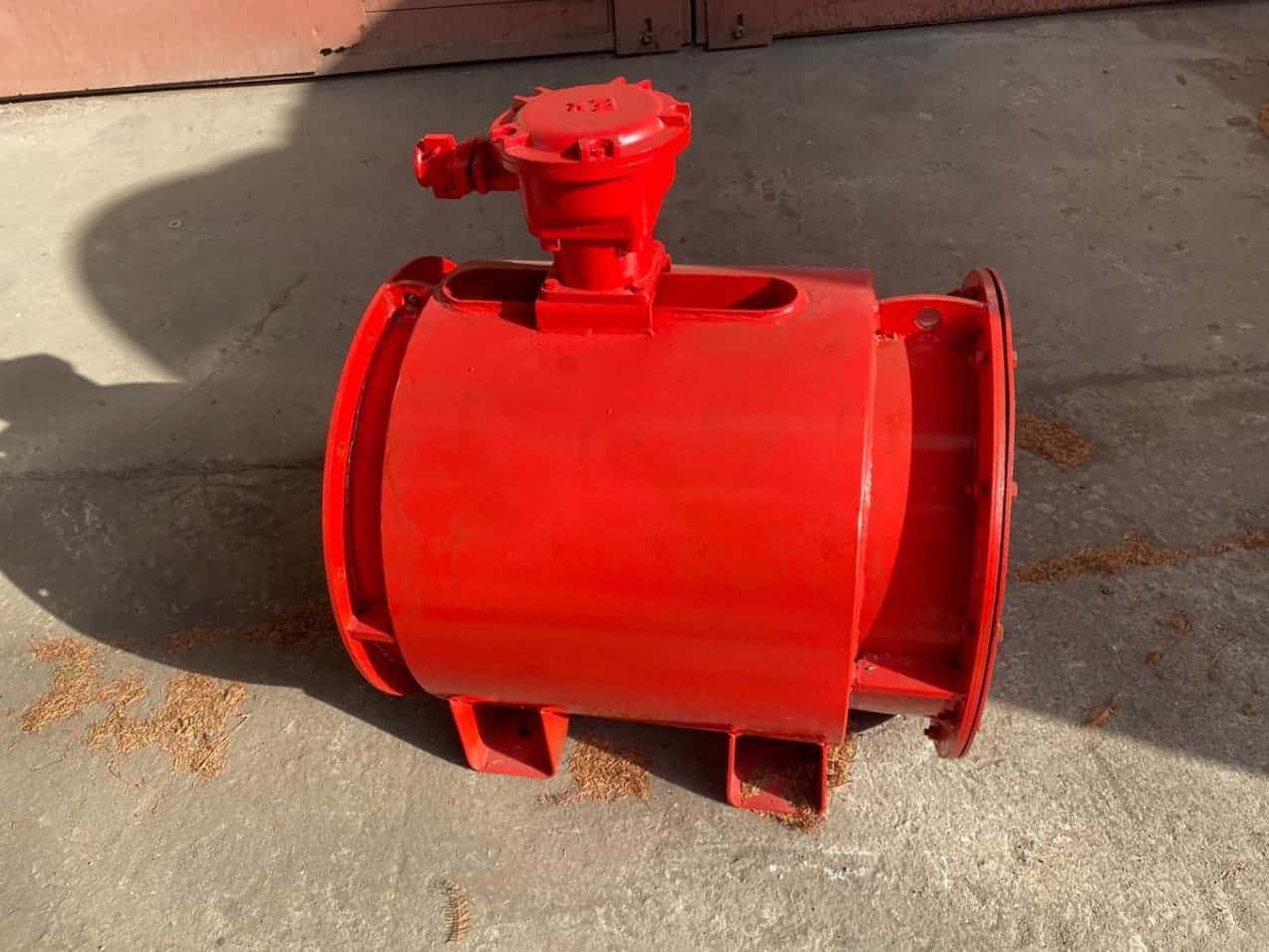
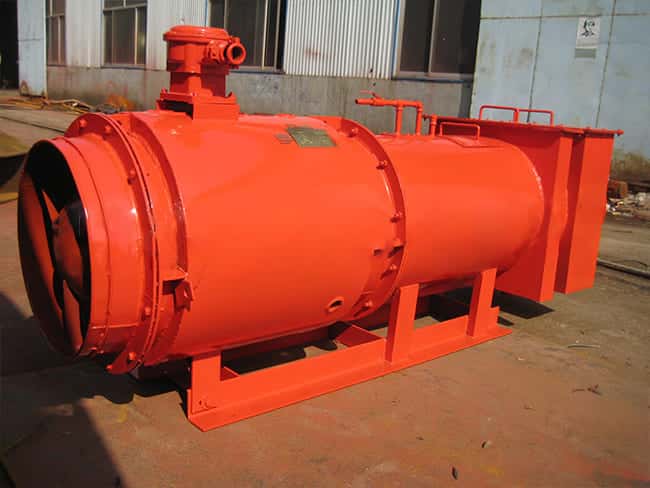
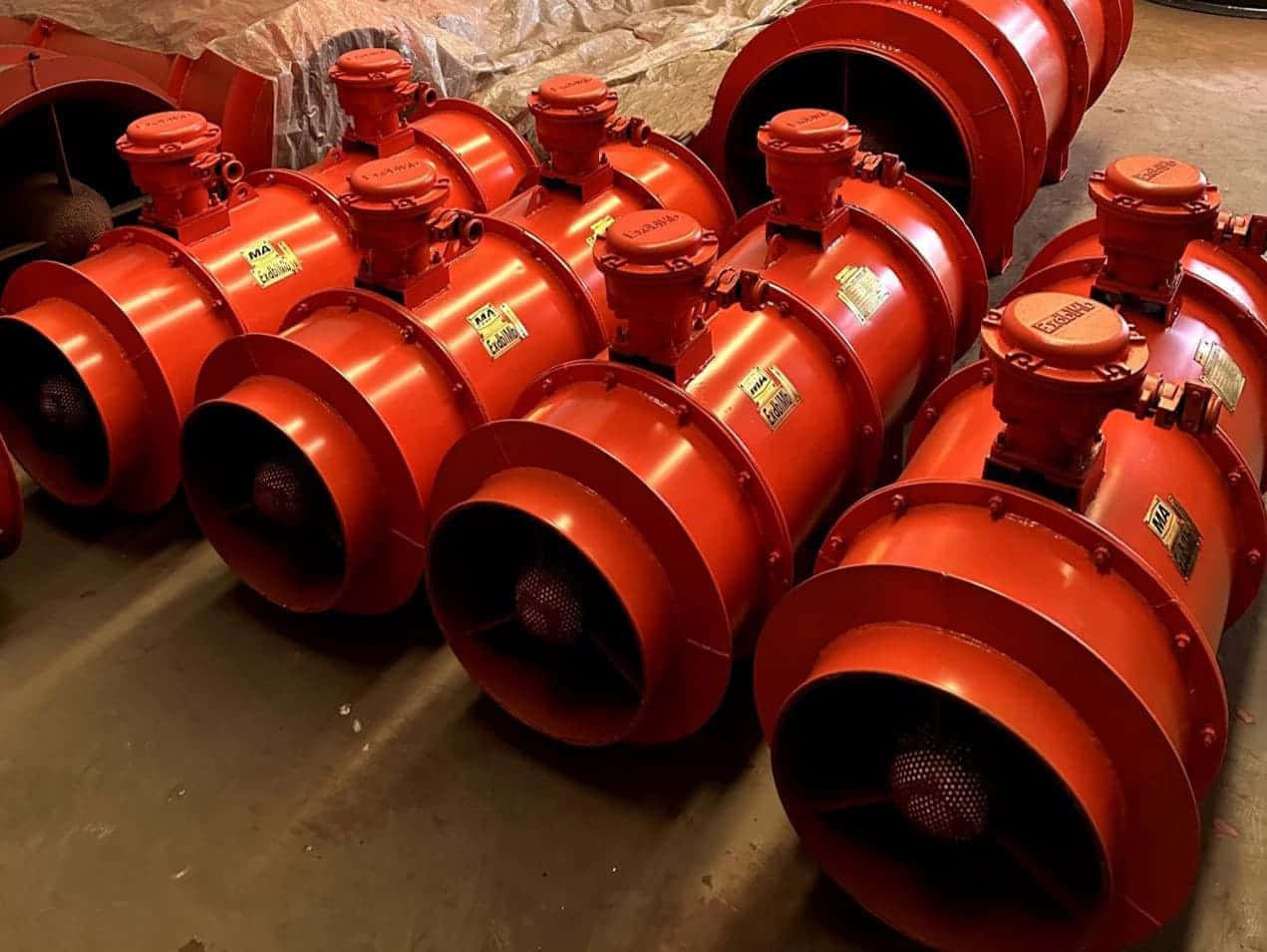
Auxiliary fans are used to ventilate development headings, blind ends, and active faces, often through ventilation ducting. These fans can be configured for forcing (blowing) or exhaust (extracting) ventilation depending on layout and control strategy. The key requirement is that the fan can overcome duct resistance and leakage while maintaining required airflow at the face.
4) Axial vs centrifugal: how the type is chosen
From a practical selection standpoint:
- Axial fans are often preferred for high airflow applications, with good efficiency and compact installation. They are common in main ventilation and many tunnel/underground uses.
- Centrifugal fans are often selected where higher pressure is needed, such as long duct systems, high-resistance sections, or specific industrial exhaust duties around mining facilities.
5) Critical mining-specific requirements
Beyond airflow and pressure, mining fans are commonly evaluated for:
- Durability: robust construction, suitable bearings, vibration control, and resistance to dust and moisture.
- Control capability: variable speed drives or adjustable pitch (for axial fans) to adapt to changing ventilation demand.
- Noise control: silencers and acoustic design, especially at surface stations and near occupied areas.
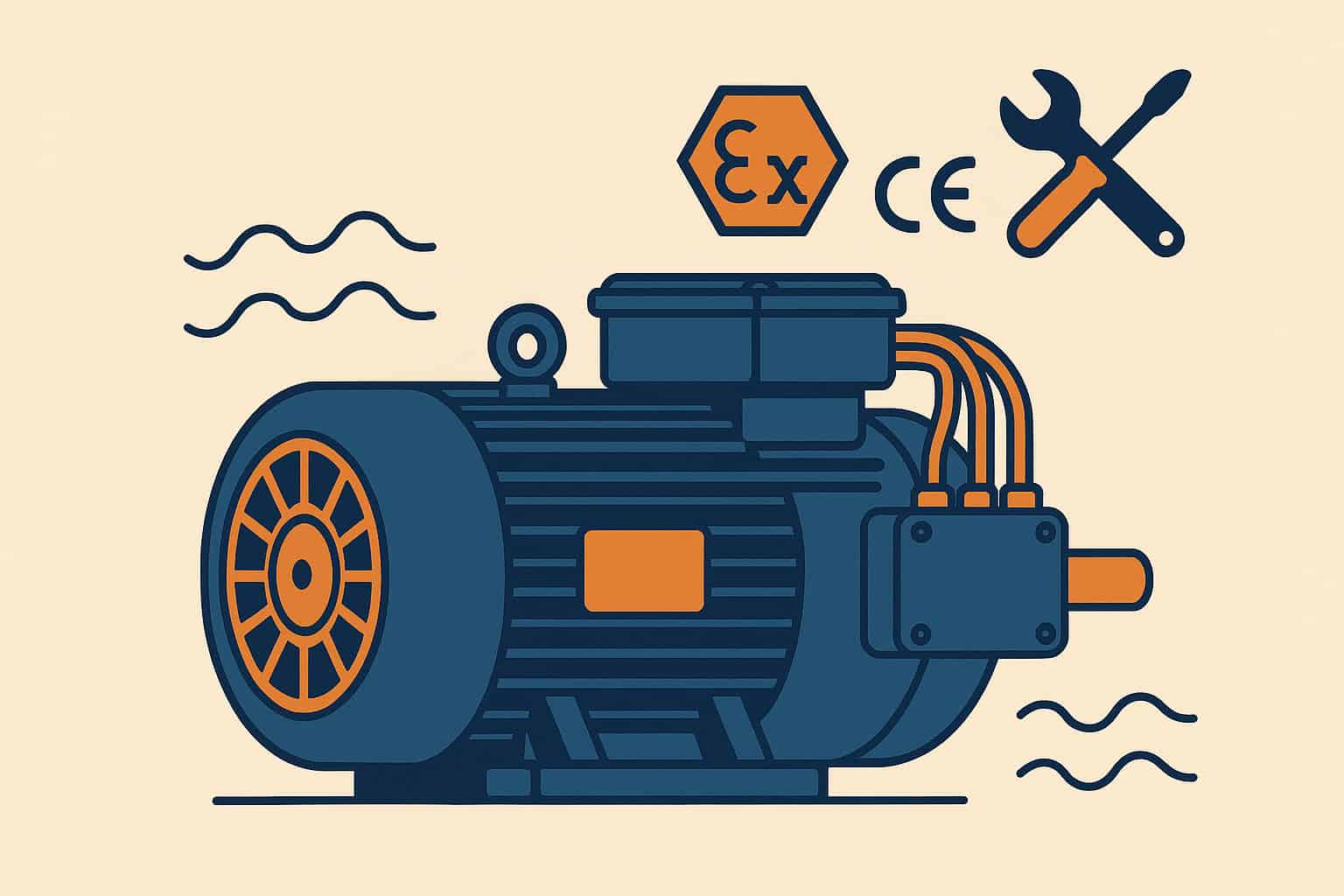
- Safety compliance: appropriate electrical protection, guarding, and explosion-proof options where required by site conditions.
In summary, mines use main fans to drive the overall ventilation system, booster fans to strengthen airflow in specific districts, and auxiliary fans to ventilate headings and faces. The most common aerodynamic designs are axial and centrifugal, selected by the duty point, network resistance, and the mine’s safety and reliability requirements.