
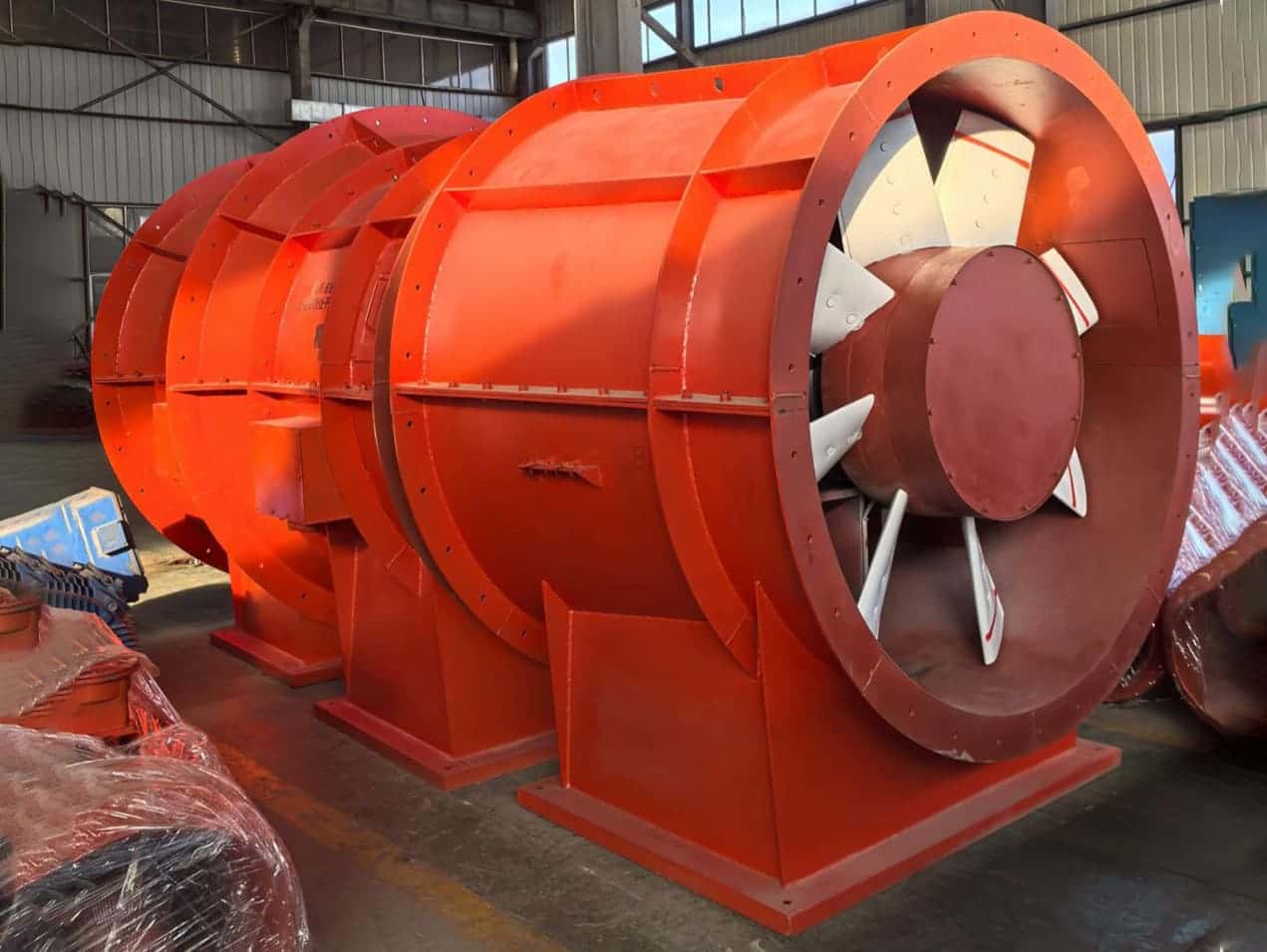
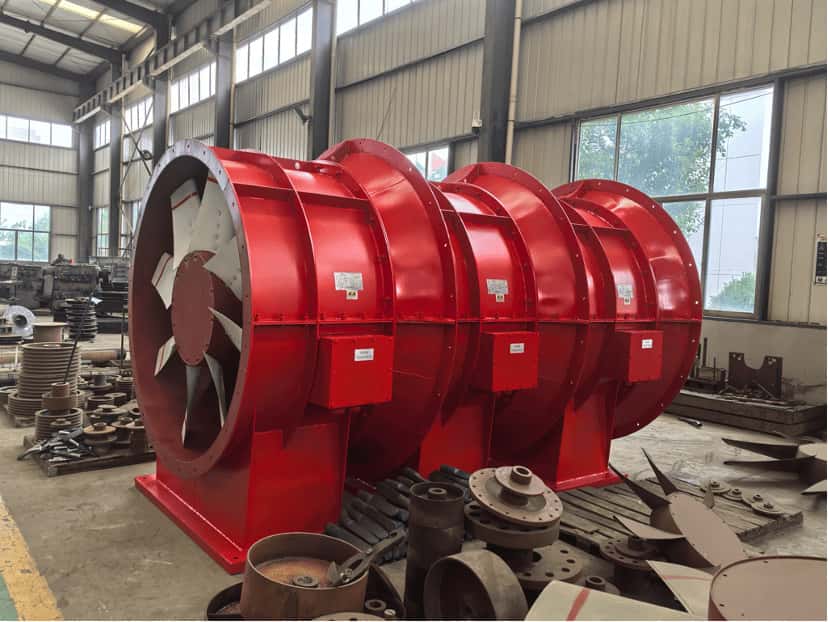
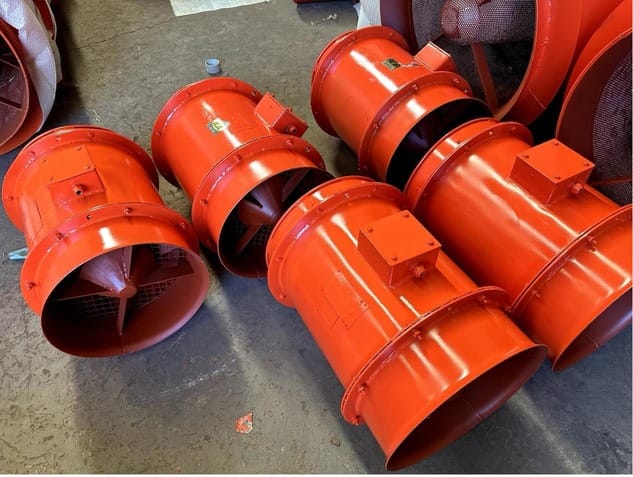
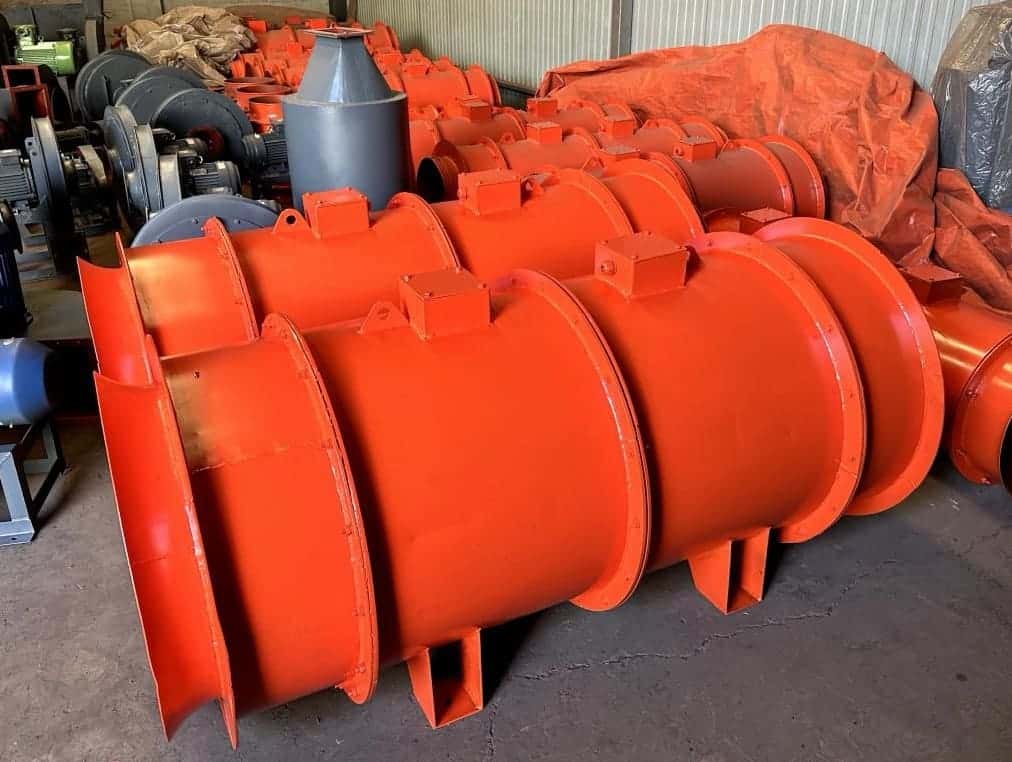
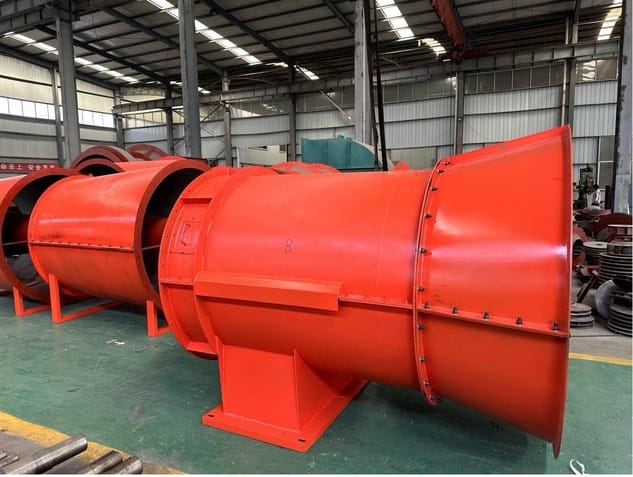
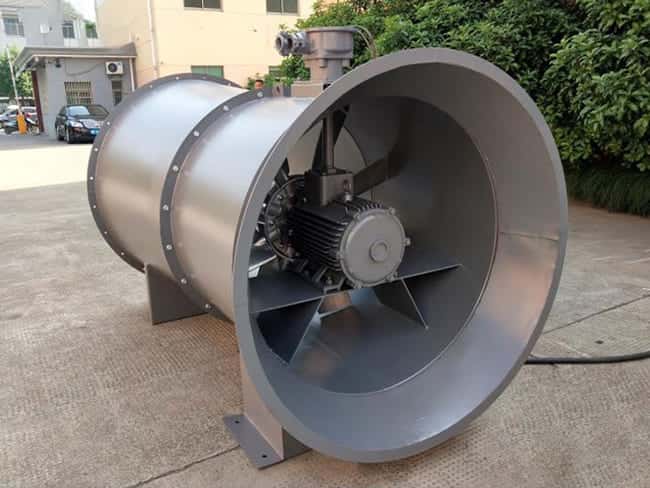
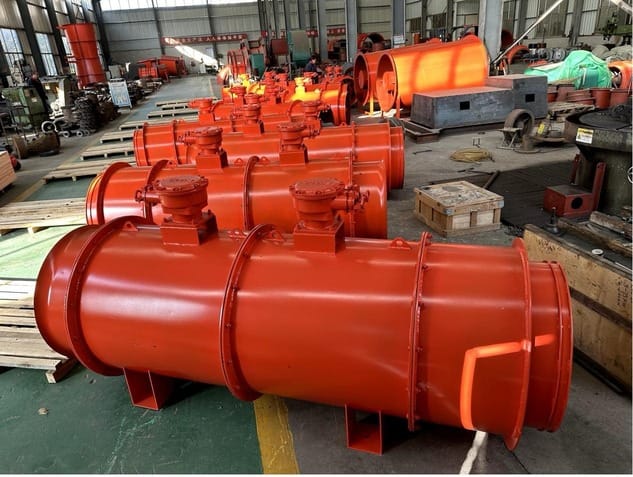
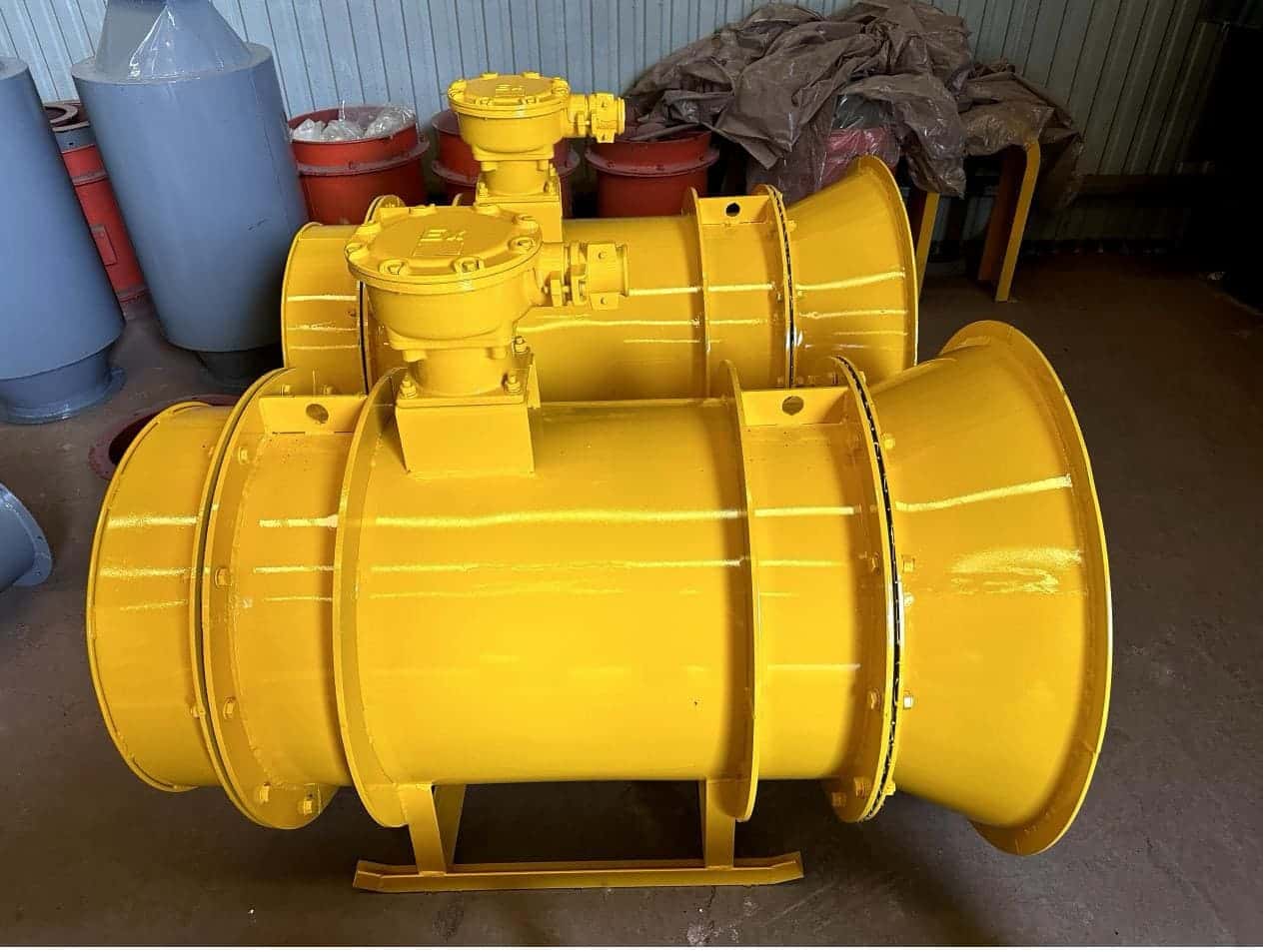
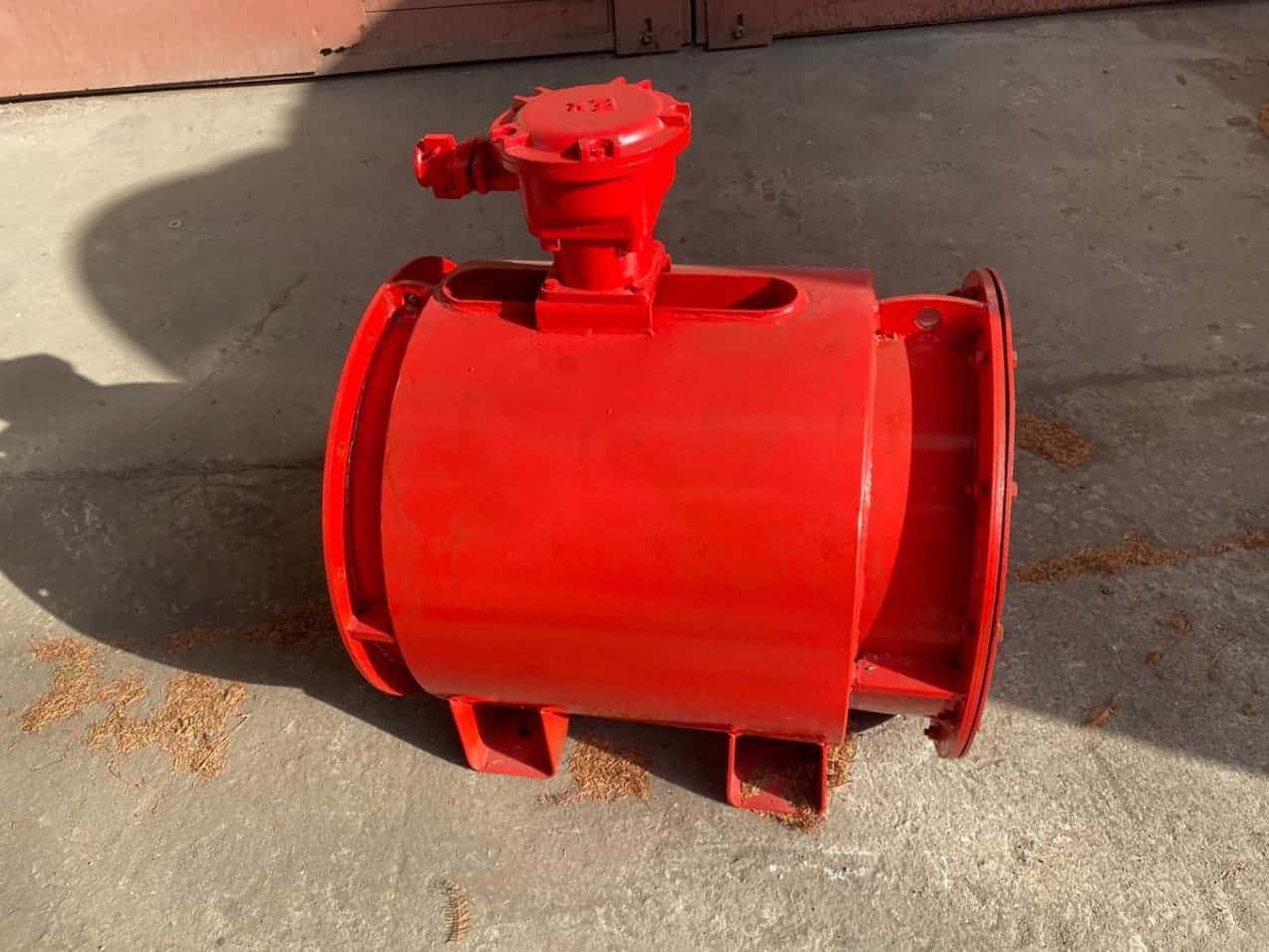
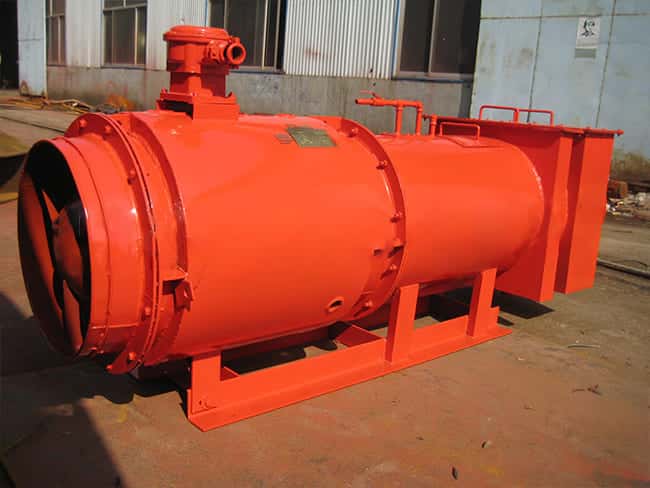
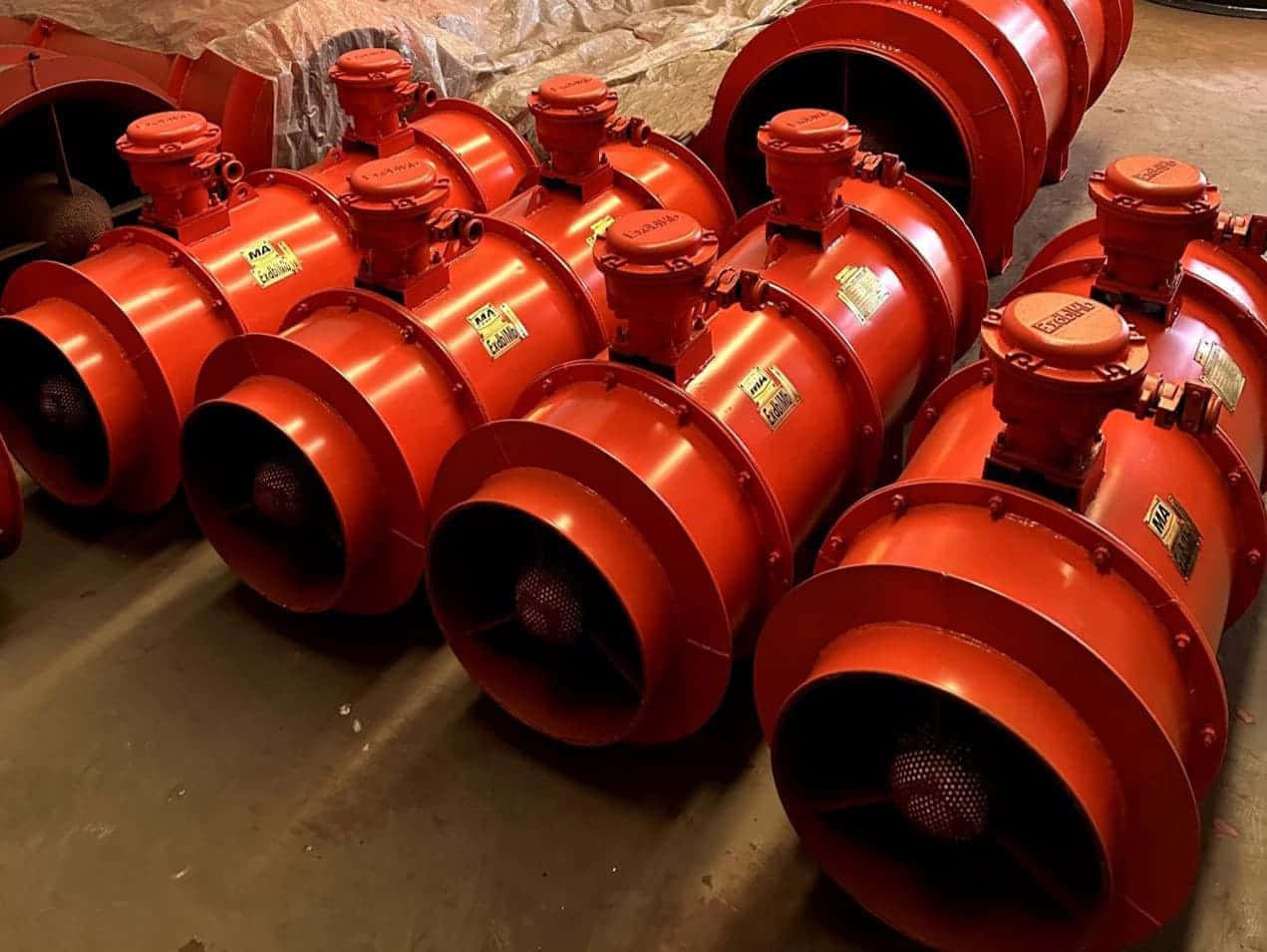
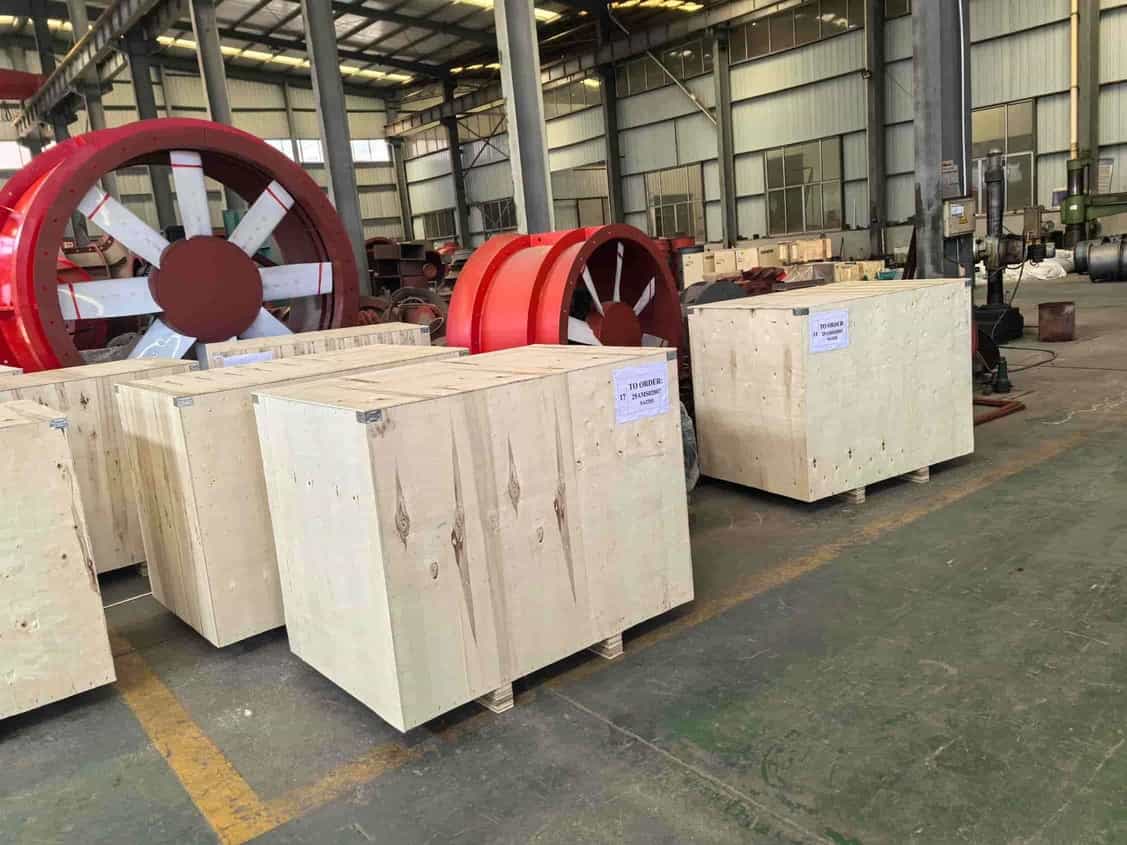
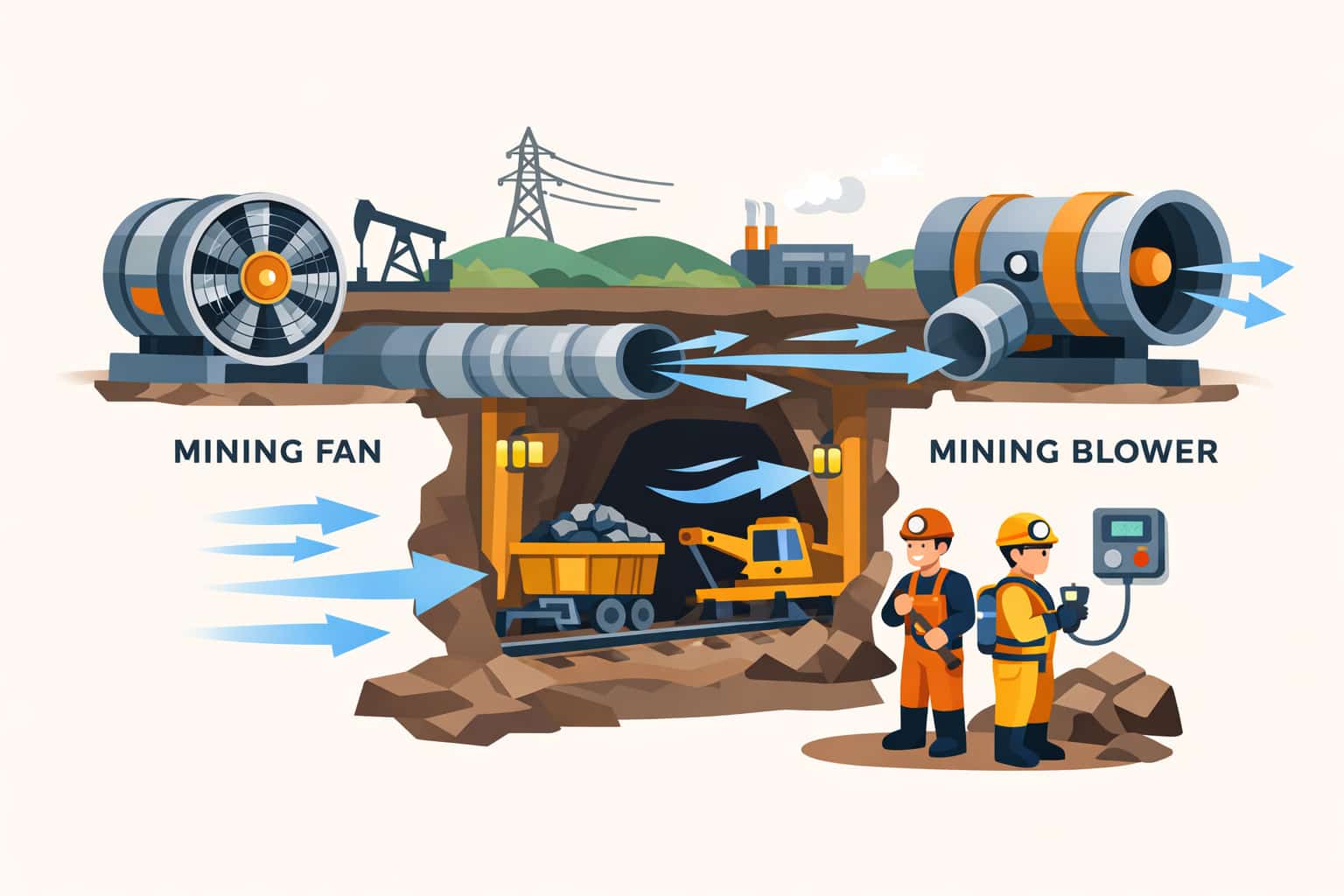
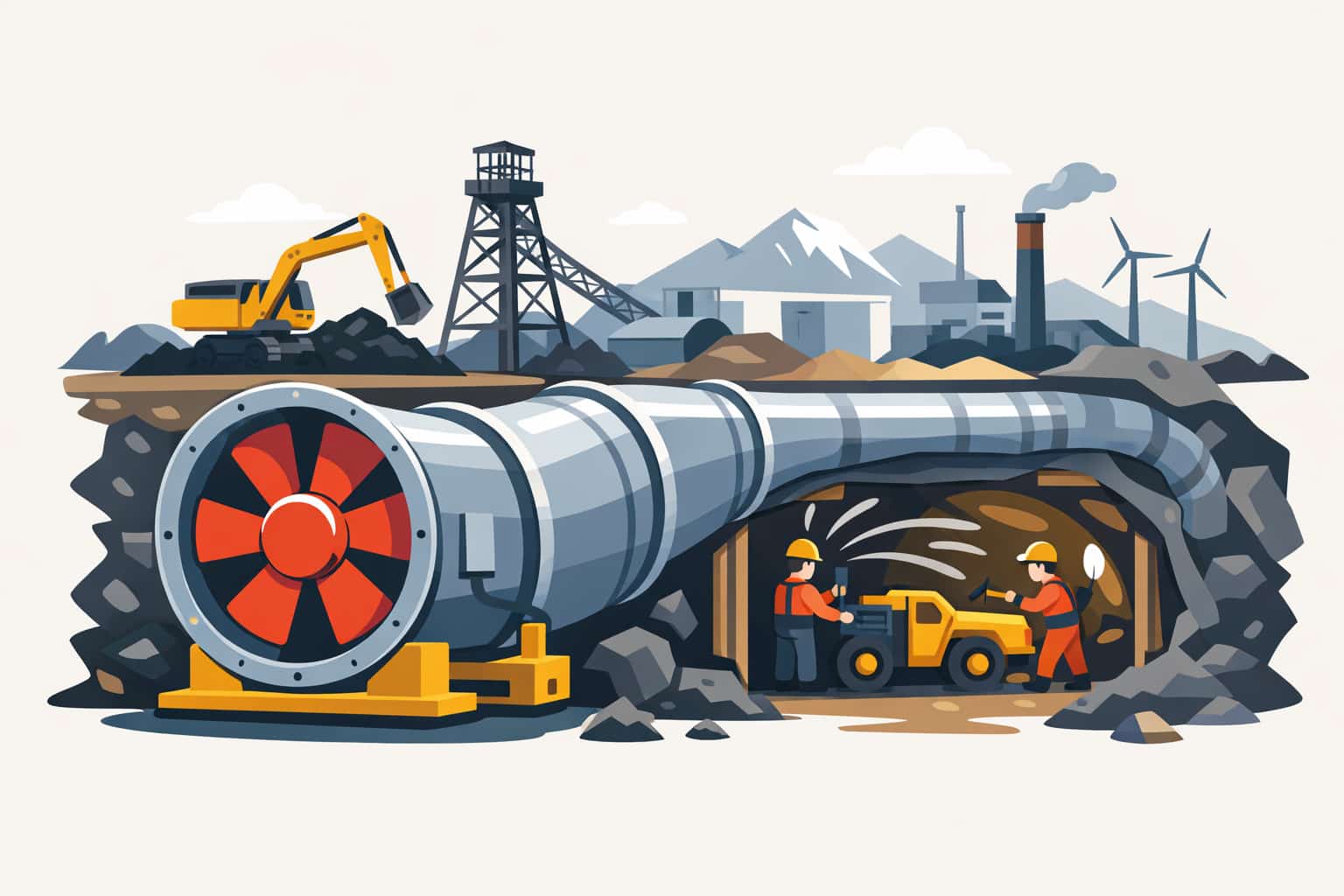

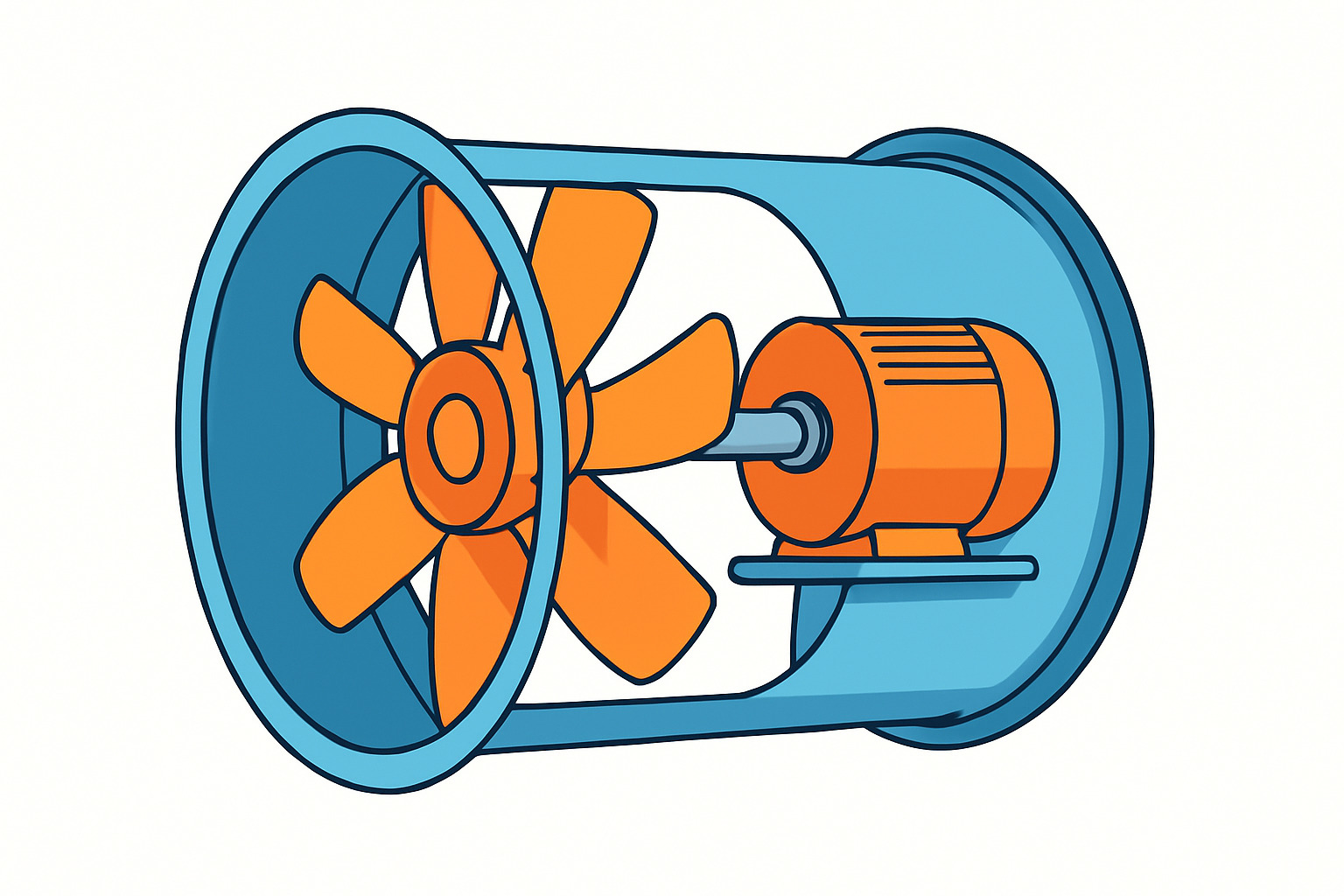
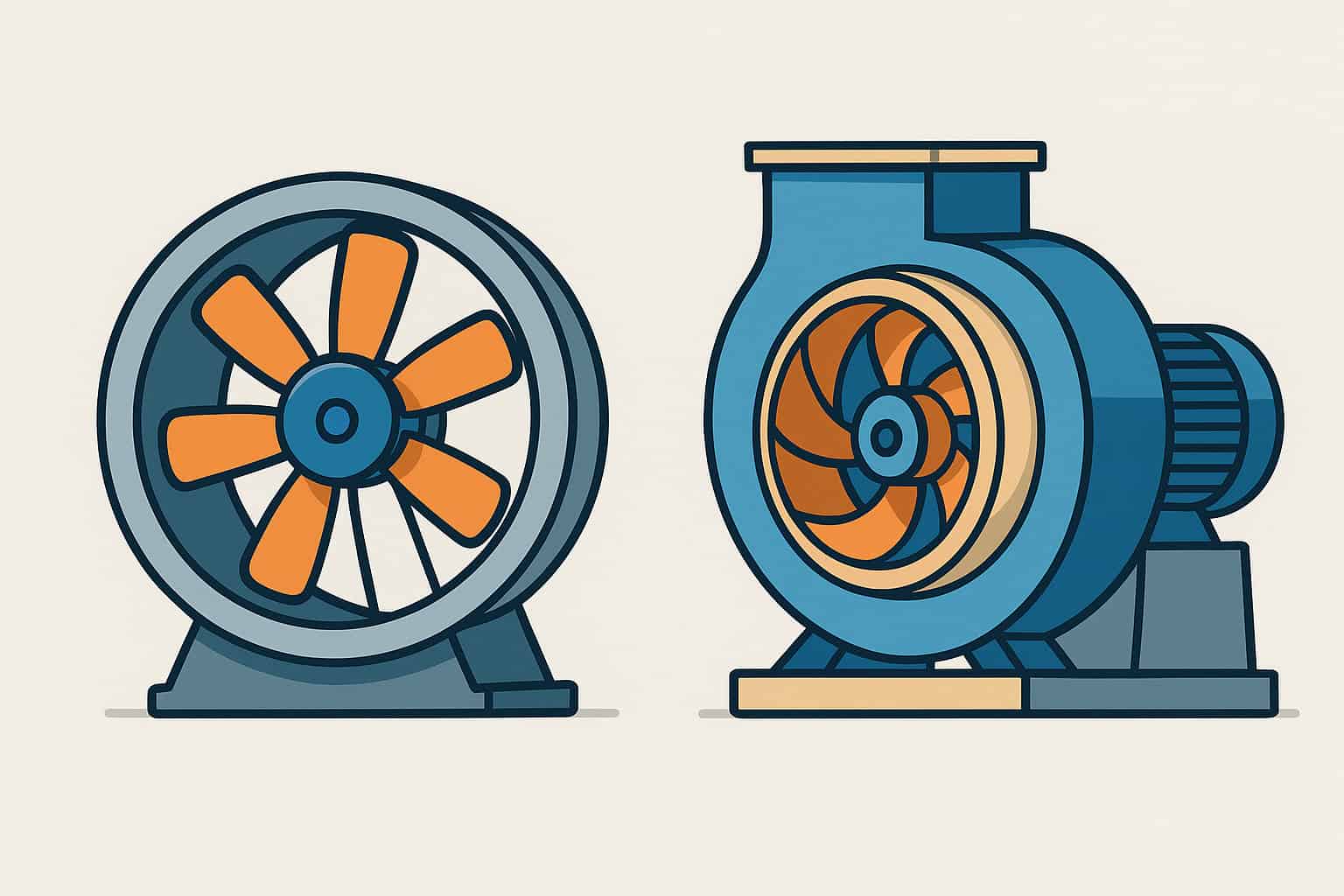
The fans used in tunnels are heavy-duty ventilation fans designed to move large volumes of air over long distances with reliable performance under harsh conditions. In most road, rail, and mining access tunnels, the primary choice is an axial tunnel fan, often used in the form of a jet fan mounted directly inside the tunnel, or as large axial fans installed at ventilation shafts and portals.
Axial tunnel fans and jet fans move air parallel to the fan shaft, like a propeller. Jet fans are compact axial units installed in the tunnel crown or on side brackets. They produce high-velocity jets that entrain surrounding air and push it along the tunnel, creating a longitudinal airflow. This airflow carries vehicle exhaust gases and dust towards portals or exhaust shafts where the air is discharged. Jet fans are popular because they are relatively easy to install, can be spaced along the tunnel as needed, and can be individually controlled to match changing traffic and environmental conditions.
At shaft locations or portals, tunnels often use large axial exhaust or supply fans. These fans handle the total tunnel airflow, working in combination with jet fans to draw polluted air out and bring fresh air in. For long tunnels or systems with cross passages and ventilation caverns, multiple fans may be arranged to create both longitudinal and transverse airflow patterns.
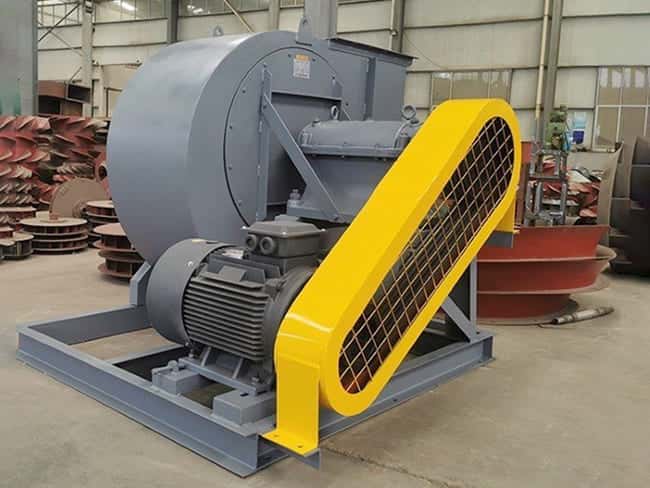
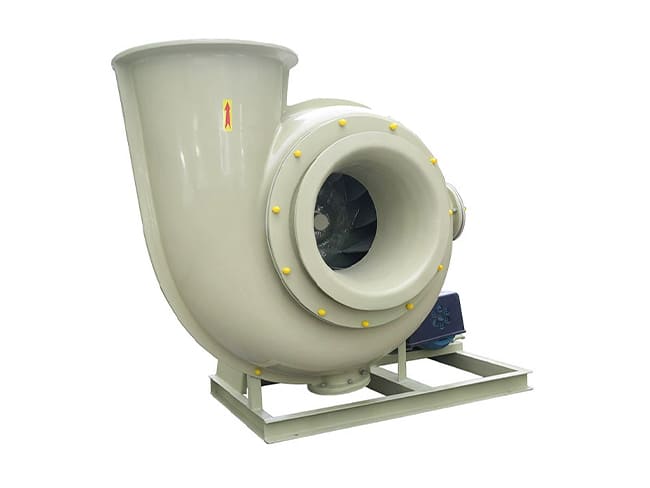
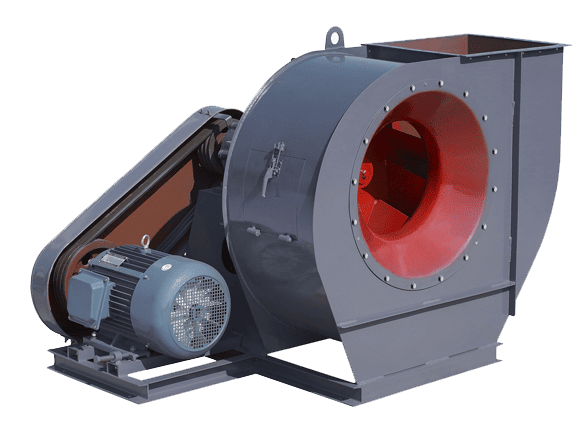
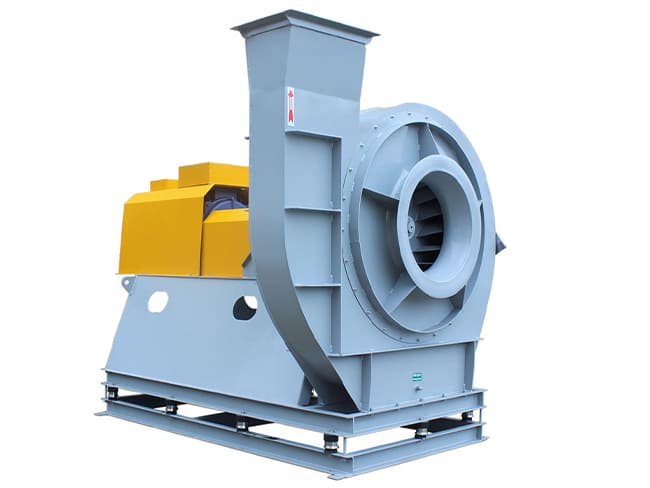
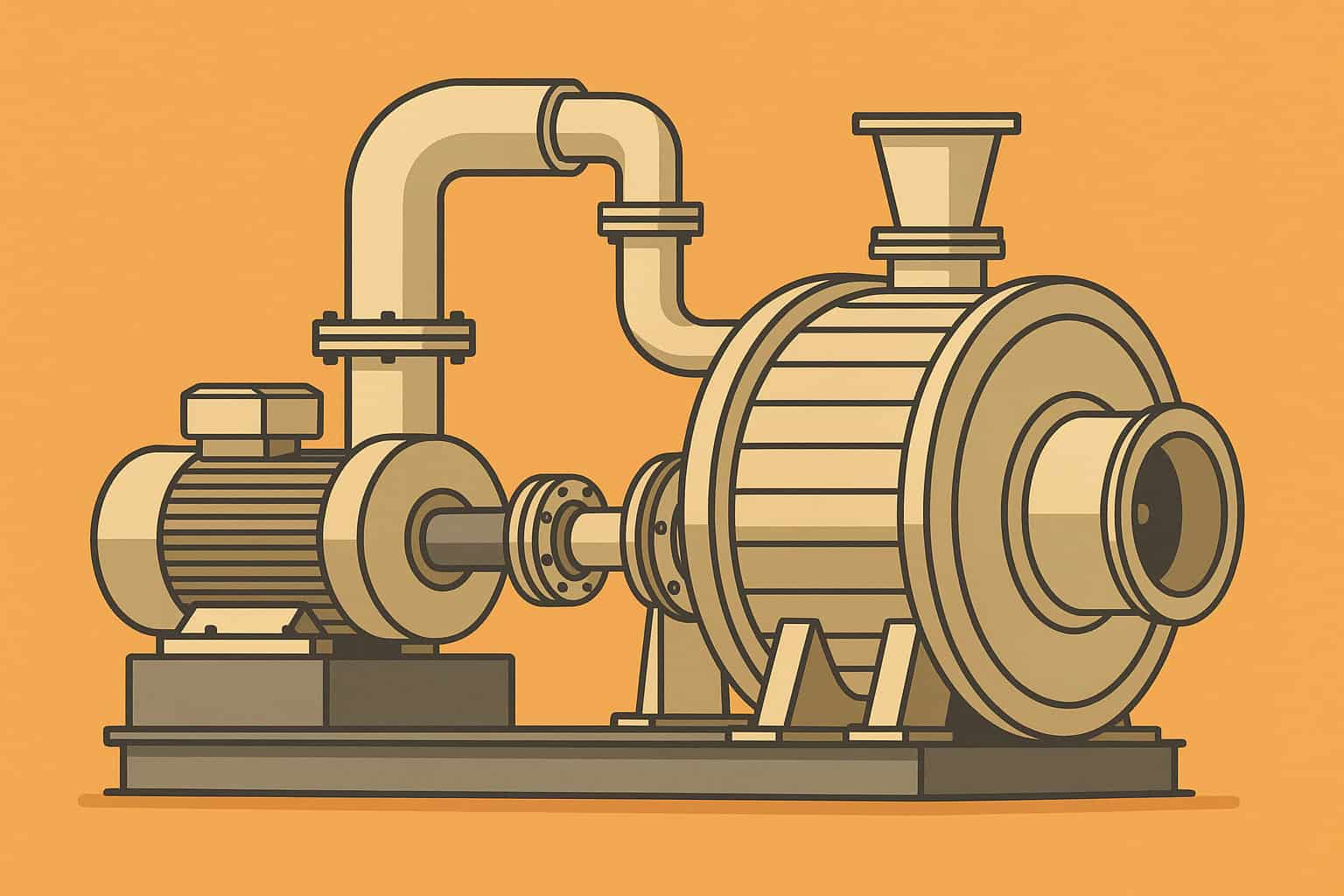
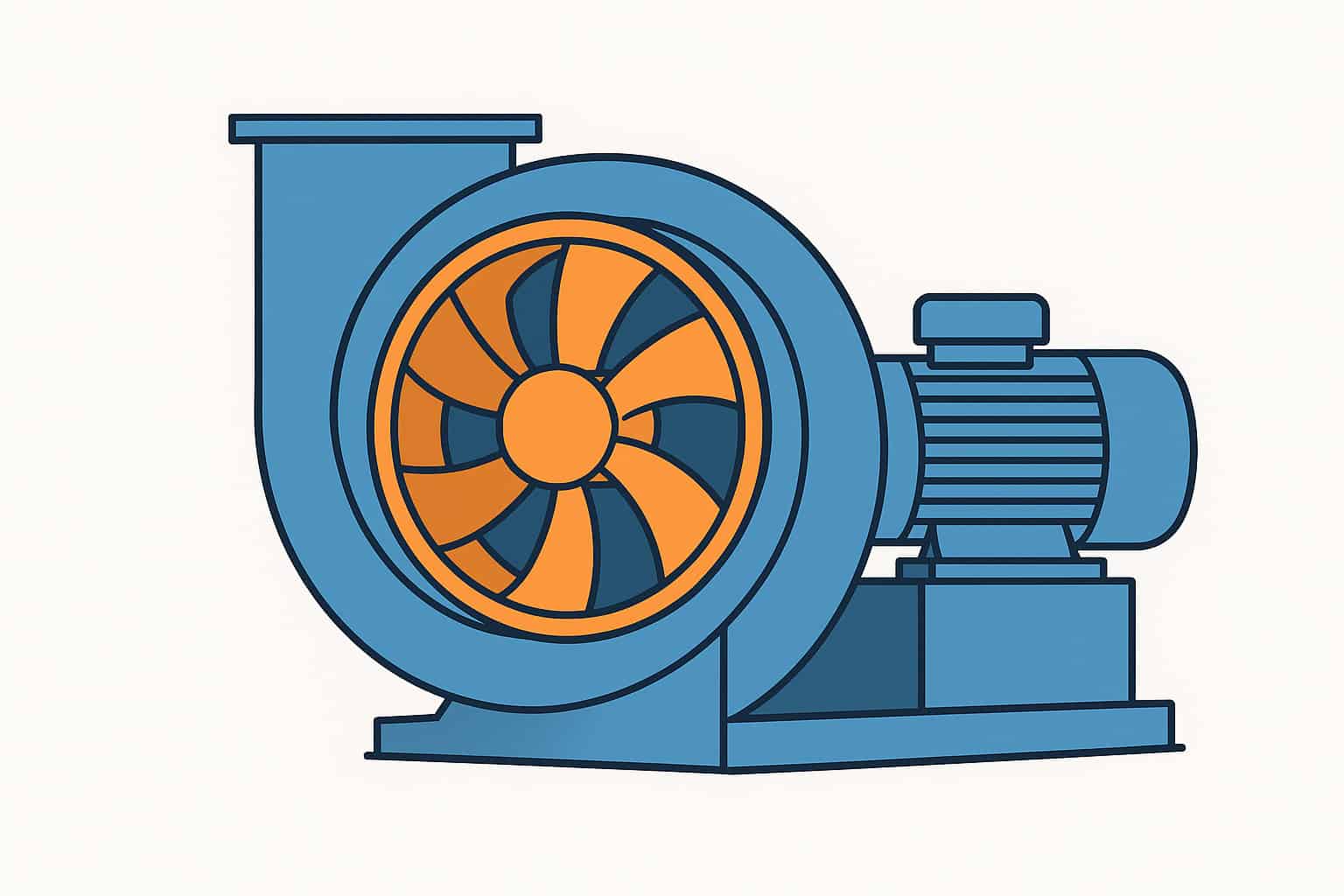
In some applications—especially around industrial plants or where filtration systems are installed—centrifugal fans may also be used. These radial fans generate higher static pressure and are well suited to ducted systems with filters, silencers, or high-resistance components. However, for the main tunnel air movement along the bore, axial fans remain the most common solution due to their efficiency at high flow rates.
All tunnel ventilation fans must meet strict requirements for reliability and safety. Many are designed for high-temperature operation so they can continue to run during tunnel fires, controlling smoke and heat long enough for people to evacuate and for emergency services to respond. Casings, impellers, motors, and cable systems are selected for durability in dusty, humid, and sometimes corrosive environments.
In summary, the fans used in tunnels are typically axial tunnel fans and jet fans, supported in some cases by centrifugal fans in ducted systems. Together, they provide the airflow needed to control exhaust gases, dust, heat, and smoke throughout the tunnel’s life.