
When engineers ask what type of axial fan is the most efficient, they are usually comparing propeller fans, tube-axial fans and vane-axial fans for a given duty. In practice, the most efficient axial fans are typically well-designed vane-axial fans or high-quality tube-axial fans operating near their best efficiency point and correctly matched to the ventilation system’s resistance.
Propeller fans are the simplest axial design. They have blades on a hub and little or no casing. They can be efficient at moving large volumes of air at very low pressure, such as for general building ventilation. However, when system resistance increases—for example, with ducts, bends or filters—their efficiency usually drops quickly. They are not the best choice where significant static pressure is required.
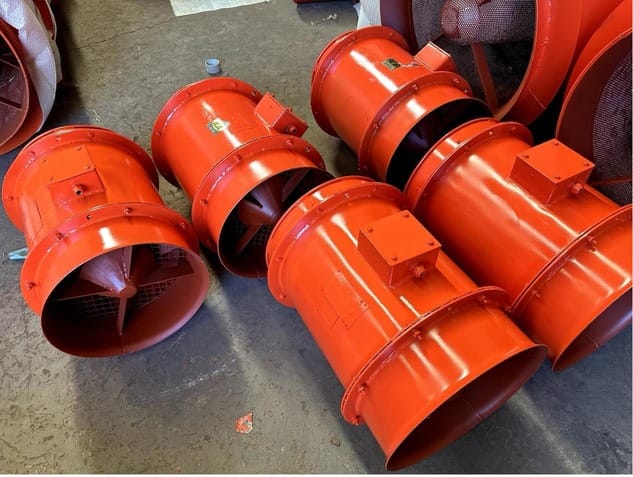
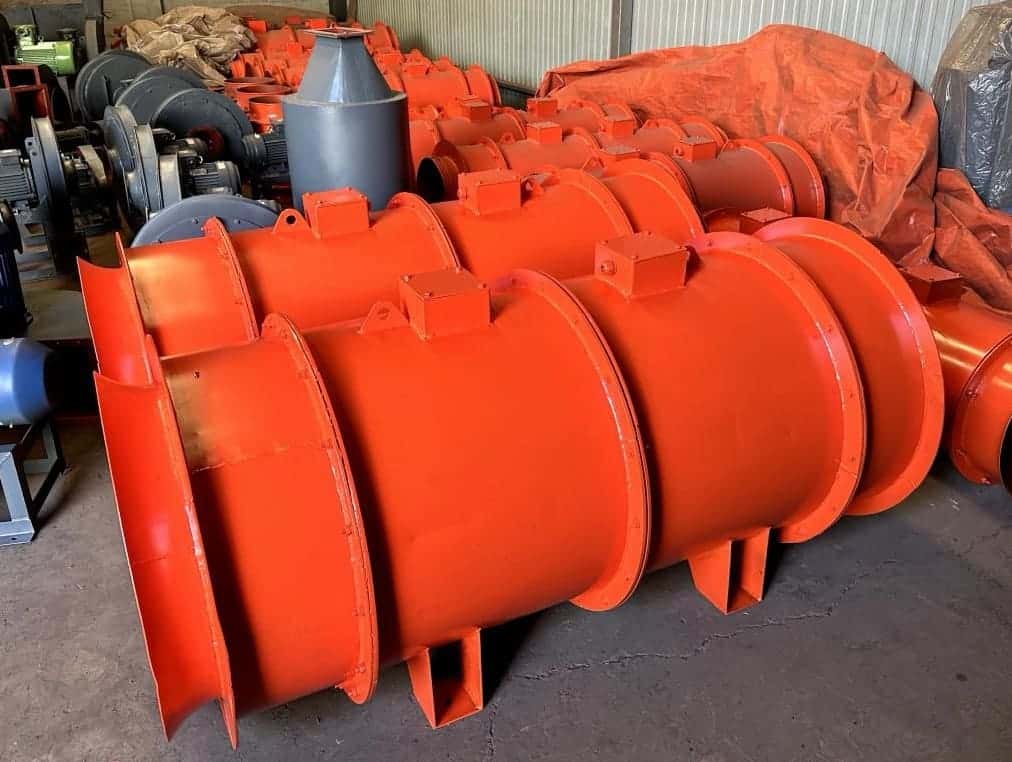
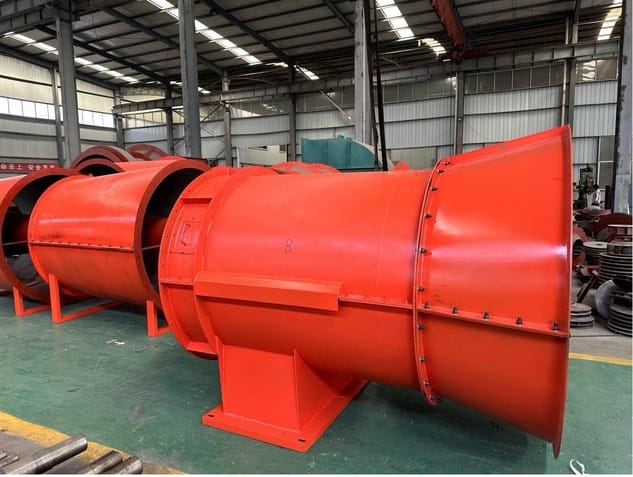
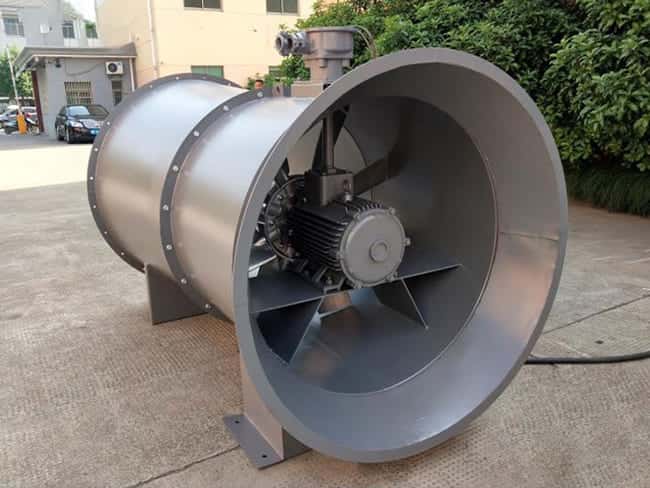
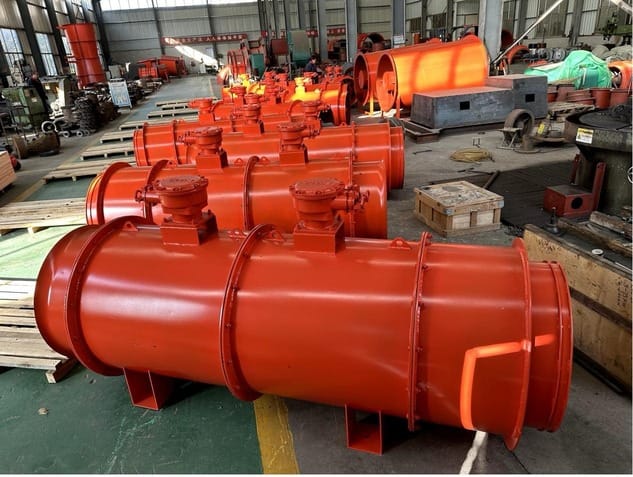
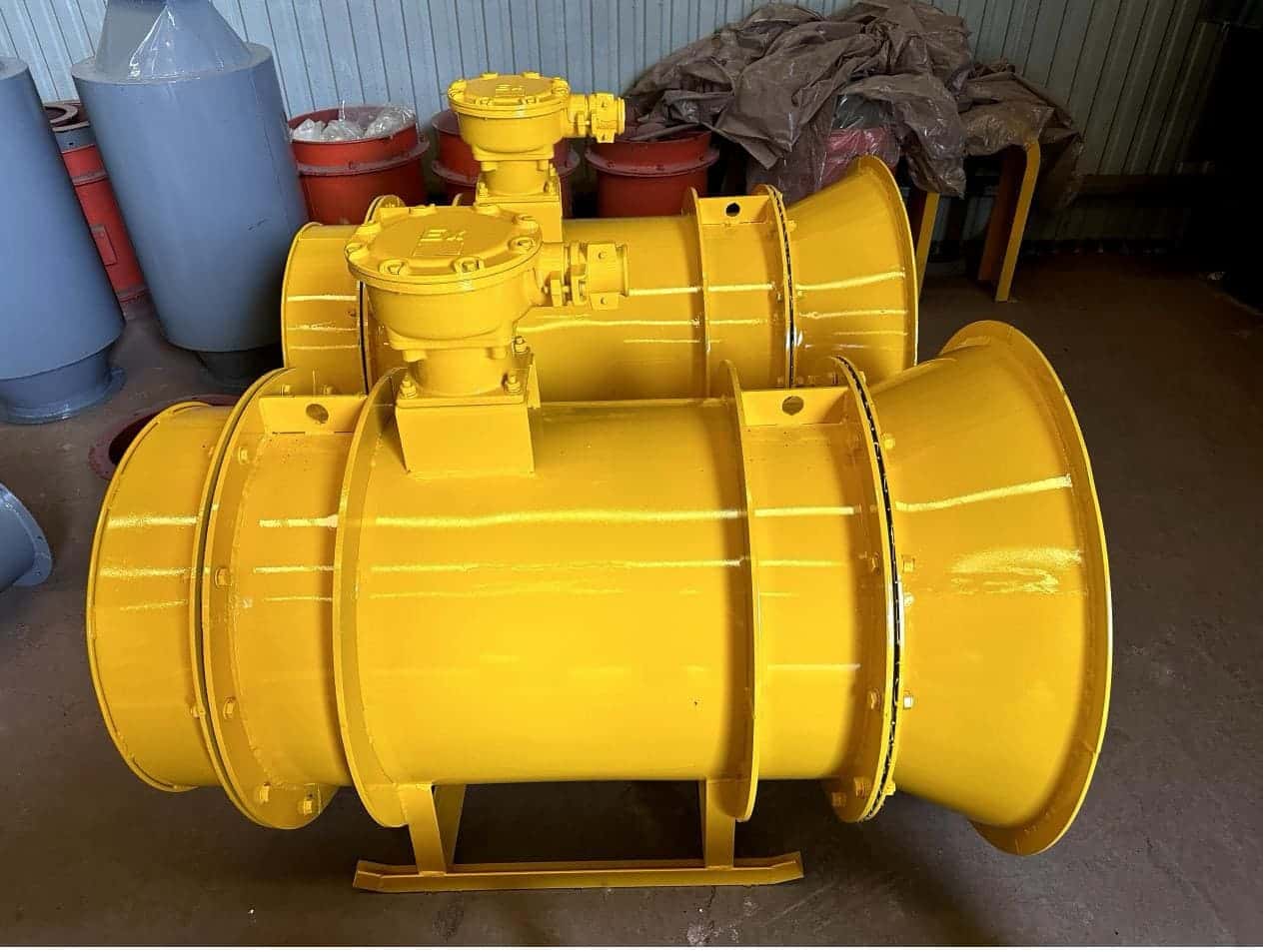
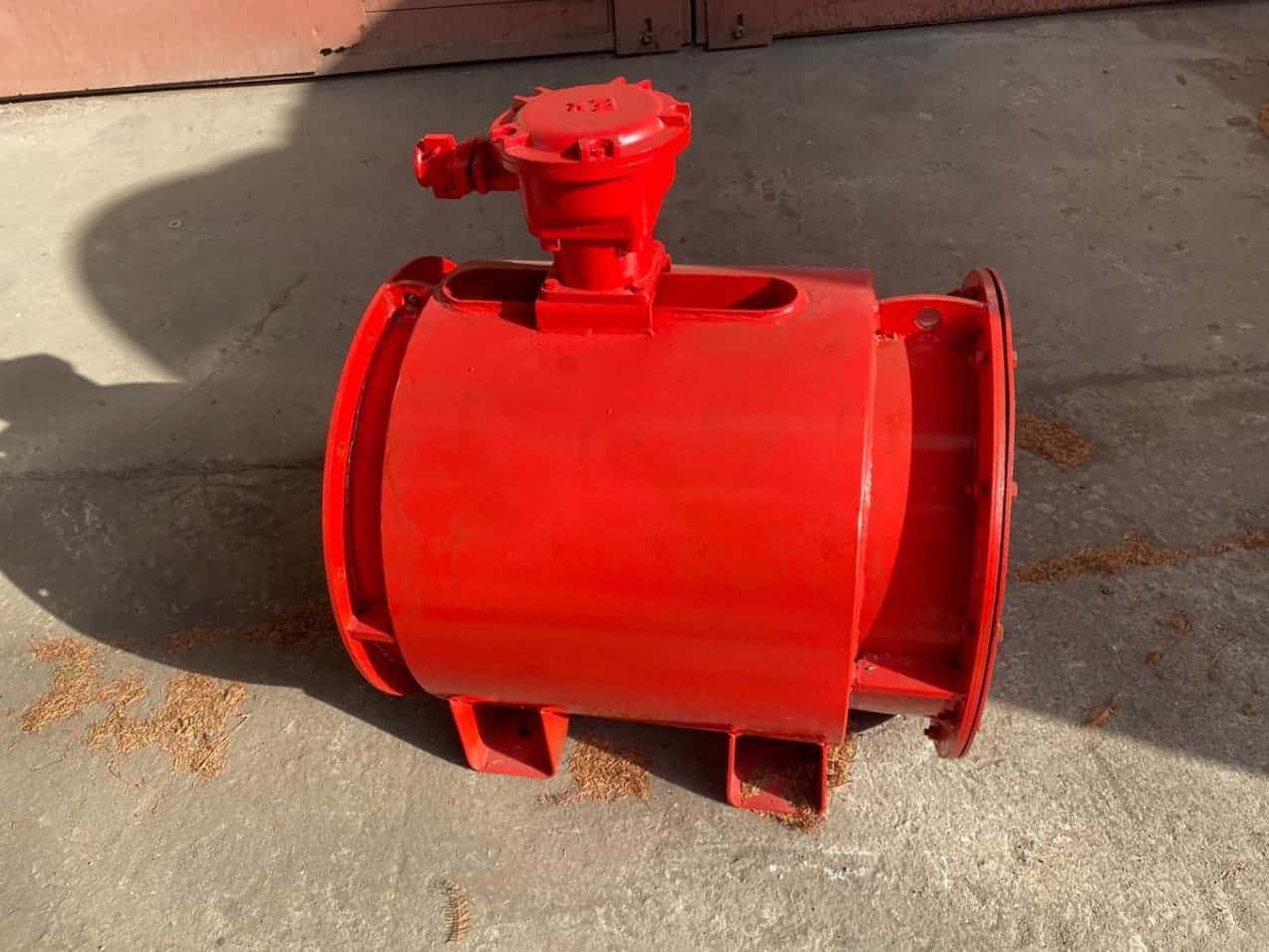
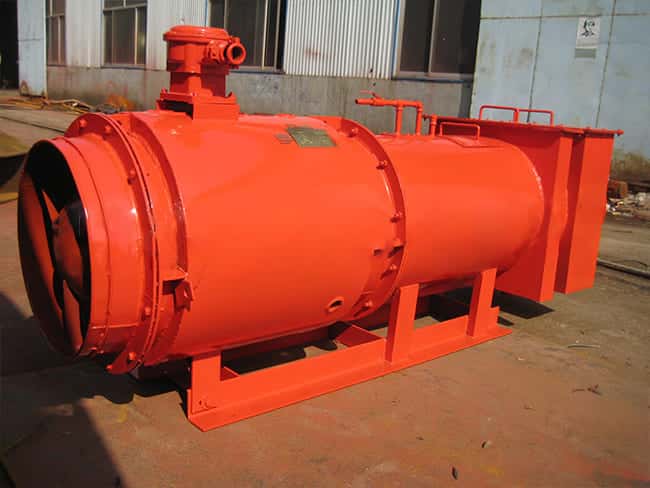
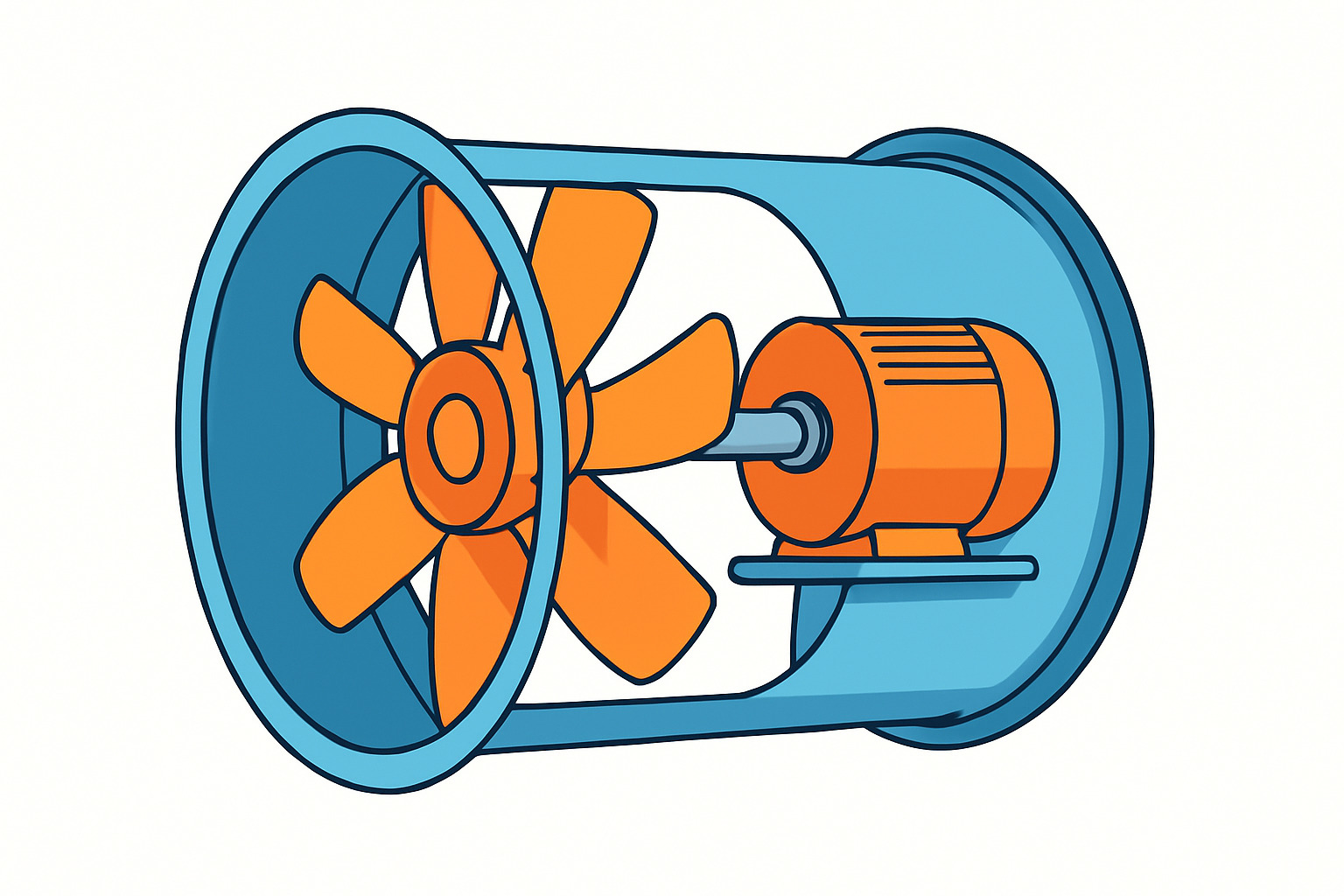
Tube-axial fans place the impeller inside a cylindrical casing. The casing helps guide the flow and reduces losses due to recirculation. For moderate pressure duties, a good tube-axial fan can be quite efficient, especially in auxiliary mine ventilation and industrial duct systems. However, the flow leaving the rotor still has swirl, and some of the energy is carried as rotational motion rather than useful static pressure.
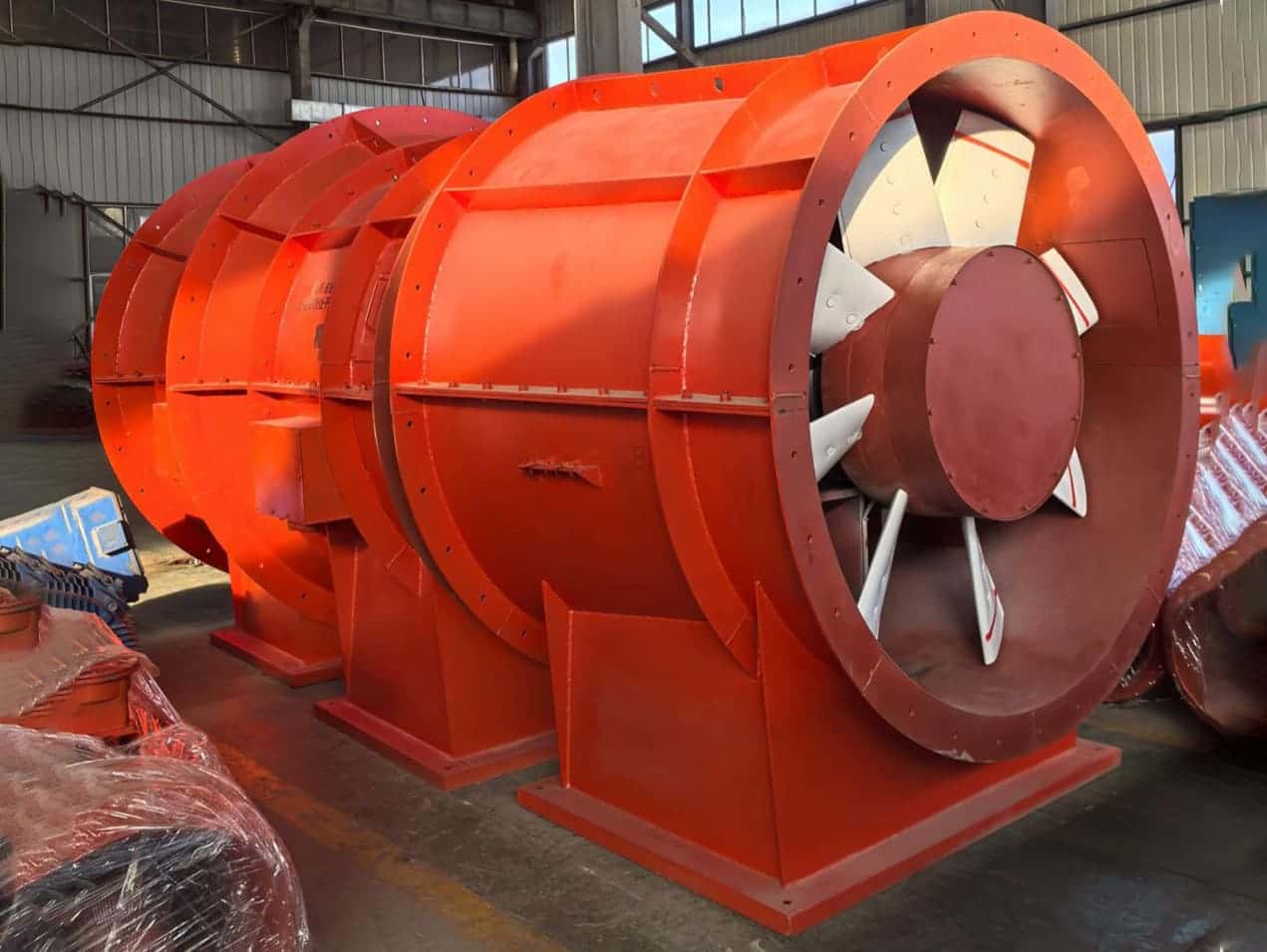
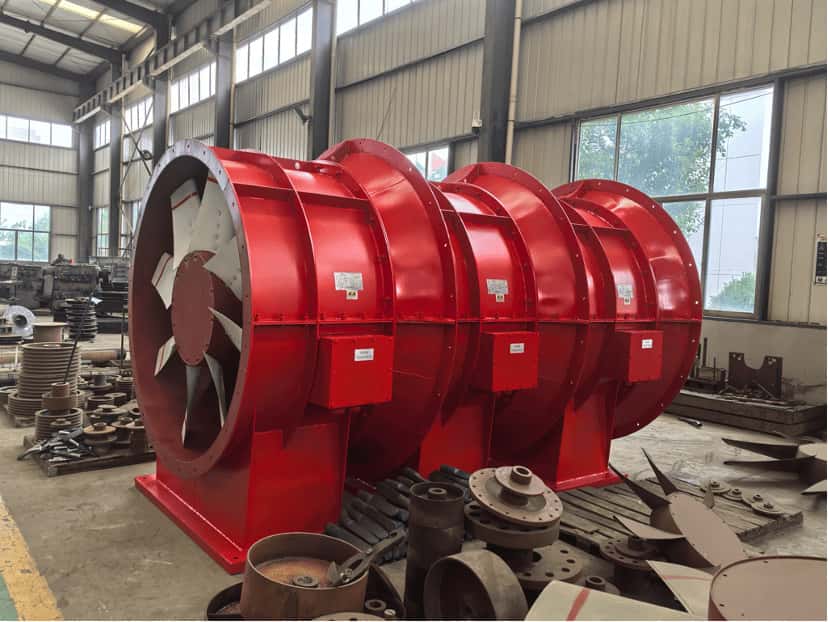
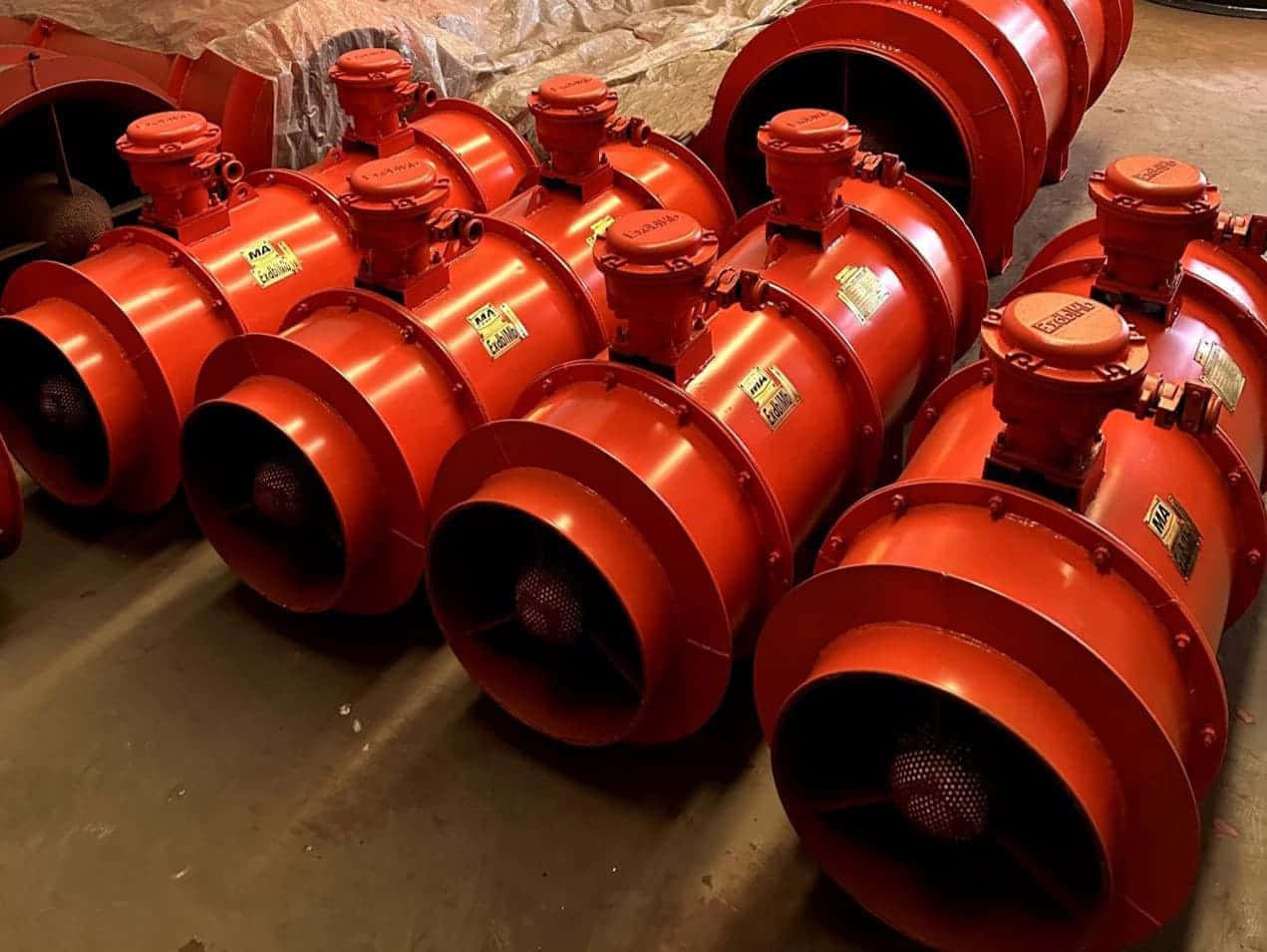
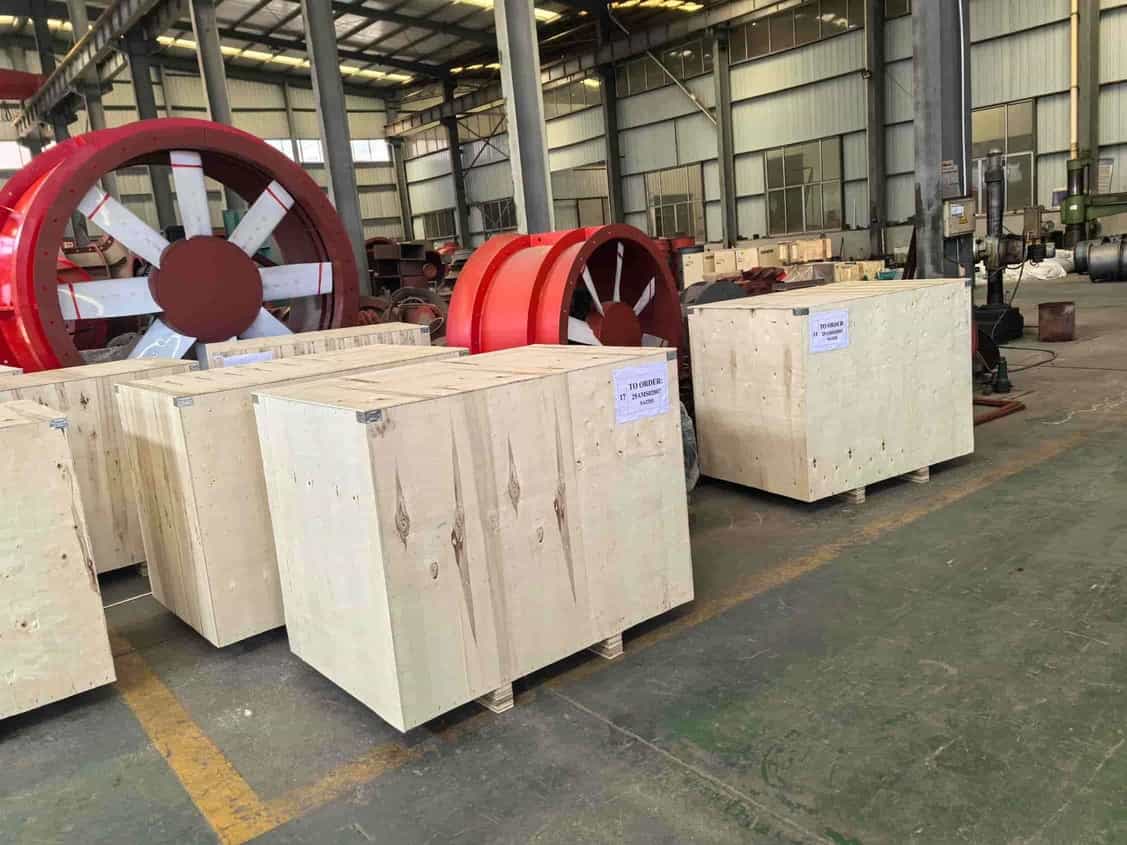
Vane-axial fans add stationary guide vanes before and/or after the rotating blades. These vanes straighten the airflow, converting more of the dynamic energy into static pressure. Because of this energy recovery, vane-axial fans can achieve higher efficiency and higher pressure than simple propeller or tube-axial designs for many industrial and mining applications. For long tunnels, main mine ventilation and demanding process ventilation, high-quality vane-axial fans are often the most efficient axial option.
However, fan type alone does not guarantee efficiency. Blade aerodynamics, surface finish, tip clearance, inlet and outlet conditions, and operating point all play major roles. Even an efficient vane-axial fan will waste energy if it is forced to operate far from its best efficiency point—for example, due to poor system design, incorrect sizing or throttling with dampers.
To maximise efficiency in a real project, designers usually start with an axial fan type appropriate for the pressure range (often a vane-axial or good tube-axial fan for mining and industrial ventilation), then carefully match its performance curve to the system resistance. They also pay attention to inlet boxes, silencers, diffusers and duct transitions so that the fan sees smooth, uniform flow.
In summary, the most efficient axial fans are usually well-designed vane-axial fans or high-quality tube-axial fans operating near their design duty point in a properly engineered ventilation system.