
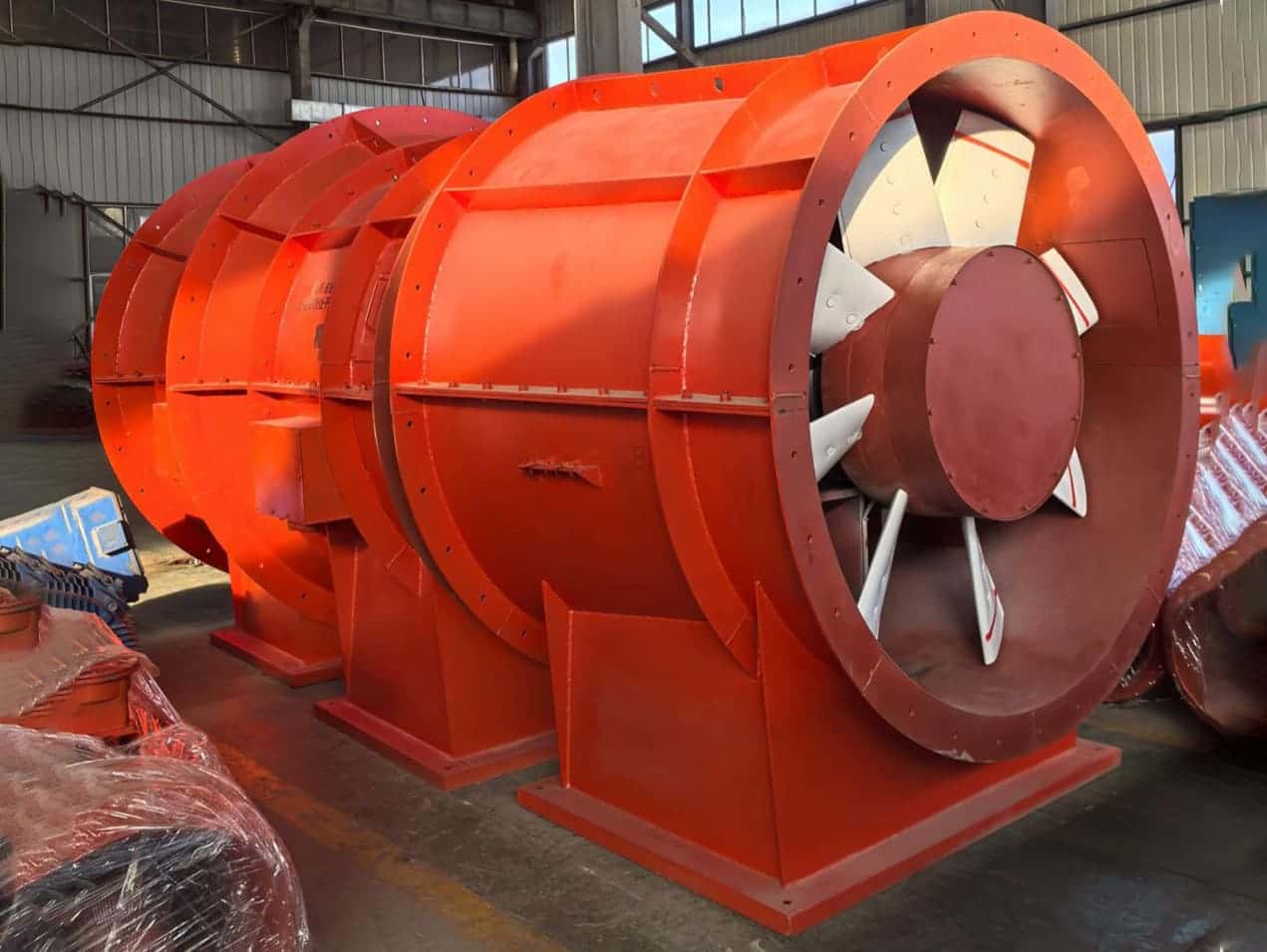
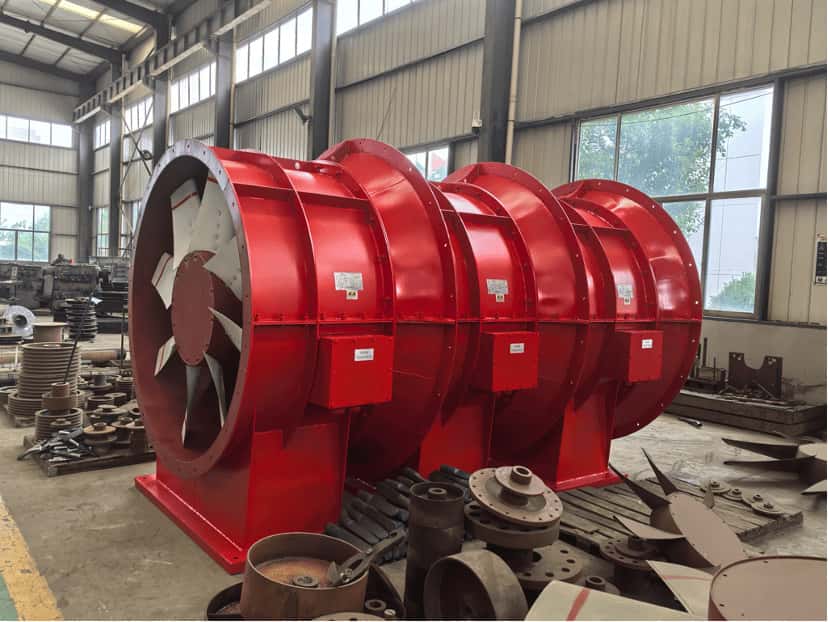
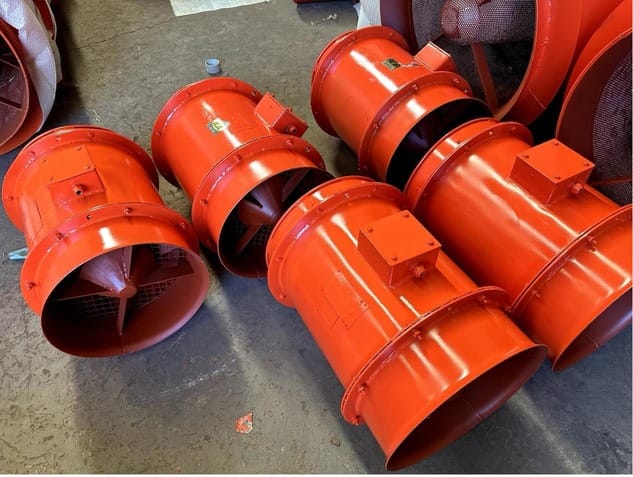
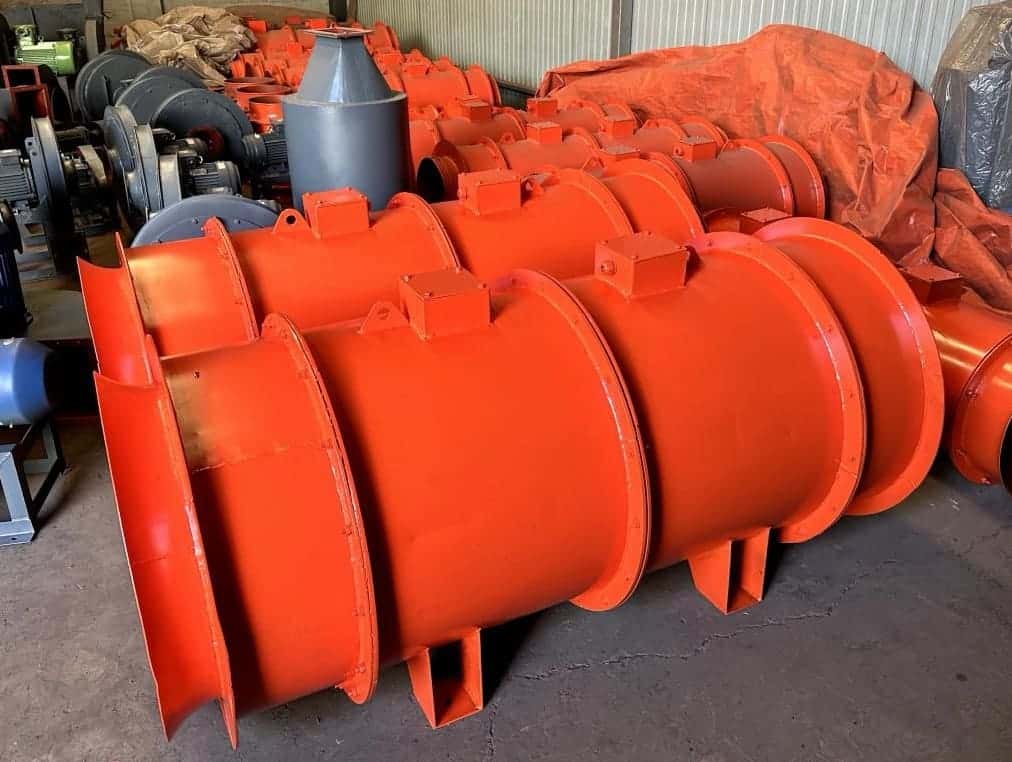
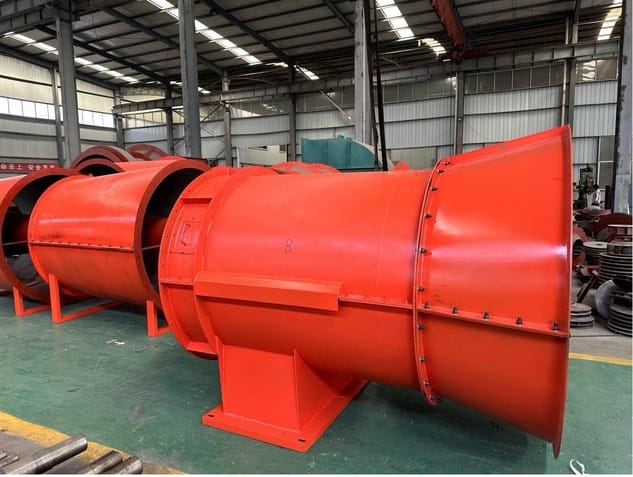
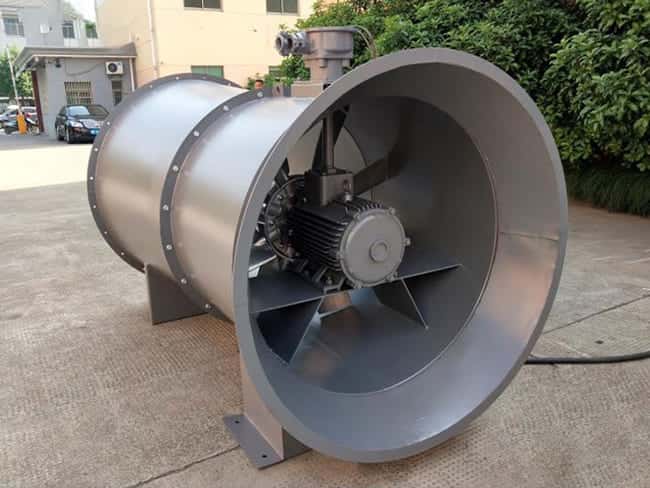
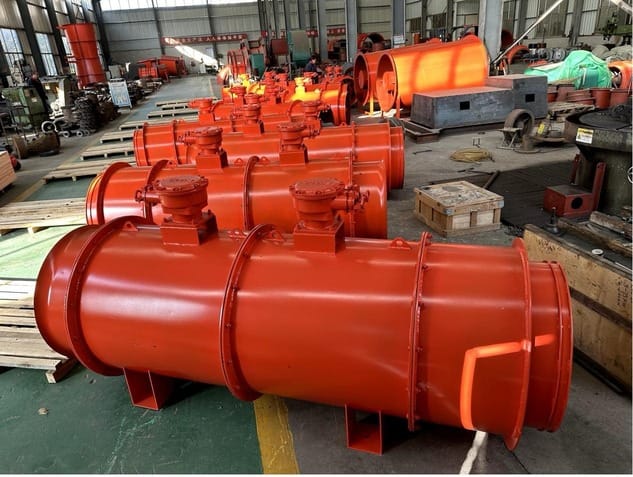
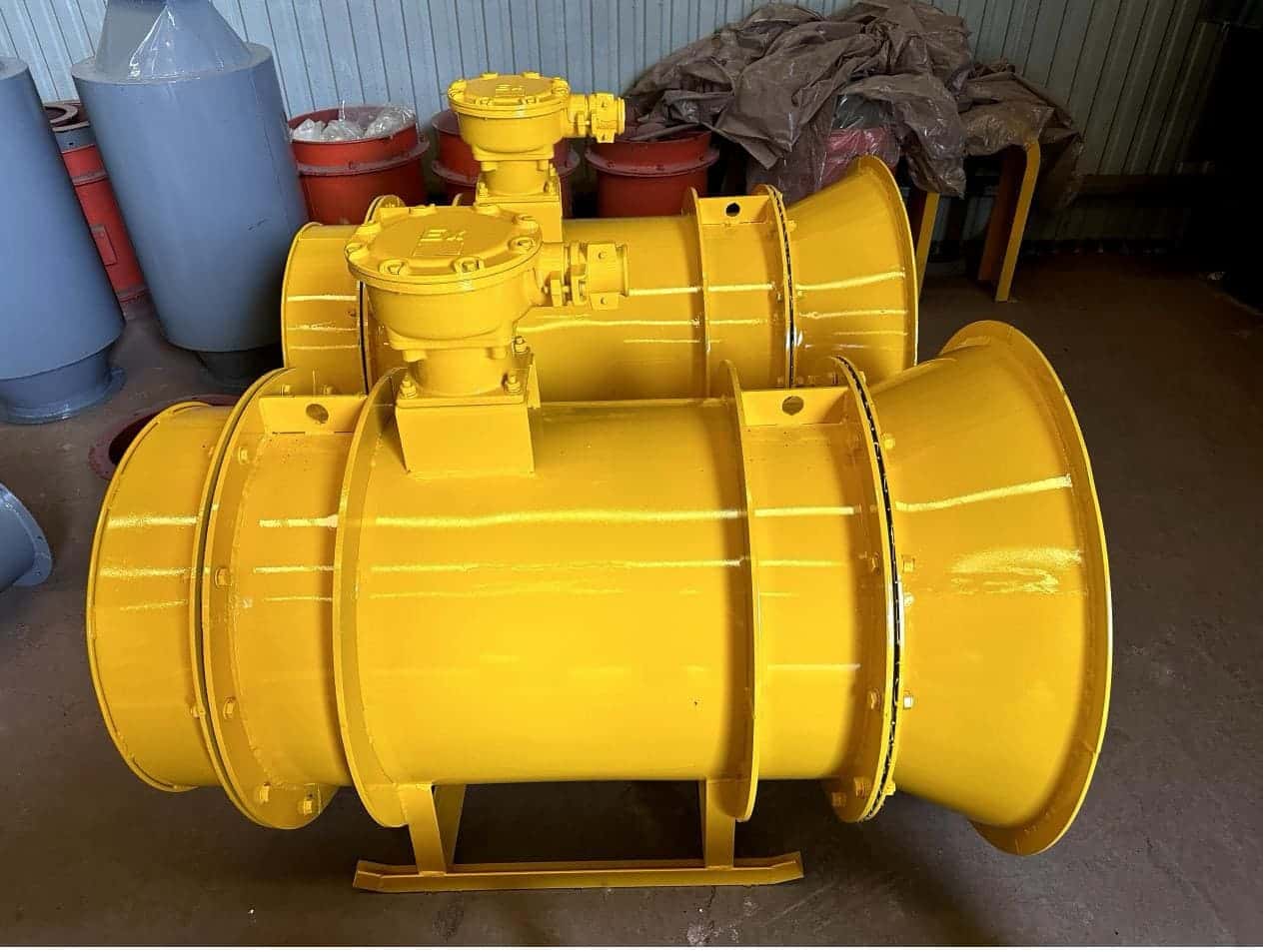
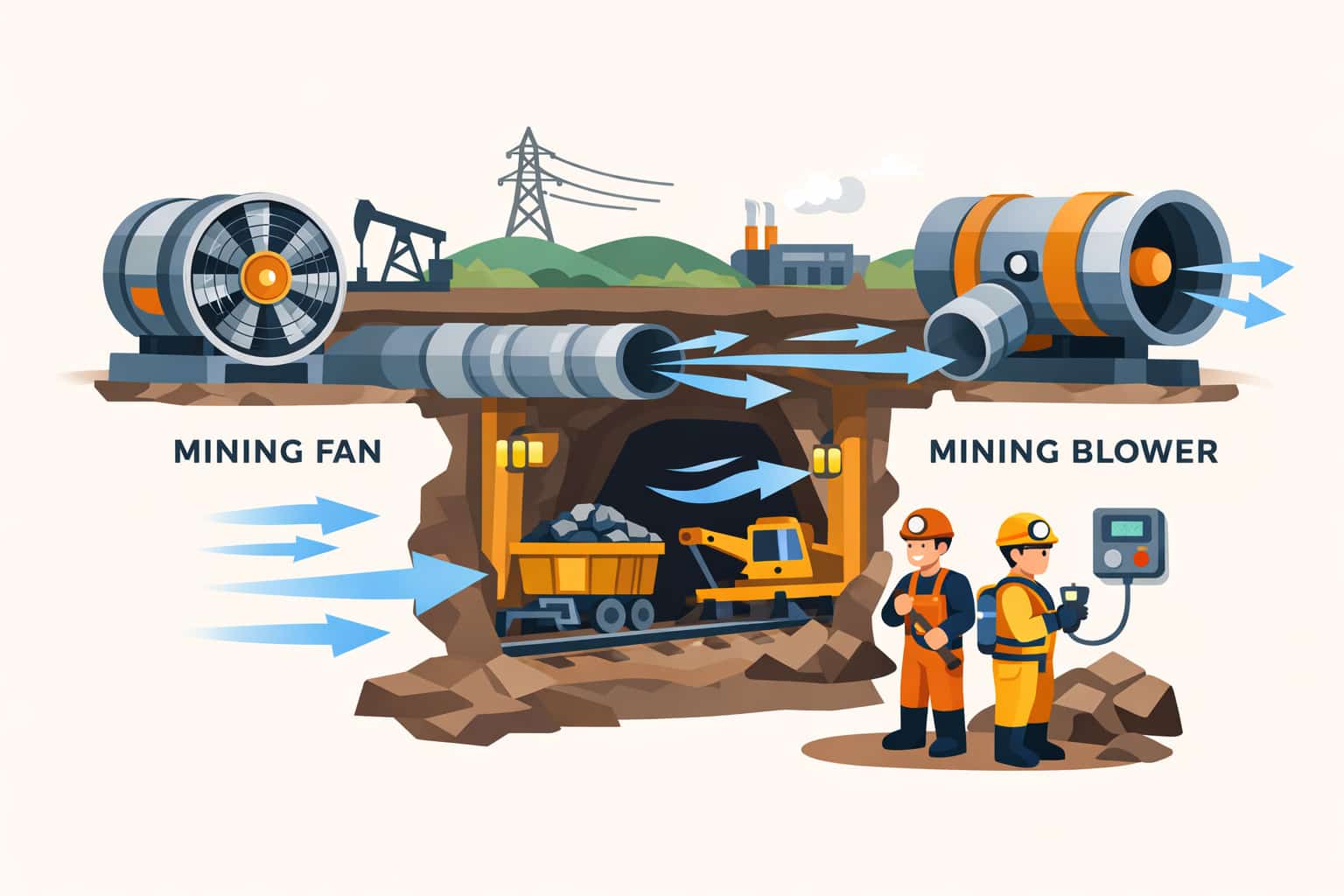

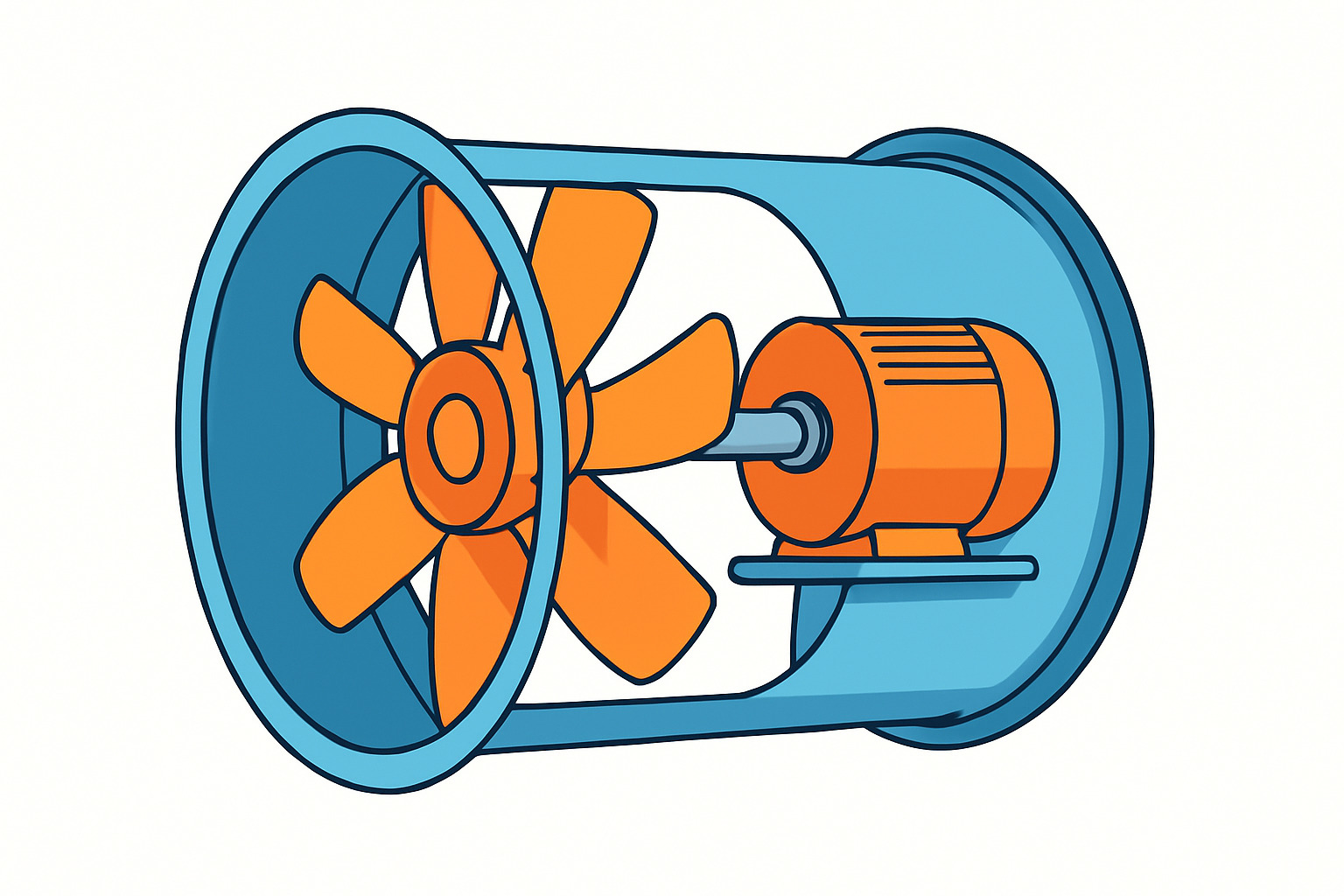
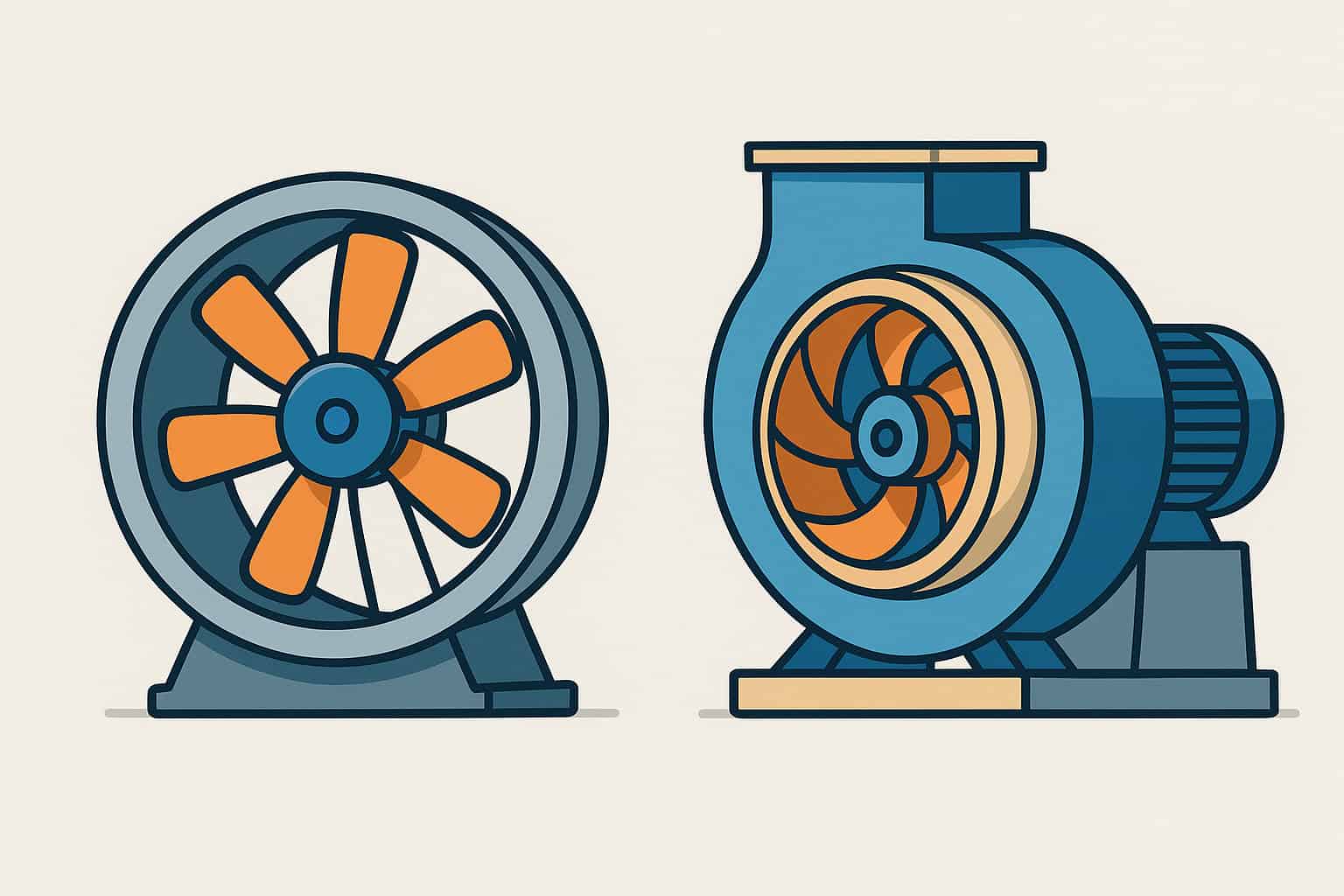
The question “What type of fan uses the least electricity?” sounds simple, but the real answer is, “It depends on how much air and pressure you need.” A tiny desk fan uses very little power, but it may not move enough air for a workshop or tunnel. In ventilation engineering, the most energy-efficient fan is not just the smallest one, but the one that delivers the required airflow and pressure with the lowest input power.
For many low to medium pressure applications, efficient axial fans and HVLS (high-volume, low-speed) fans are among the lowest-energy options per unit of air moved. A large-diameter axial fan turning slowly can move a great volume of air with relatively low power because it operates close to its best efficiency point and avoids high internal losses. HVLS fans, for example, gently move large amounts of air in warehouses or workshops using surprisingly modest motor power.
Another very efficient category is electronically commutated (EC) fans and fans driven by high-efficiency motors with variable speed drives. EC fans integrate an efficient brushless DC motor and electronic control, keeping efficiency high over a wide speed range. Instead of running at full speed all the time and wasting energy, EC or VFD-controlled fans can slow down when full airflow is not needed, taking advantage of the fan laws: a small reduction in speed gives a large reduction in power consumption.
Fan type, however, is only part of the story. The system in which the fan operates has a big impact on energy use. A very efficient fan installed in a poor system with excessive resistance (too many bends, undersized ducts, dirty filters, leaking airways) will still draw more power than necessary. Conversely, a well-designed system with smooth air paths, correct duct sizes and low pressure losses allows a fan to work at lower pressure, reducing energy demand regardless of type.
In industrial and mining ventilation, the lowest electricity use is achieved by combining:
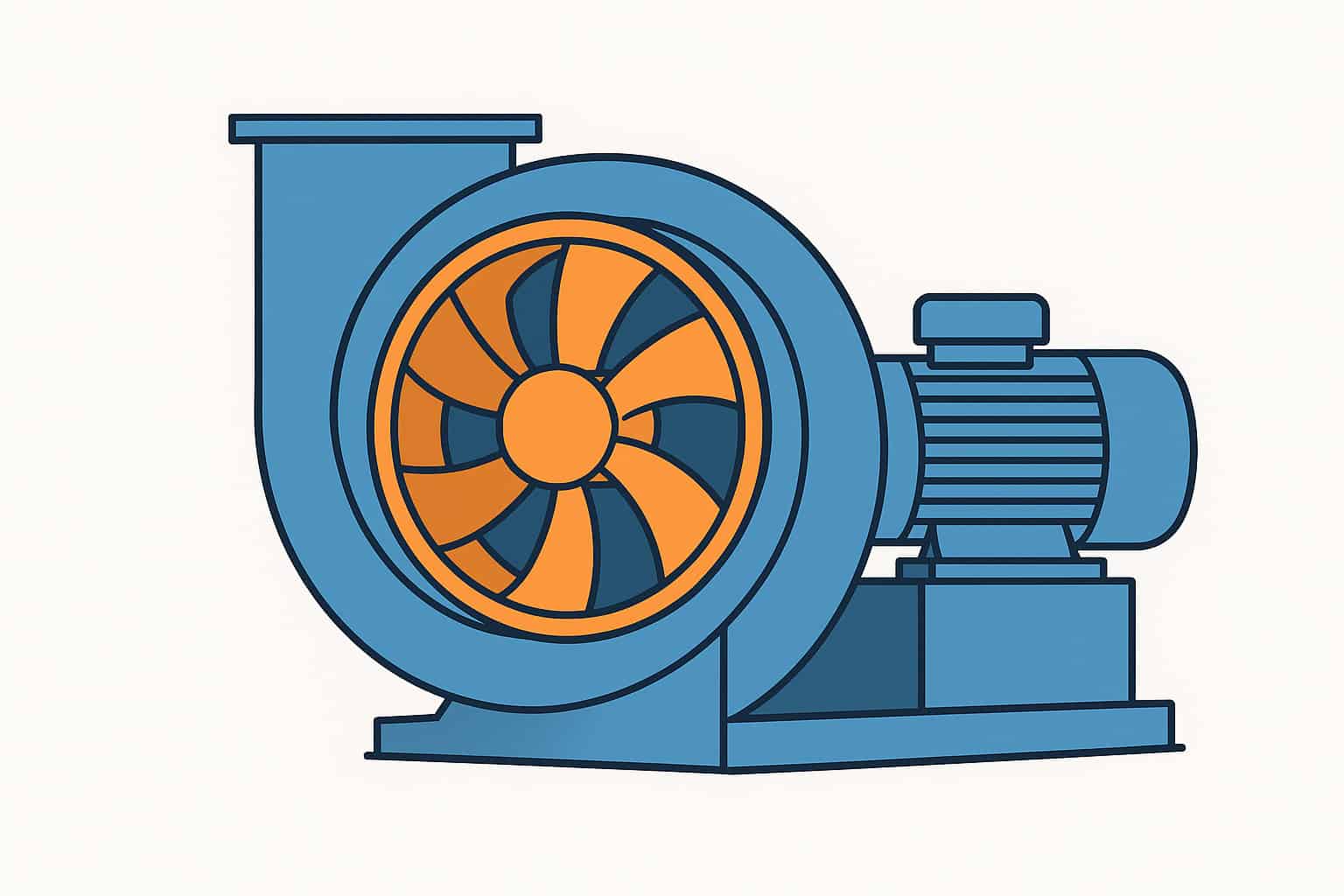
- An appropriate aerodynamic type (axial for bulk low-pressure flow, centrifugal for higher pressure when needed).
- A high-efficiency motor and, where practical, variable speed control.
- A well-designed, low-resistance system so the fan does not need to generate unnecessary pressure.
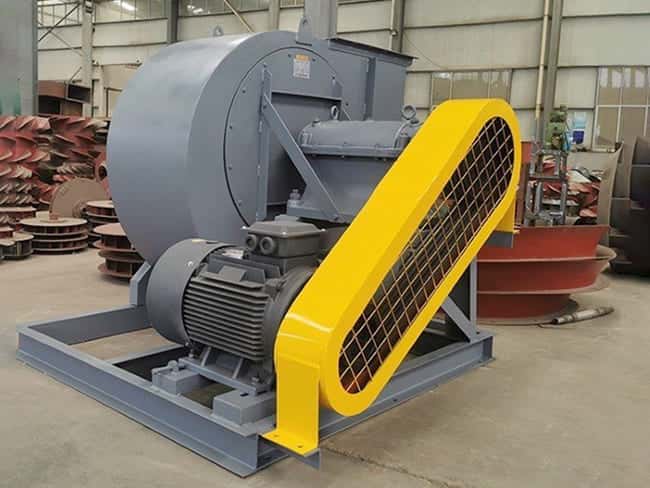
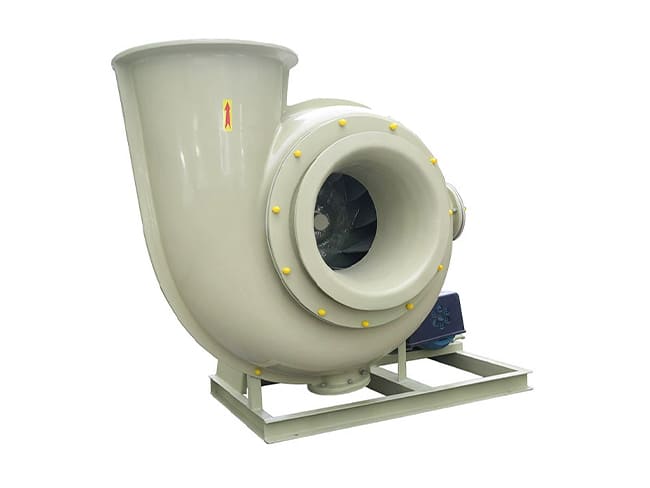
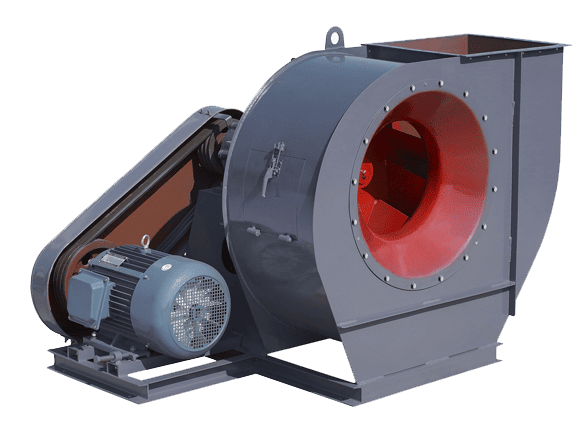
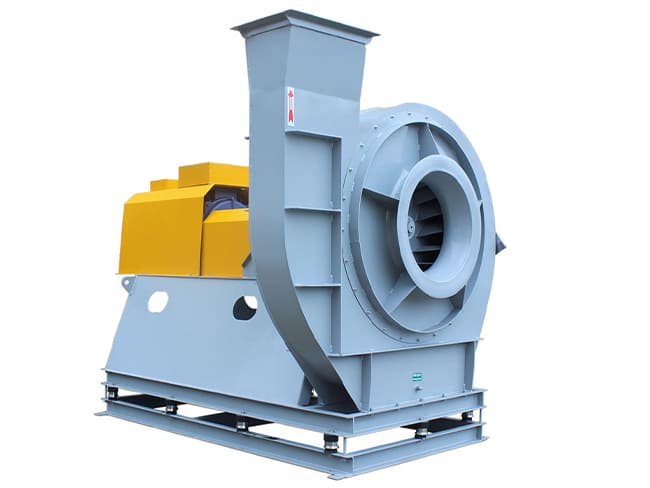
From a practical perspective, if you want a fan that uses the least electricity for a given job, you should aim for a properly sized, efficient axial or backward-curved centrifugal fan with an efficient motor and speed control, installed in a clean, low-loss duct or airway. A large, slow, efficient fan almost always uses less electricity than several small, high-speed fans struggling against a restrictive system.
