
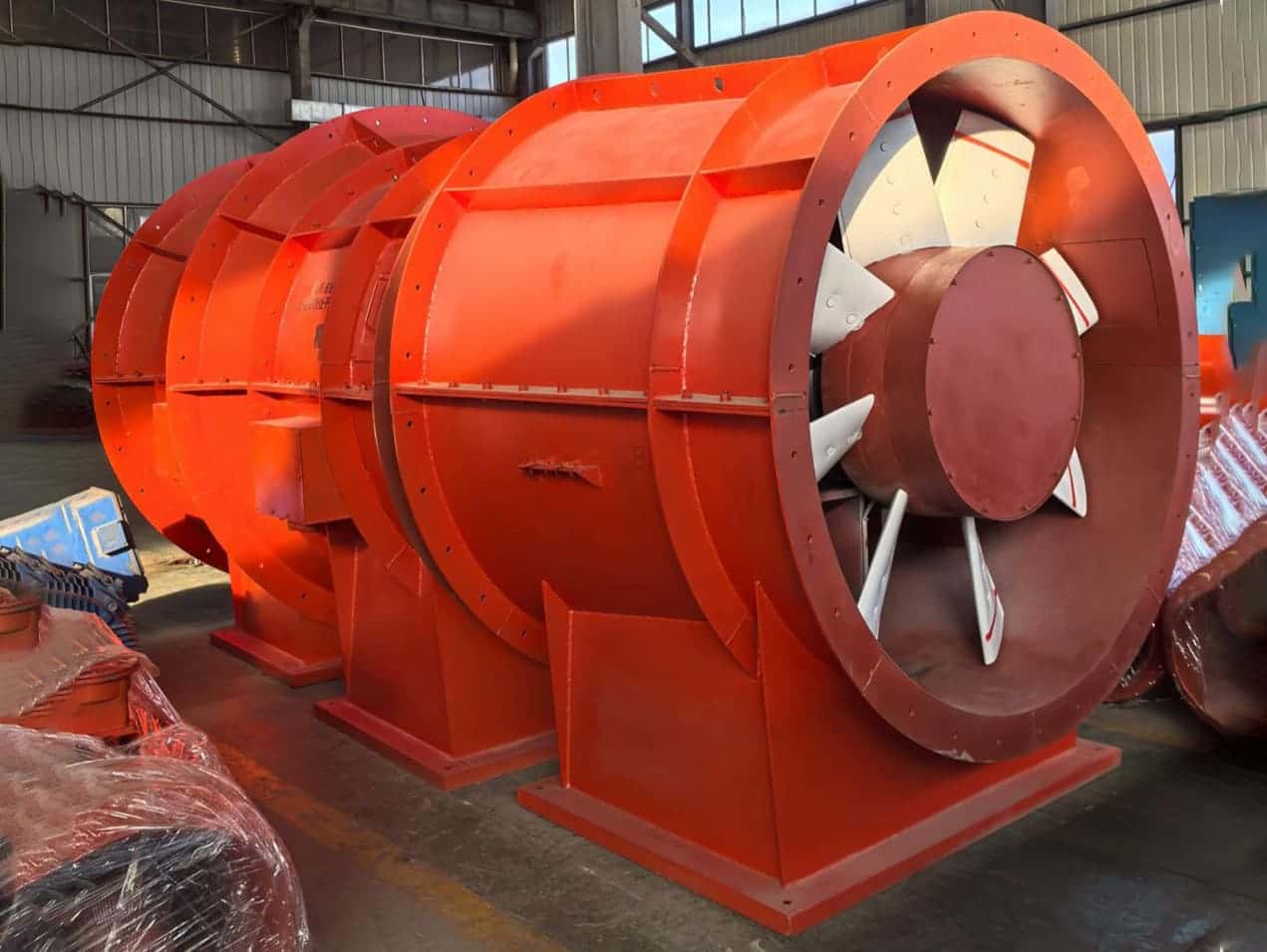
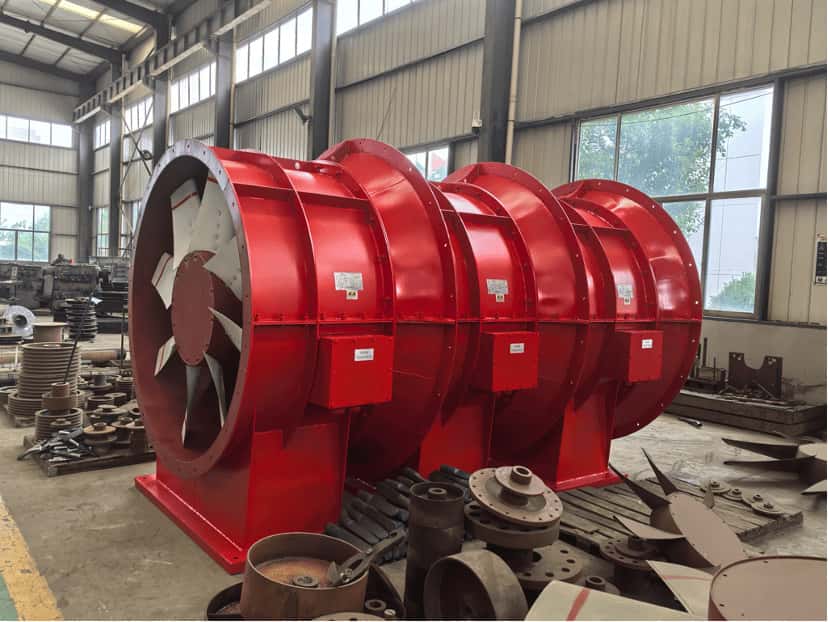
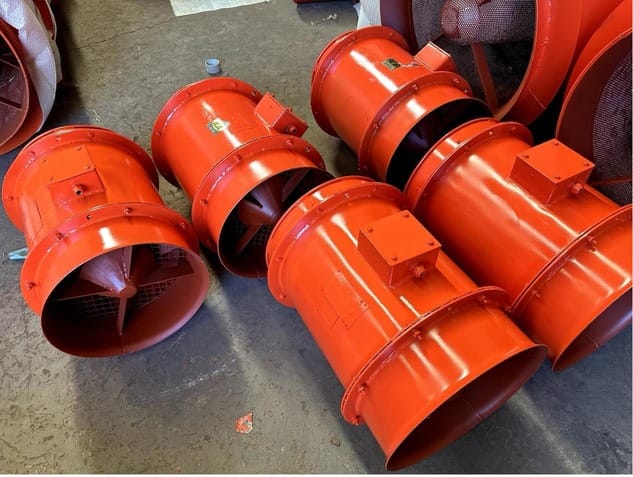
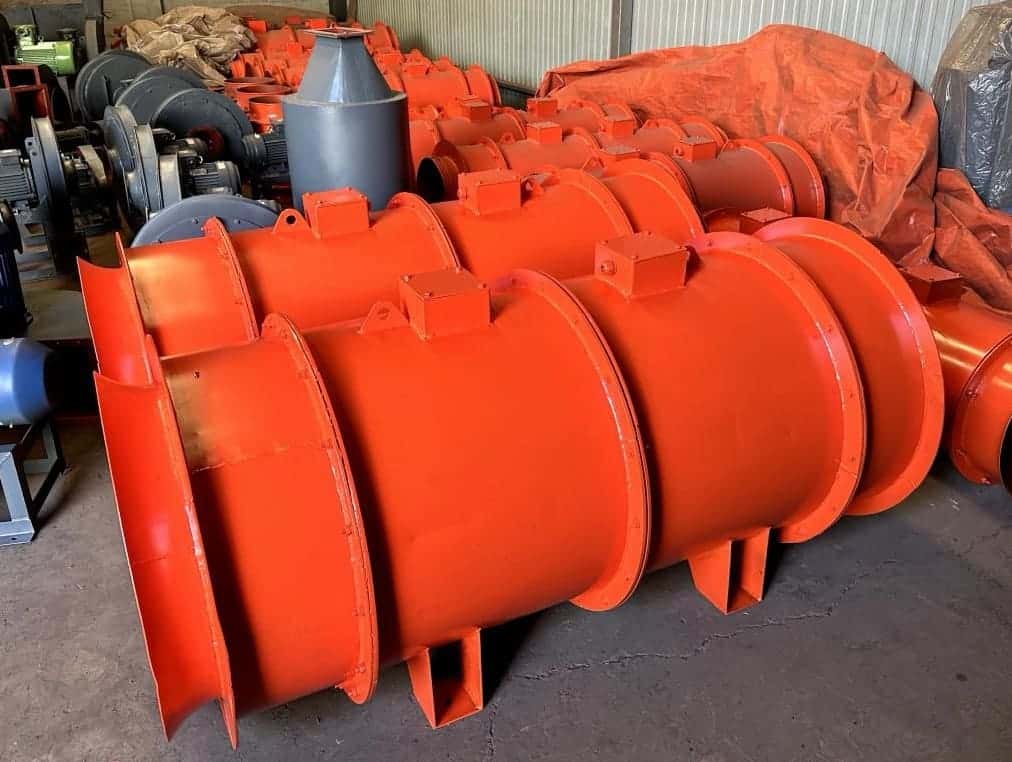
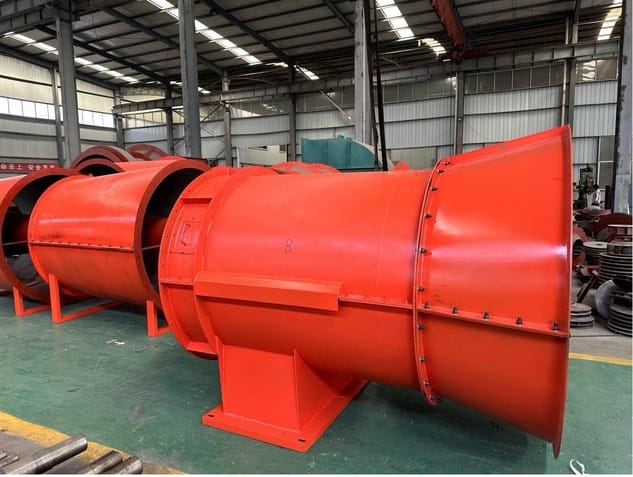
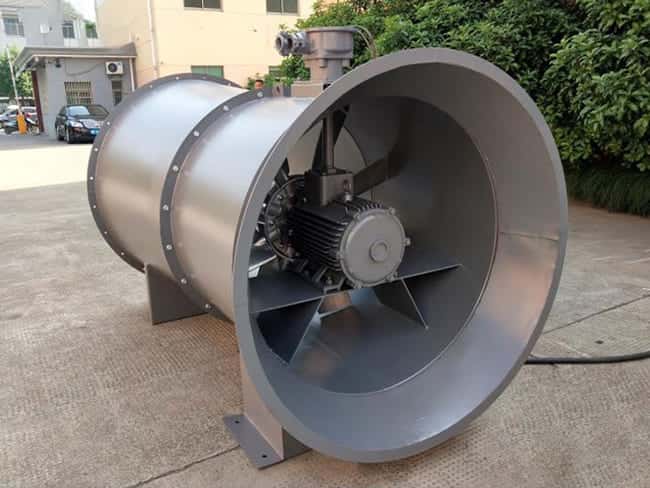
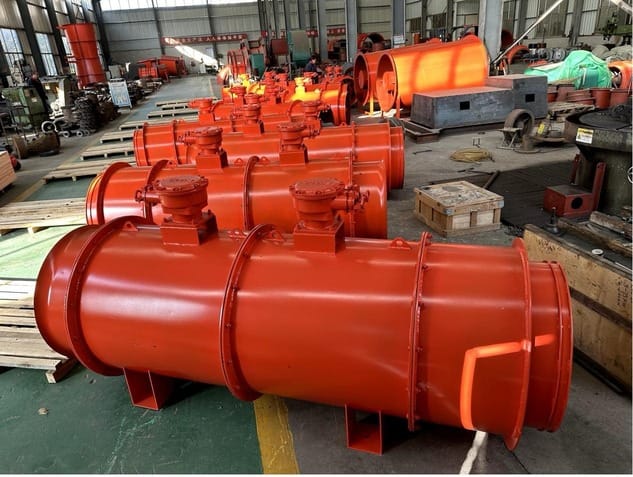
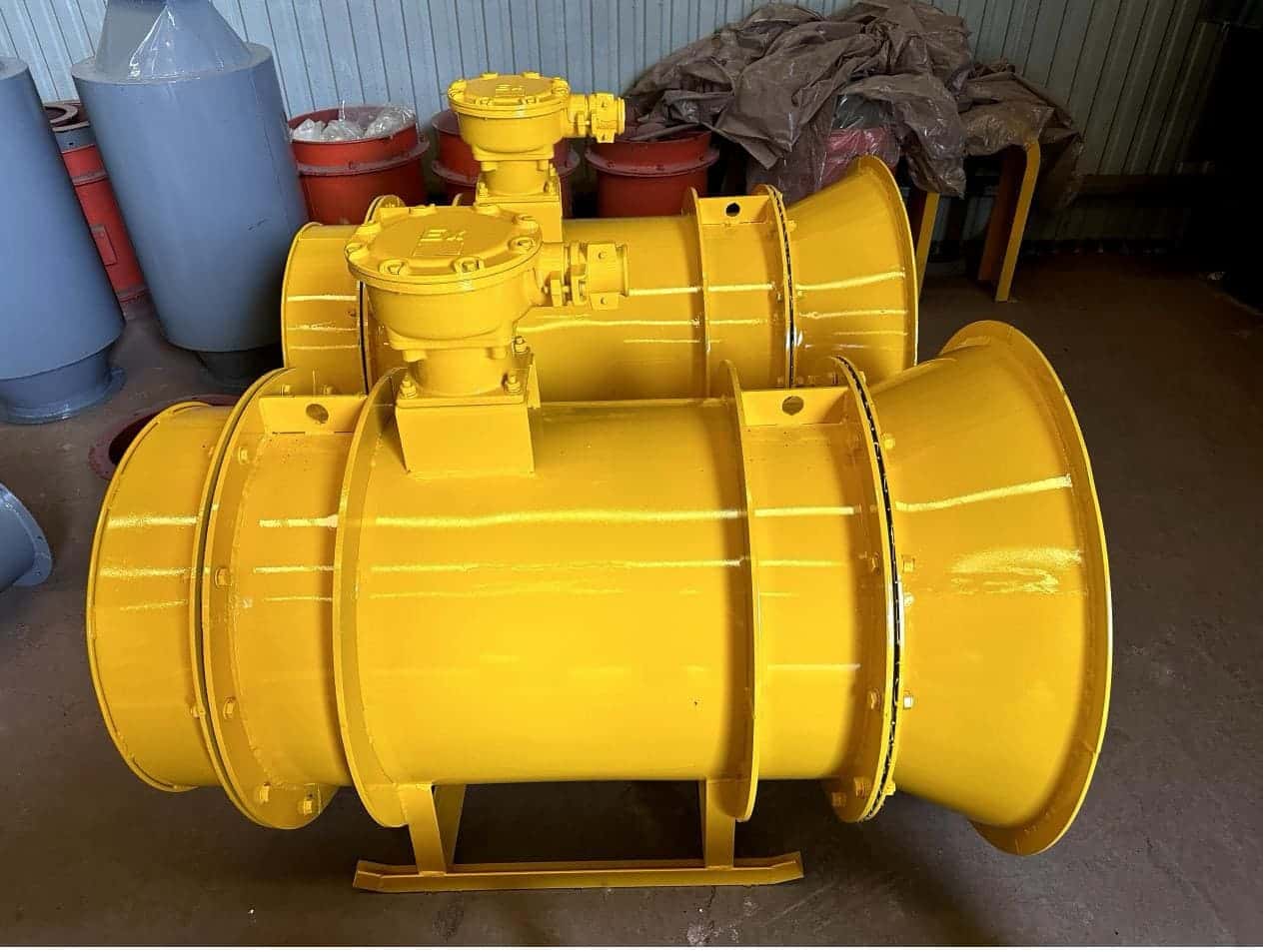
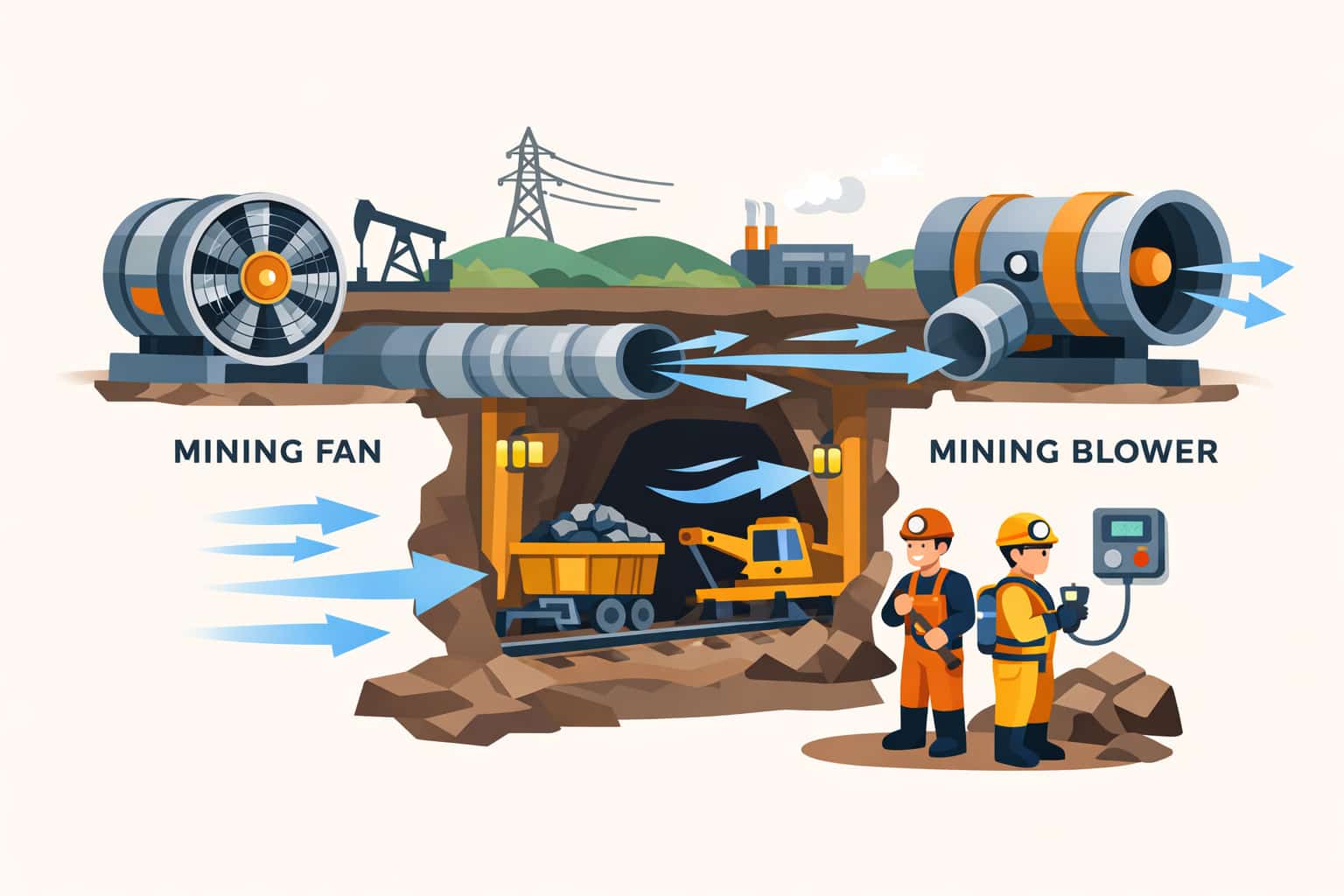
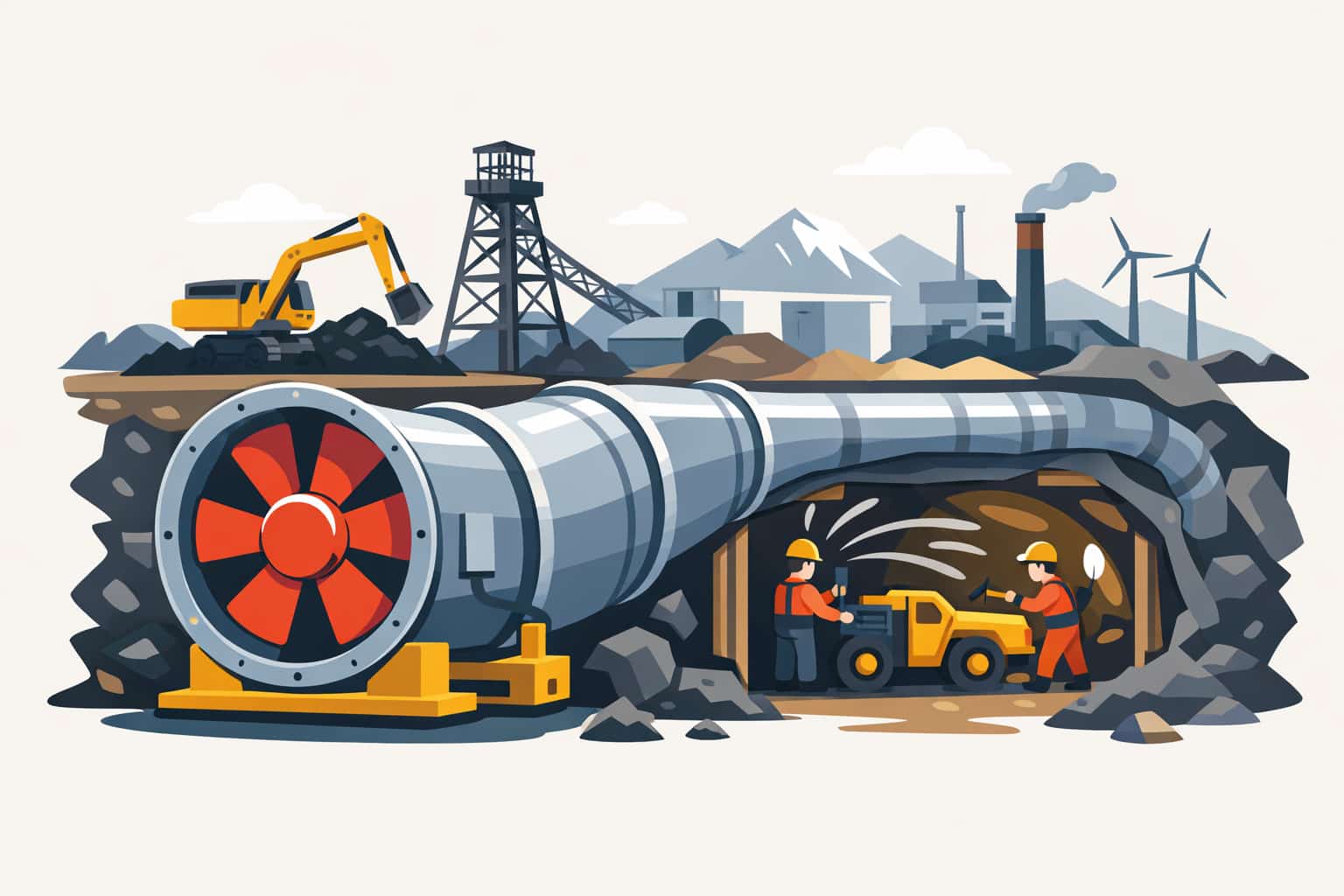
You should consider using a booster fan in underground mining when the existing main ventilation system can no longer deliver sufficient airflow to certain parts of the mine and upgrading surface fans or adding a new shaft would be technically difficult or uneconomical. A booster fan is most effective when there is a clearly identified high-resistance branch, such as a deep-level district or long lateral development, that needs extra pressure to obtain the required air quantity.
One common trigger for booster fan use is mine deepening or lateral expansion. As production moves farther from the main shafts, airways become longer and resistance increases. The main fans may already be operating near their maximum pressure or power limit, so simply turning them up is not an option. Instead of replacing them with much larger units or constructing new shafts, the mine may install a booster fan part way along the intake or return route to reinforce airflow to the new areas.
Booster fans are also useful when there are local ventilation bottlenecks that cannot be eliminated by changing airway sizes or layouts. For example, geological constraints may prevent enlarging a key drift or raise, or existing infrastructure may limit the dimensions of a critical return airway. In such cases, a booster fan can help overcome the unavoidable resistance of that branch and restore airflow to acceptable levels.
Another situation where booster fans are appropriate is when production demands increase significantly. Adding more diesel equipment, opening multiple stopes simultaneously or increasing development rates all require more airflow. If network modelling shows that some districts will be under-ventilated under the new plan, a booster fan targeted at those districts can provide the extra capacity without overhauling the whole system.
However, the decision to use a booster fan must always account for safety and regulatory considerations. In gassy coal mines, booster fans may be restricted or prohibited because of the risk of recirculation and complex gas patterns. Even in metal mines, designers must ensure that booster operation does not create unstable flows, reverse air in sealed areas or compromise emergency egress routes. Detailed ventilation network simulations, risk assessments and regulatory consultations are necessary before committing to booster ventilation.
You should also consider a booster fan when energy efficiency and staged expansion are important objectives. By placing pressure where it is most needed, a booster can allow main fans to operate closer to their best efficiency points and can delay expensive shaft sinking or major surface fan upgrades. When combined with variable speed drives and ventilation-on-demand, booster fans can adapt to changing production patterns while keeping the ventilation system’s energy footprint under control.
In summary, you should use a booster fan in underground mining when deeper or high-resistance areas cannot be adequately ventilated by main fans alone, when local bottlenecks limit airflow, or when production increases require targeted airflow upgrades, and when a properly designed booster solution is safer and more cost-effective than large-scale changes to shafts or main fans.