
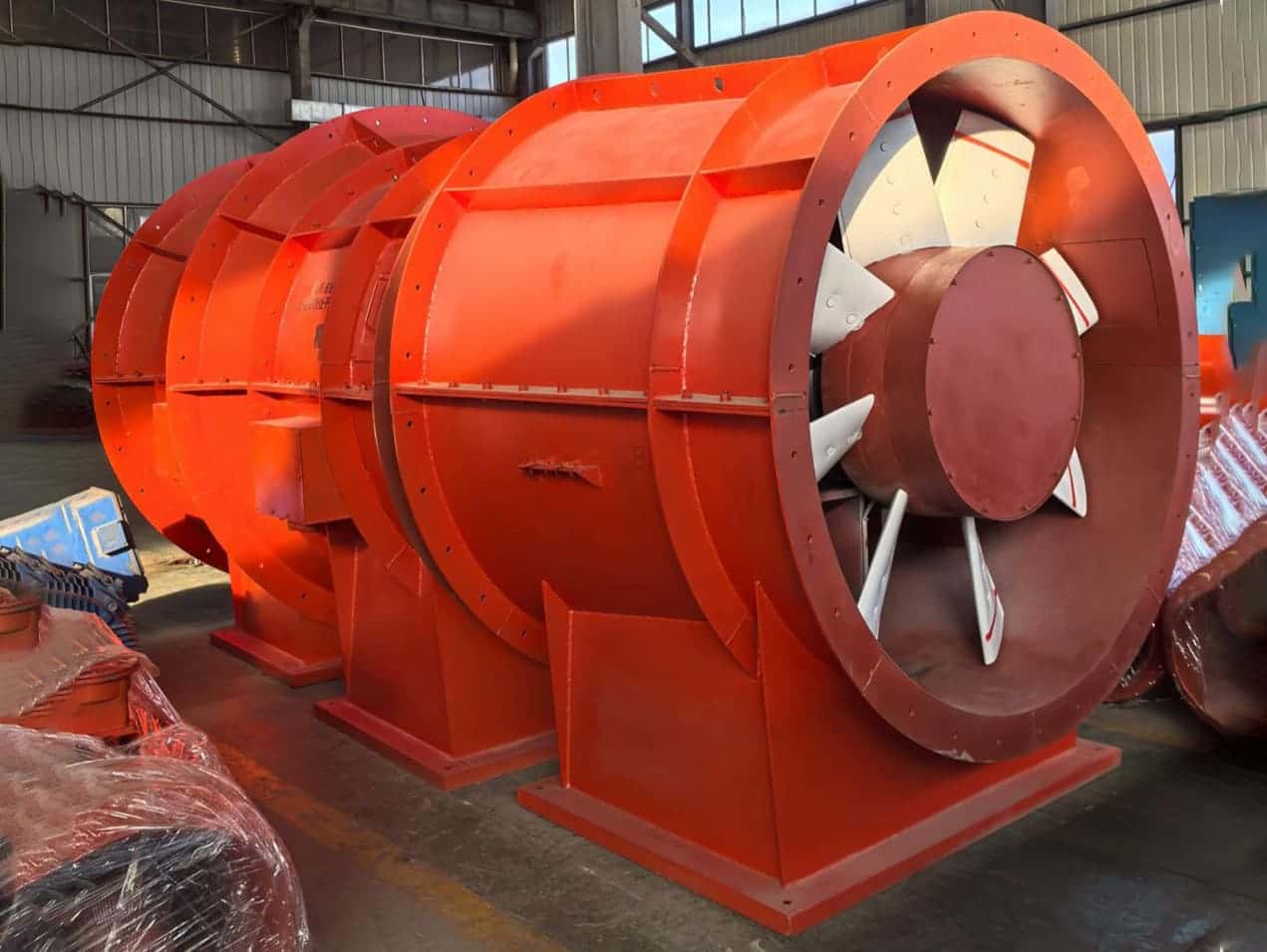
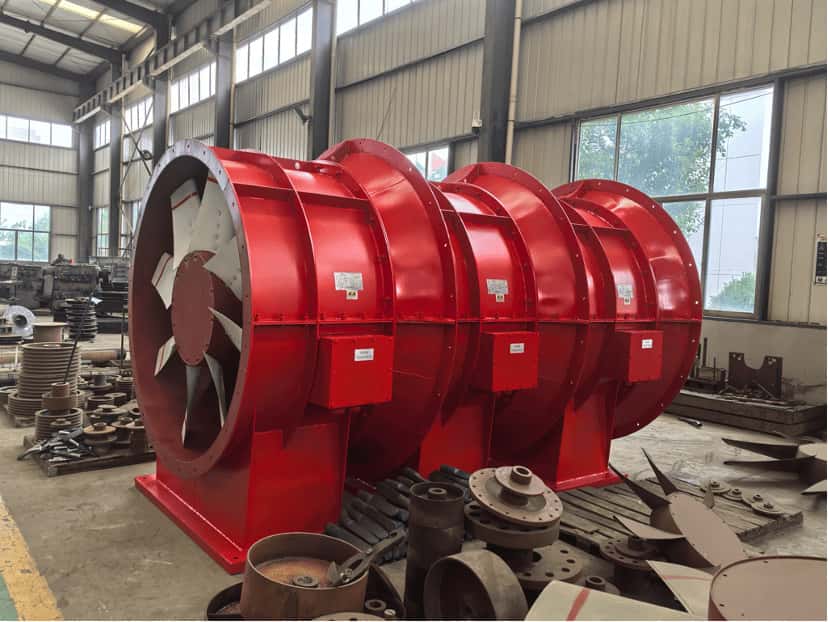
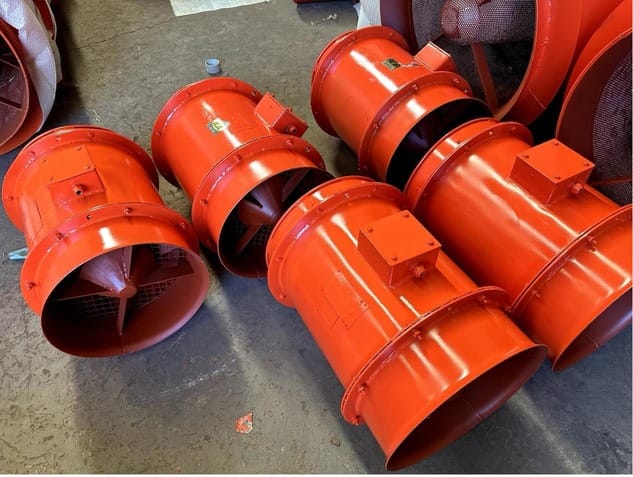
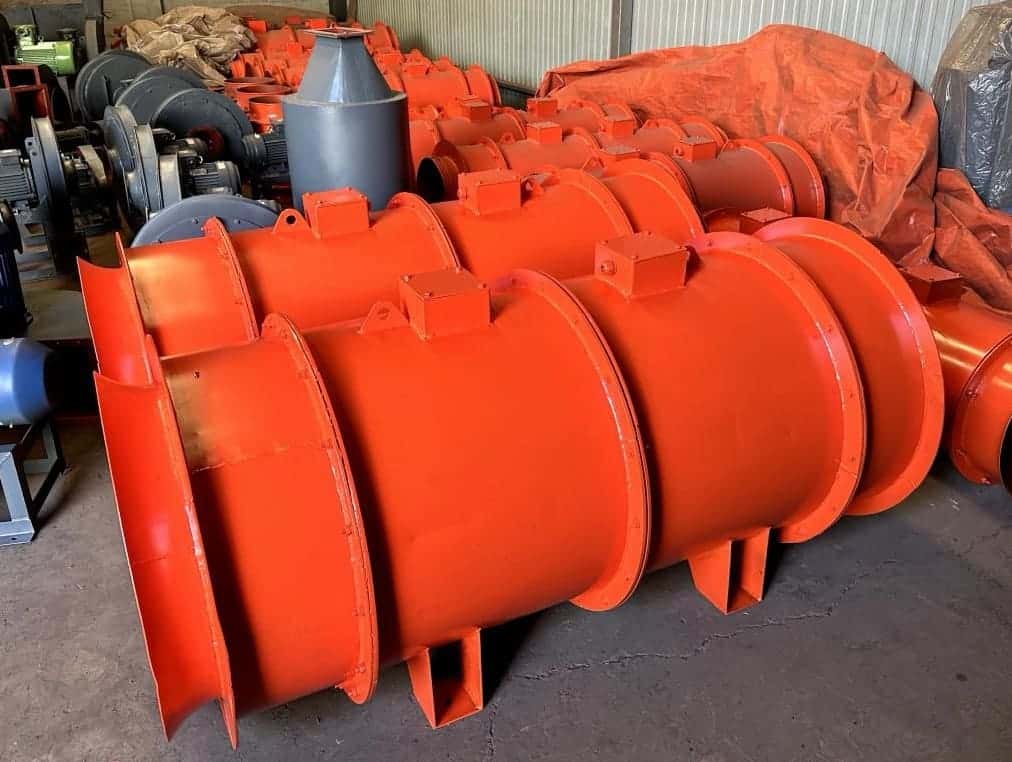
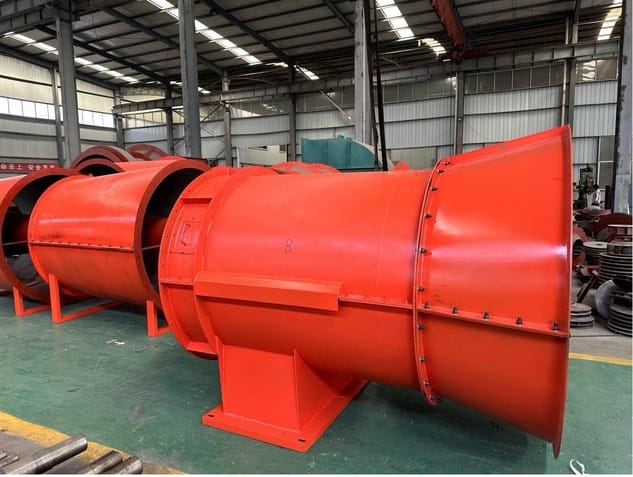
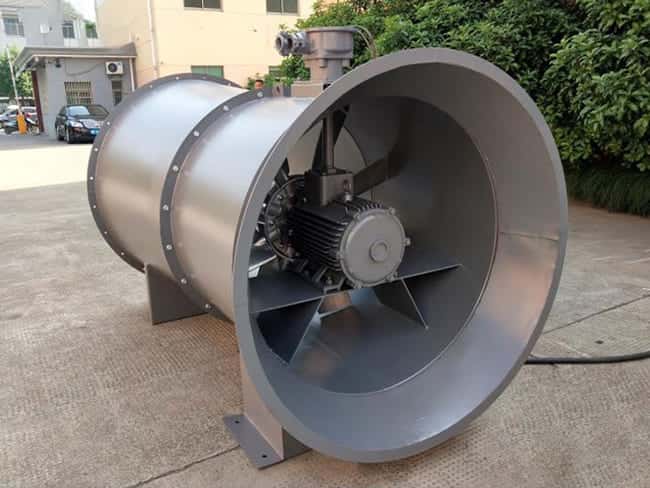
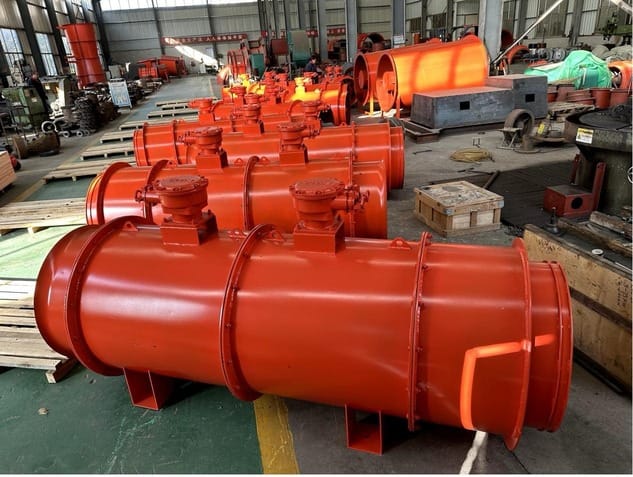
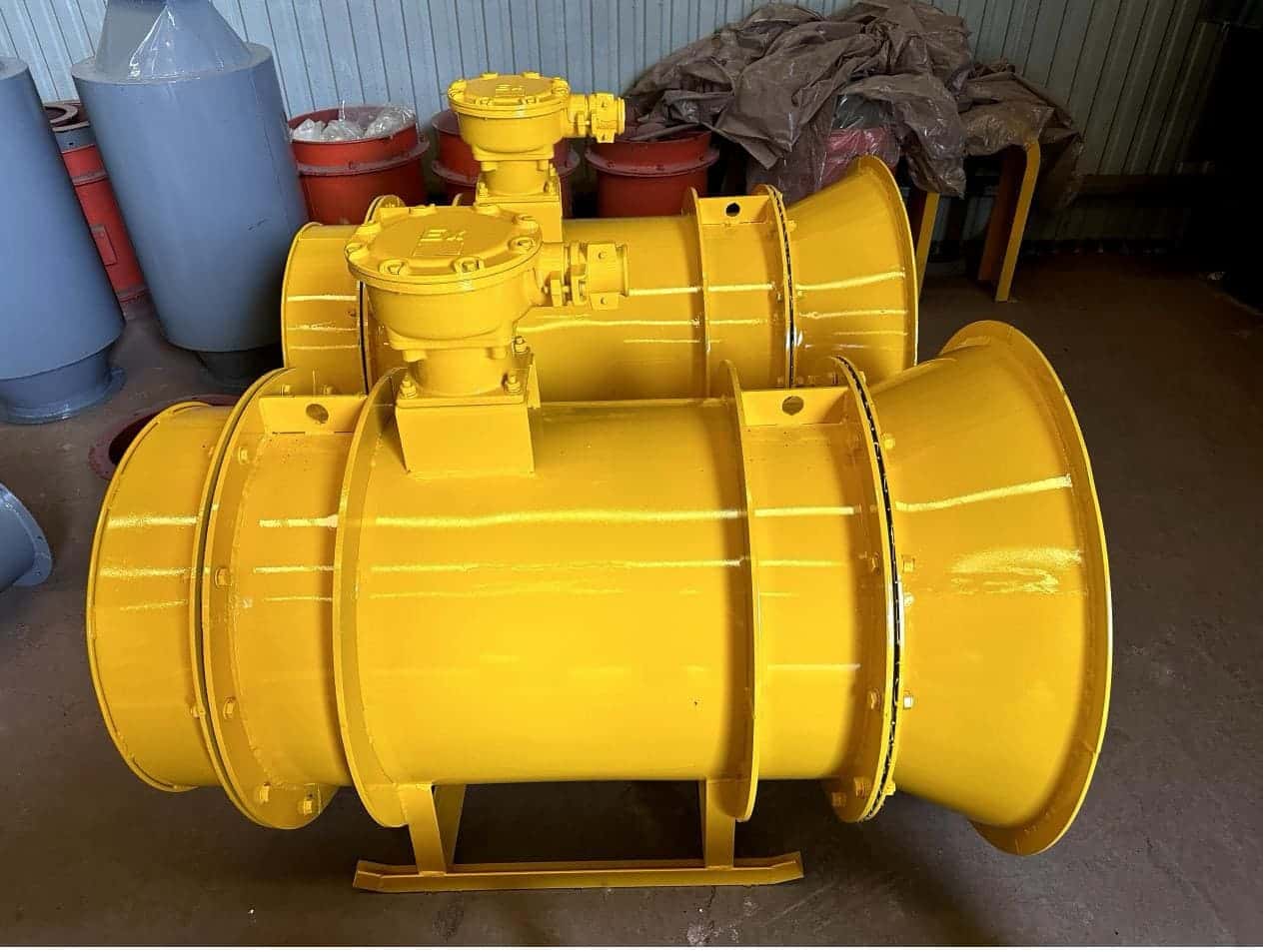
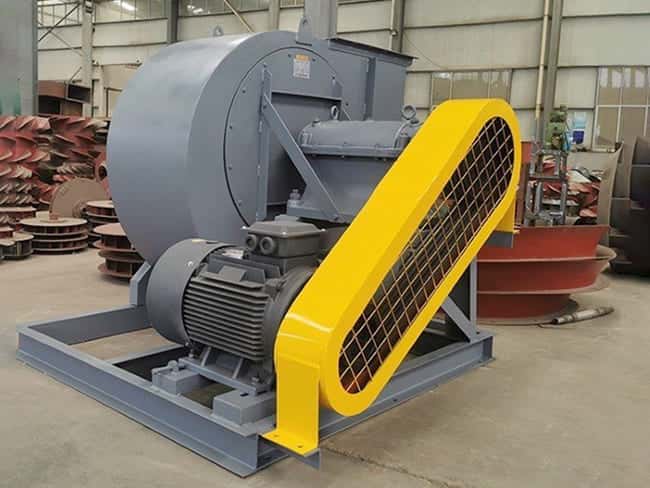
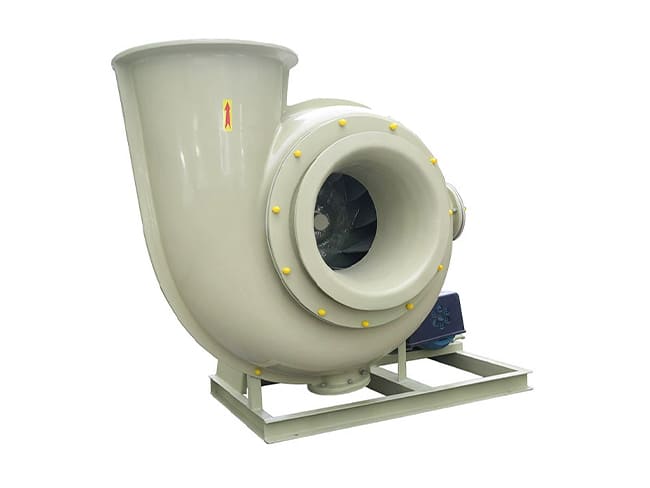
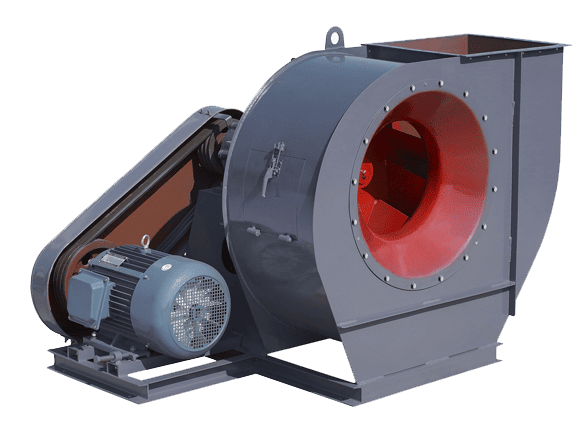
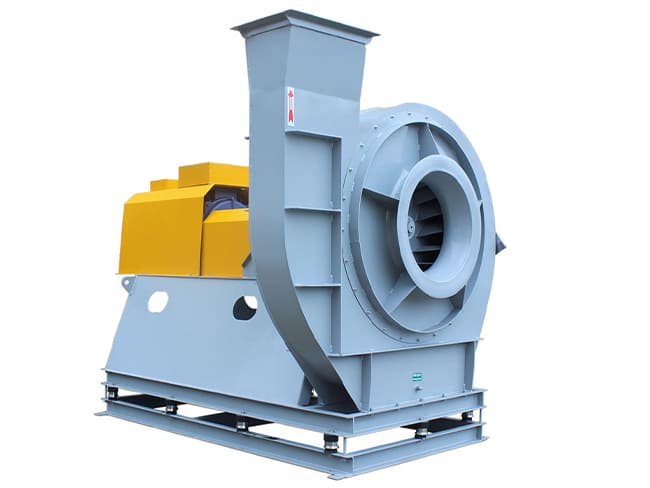

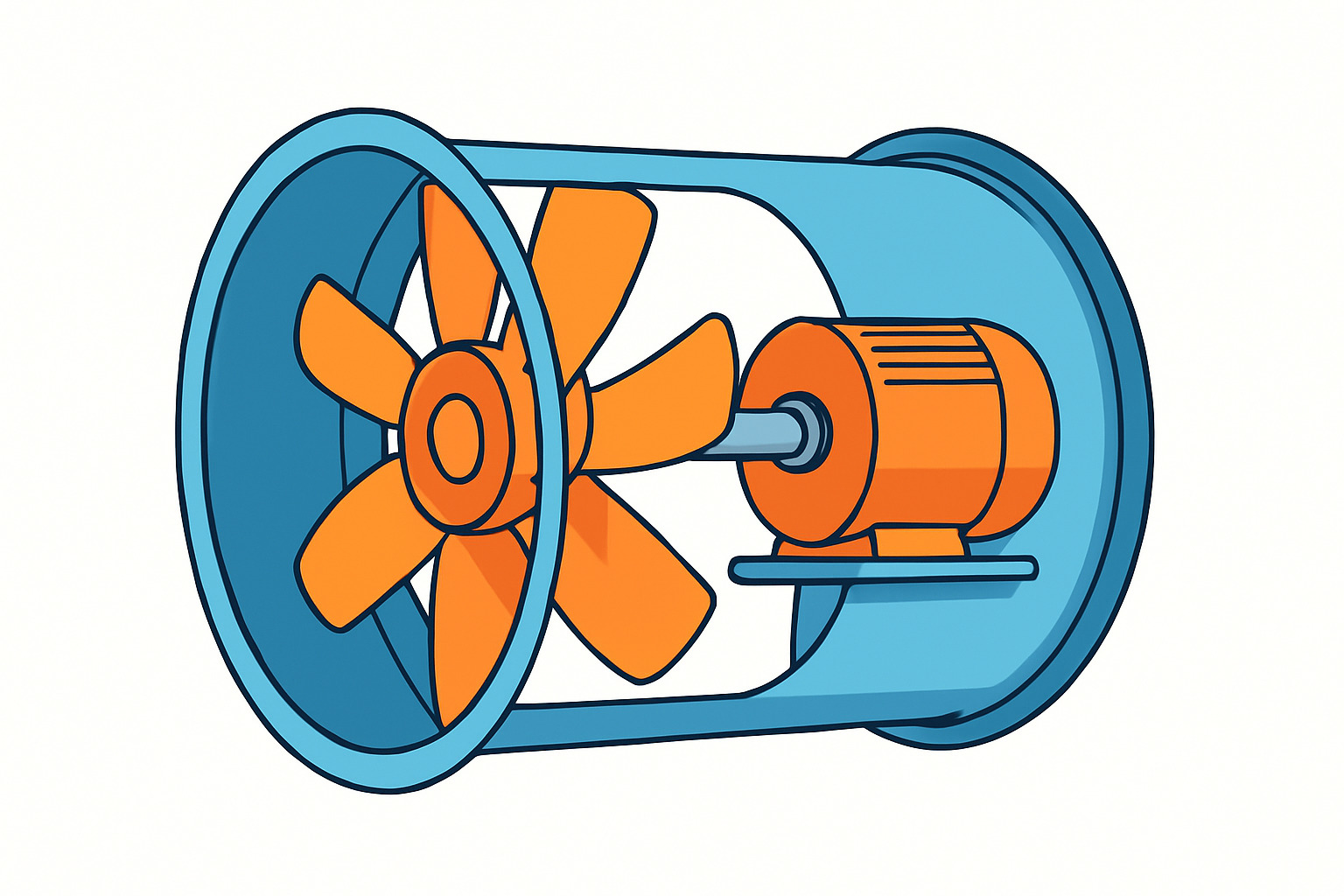
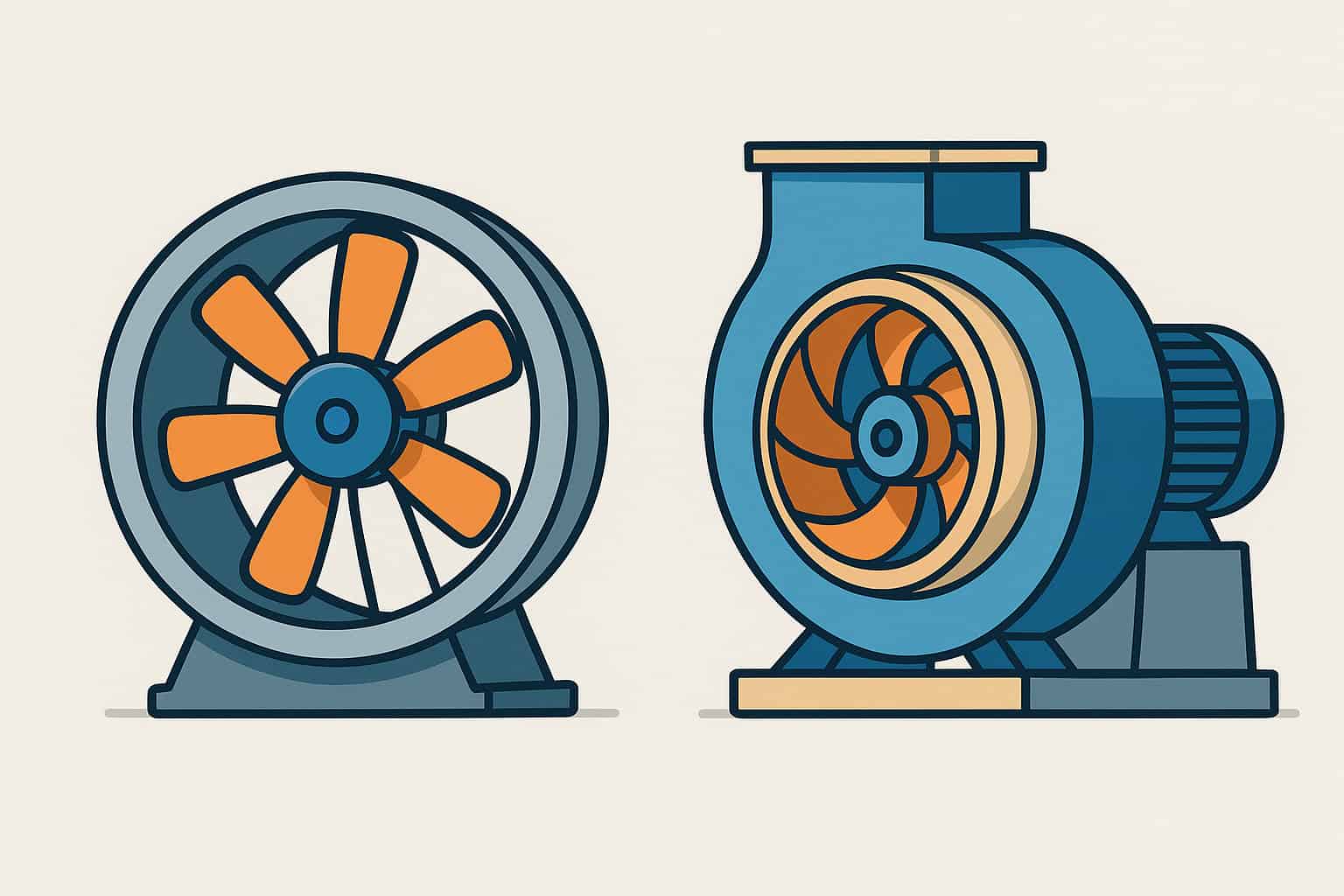
A duct booster fan is installed in a duct run where pressure loss has reduced airflow to an unacceptable level, typically far from the main fan or air handler. Its purpose is to add extra pressure and restore airflow to weak zones without having to oversize the main system. Correct placement is important to avoid noise, instability or poor distribution.
In a simple building duct system, airflow tends to be strongest near the main fan or air handling unit and weakest at the longest or most restrictive runs. If a distant room or process branch is not getting enough air, one solution is to place a booster fan in that branch. The fan is usually located in an accessible straight section of duct upstream of the weak outlet, where the airflow is fully developed and there is space for support and maintenance.
From a design standpoint, you want the booster fan to work with the main fan, not against it. This means understanding the system curve and the main fan curve so that the booster simply raises pressure in a long branch rather than causing flow recirculation or excessive noise. Placing a booster immediately next to elbows, transitions or dampers should be avoided where possible, because severe turbulence can reduce performance and increase vibration.
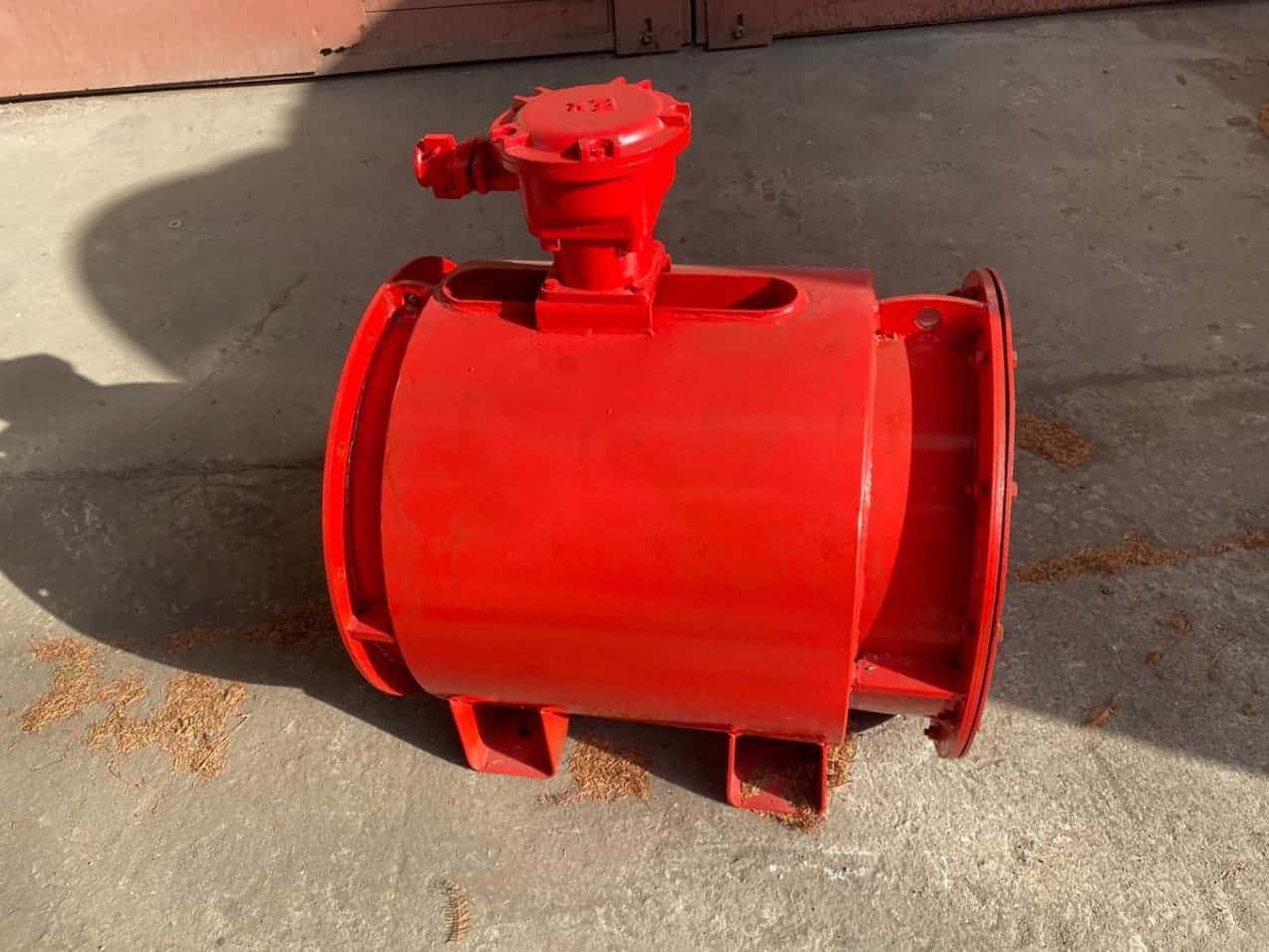
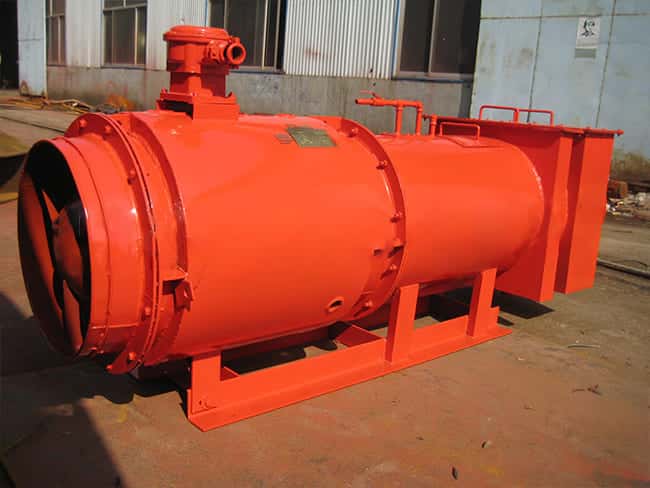
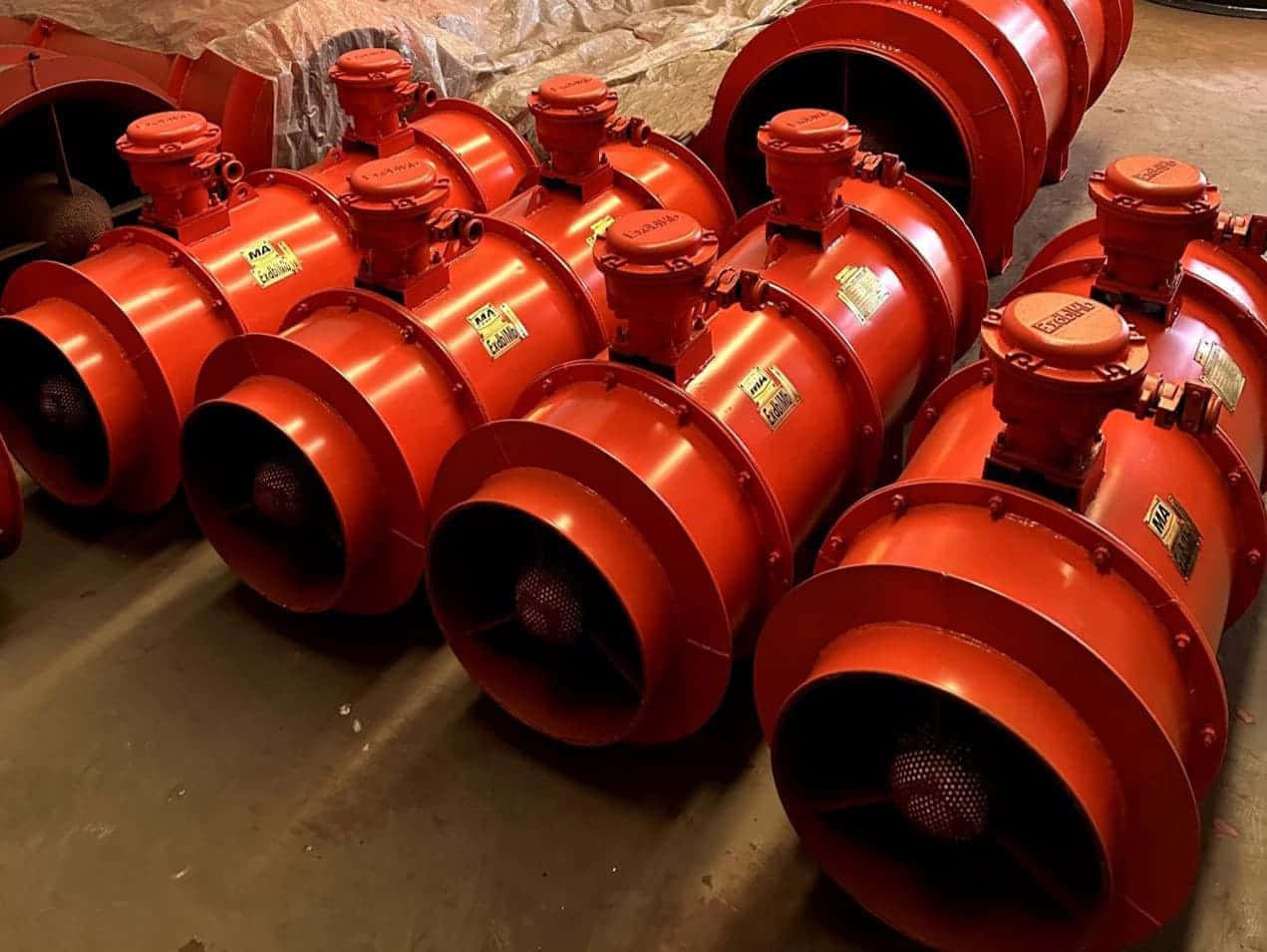
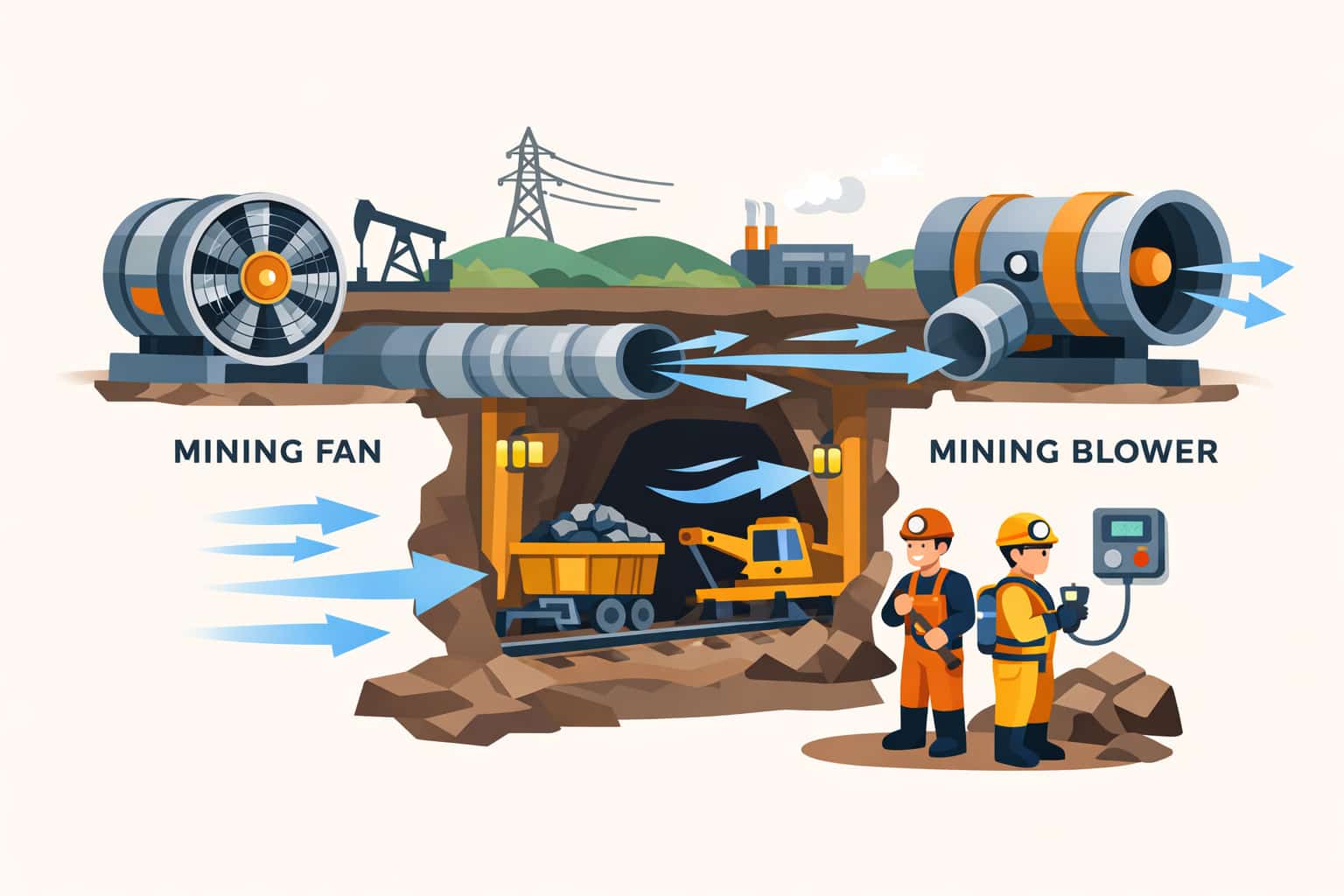
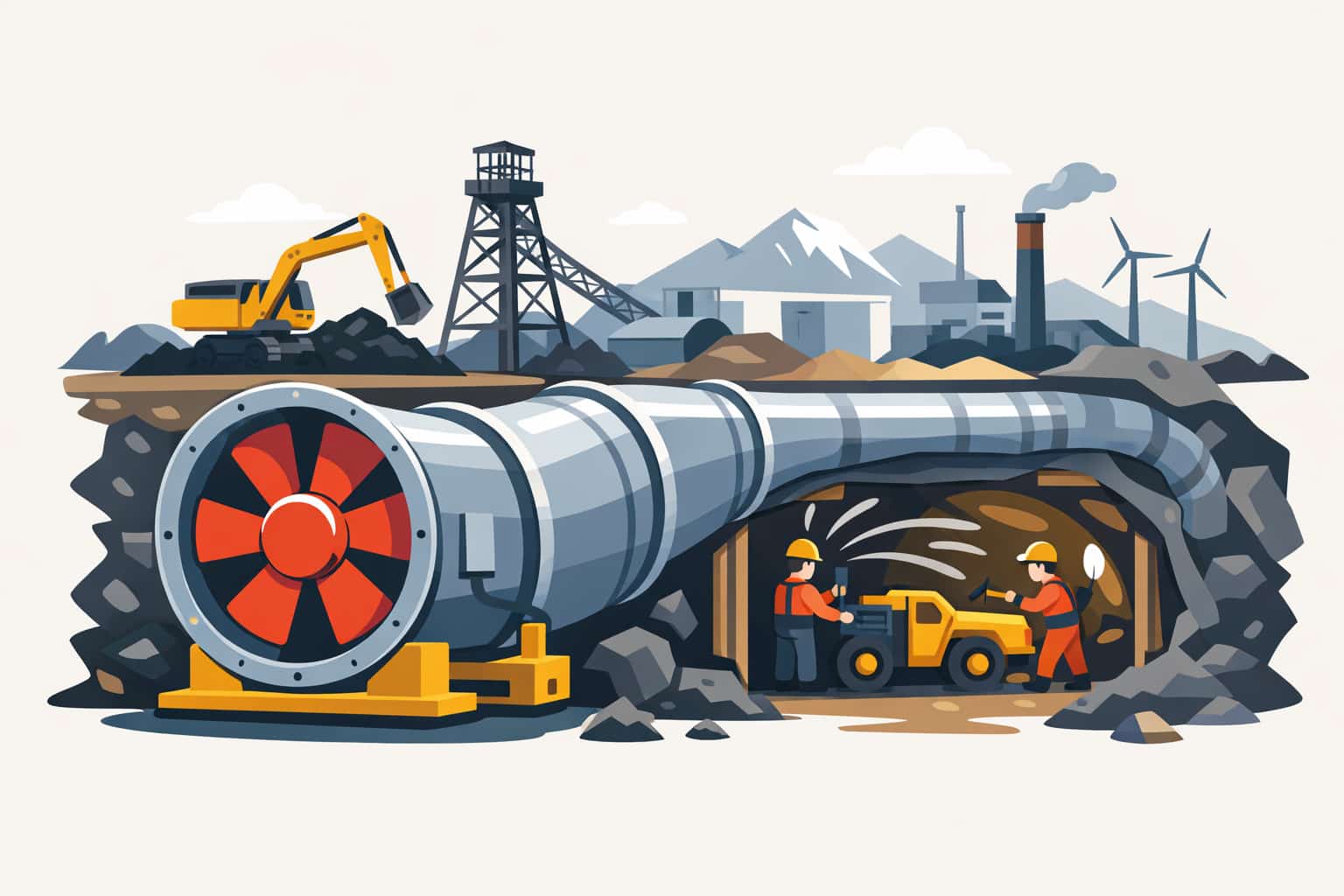
In industrial and mining applications, auxiliary or booster fans are often installed in long ducts or ventilation lines that serve tunnels, headings or remote process equipment. For example, in underground development headings, a small axial booster fan may be placed several hundred meters from the main fan to keep air velocity and quality within regulations at the face. The booster fan is then positioned where power is available, the duct is straight, and airflow measurements confirm the need for additional pressure.
Access and safety also affect placement. A booster fan should be installed where technicians can safely reach it for inspection, cleaning and repairs. Supports, vibration isolators and flexible connections may be used to protect ductwork and structures. In hazardous or dusty environments, the fan and its motor may need special ratings, and the chosen location must comply with all relevant safety rules.
In summary, you put a duct booster fan in the section of duct that suffers the greatest pressure loss and weakest airflow, typically mid run or near distant branches. It should be placed in a straight, accessible section of duct so that it can add pressure smoothly, work in harmony with the main fan and be maintained safely over its service life.