
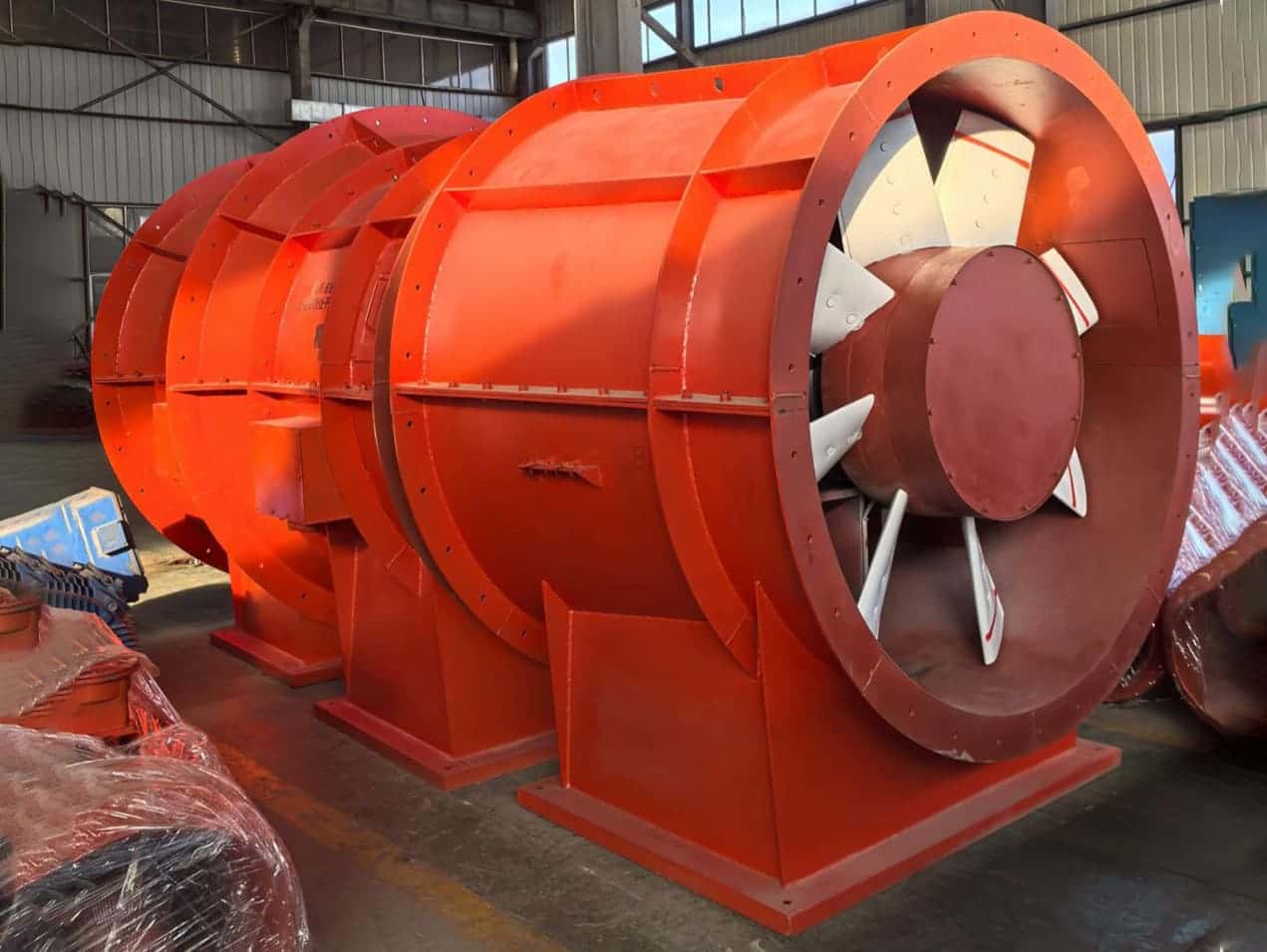
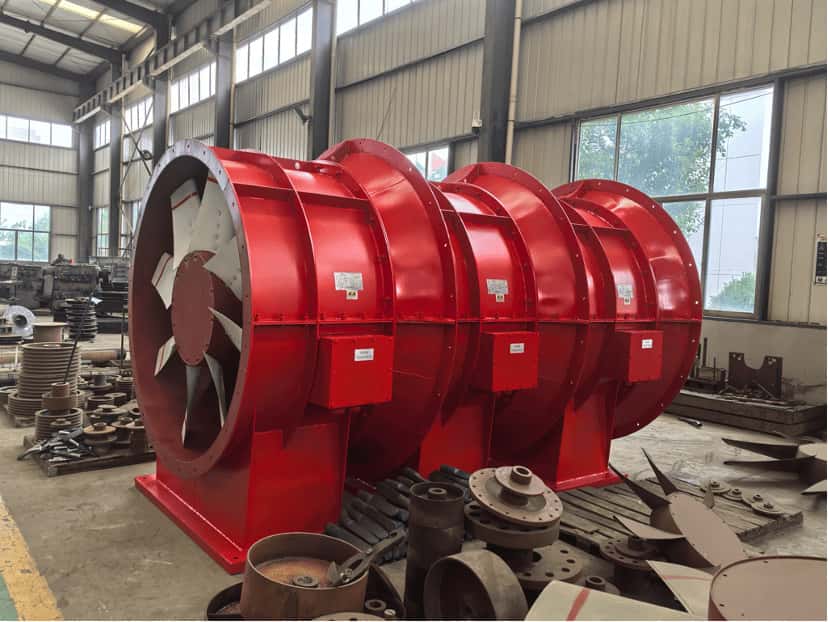
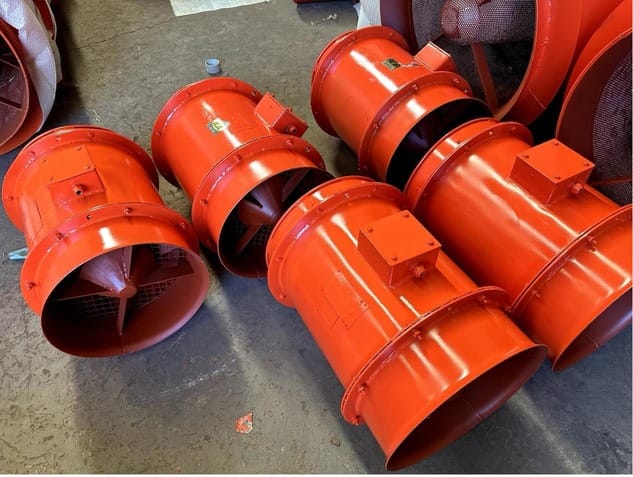
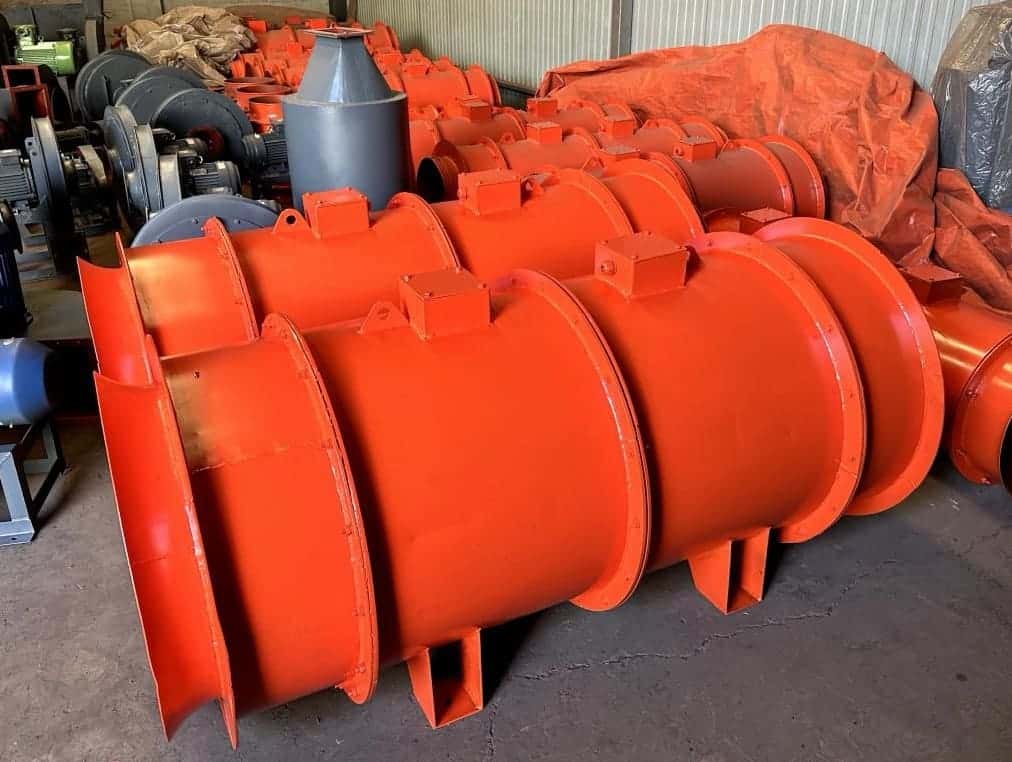
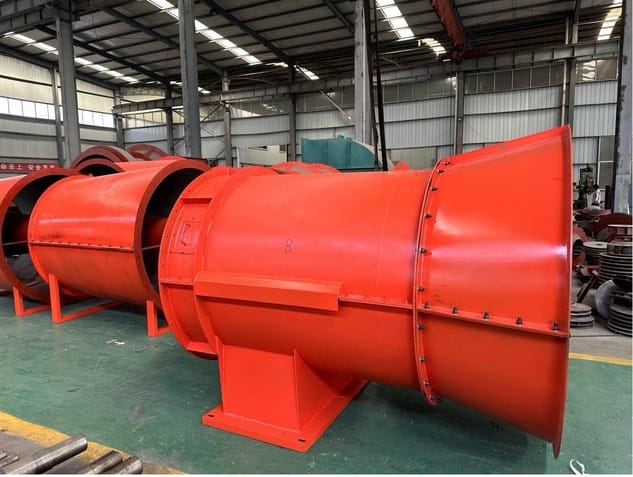
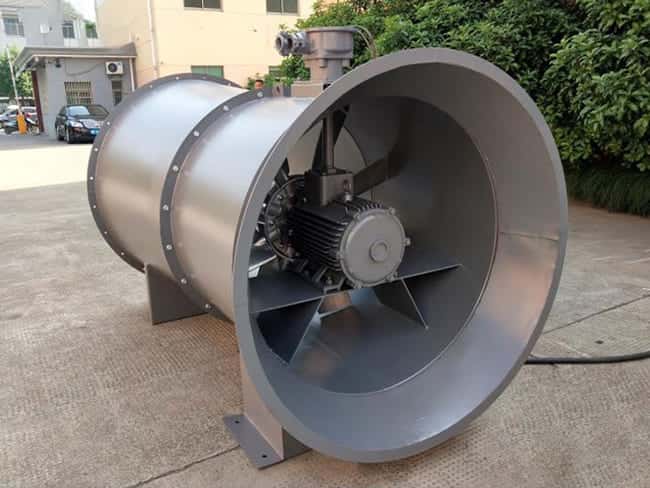
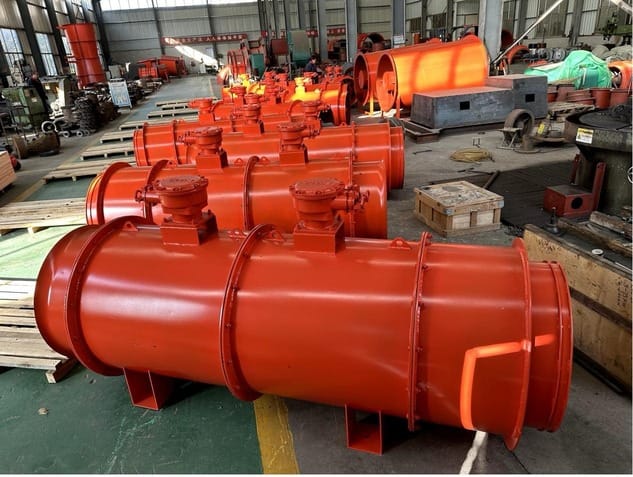
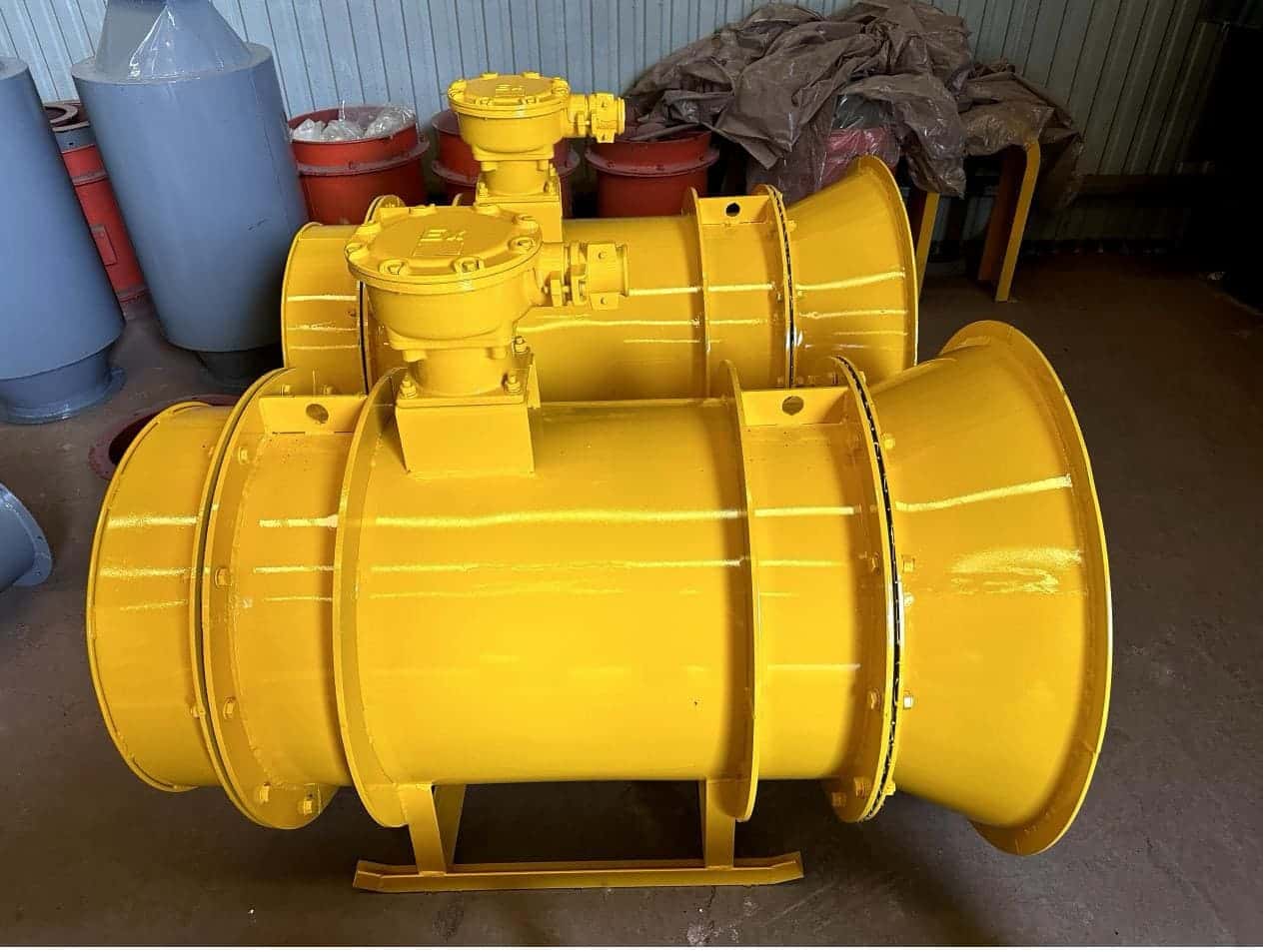
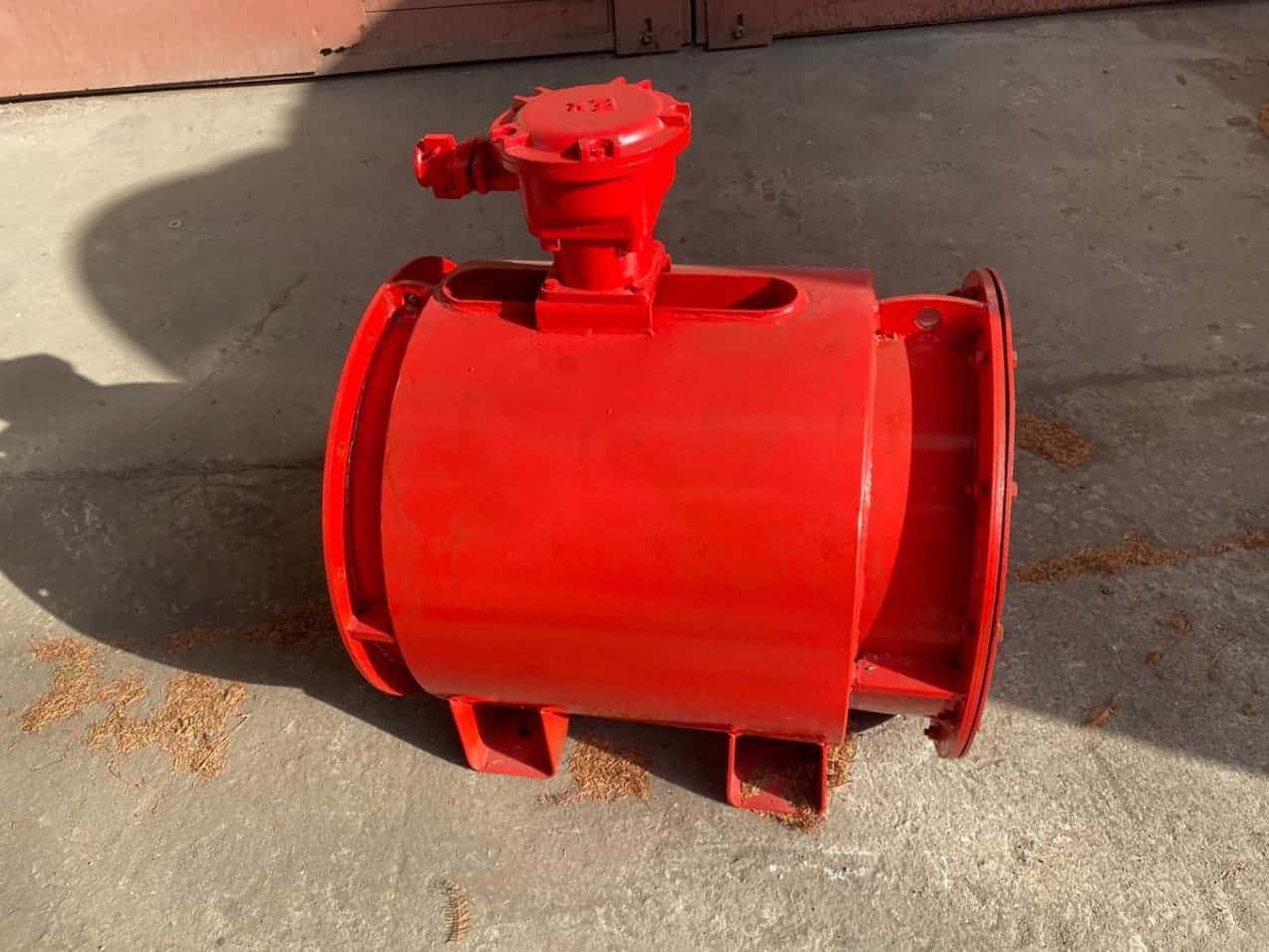
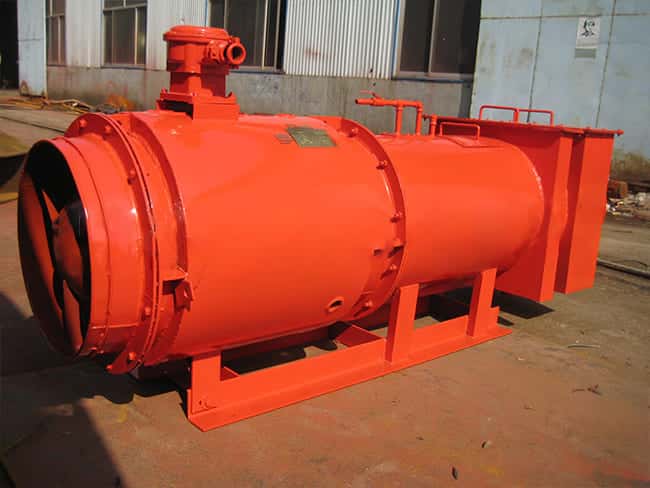
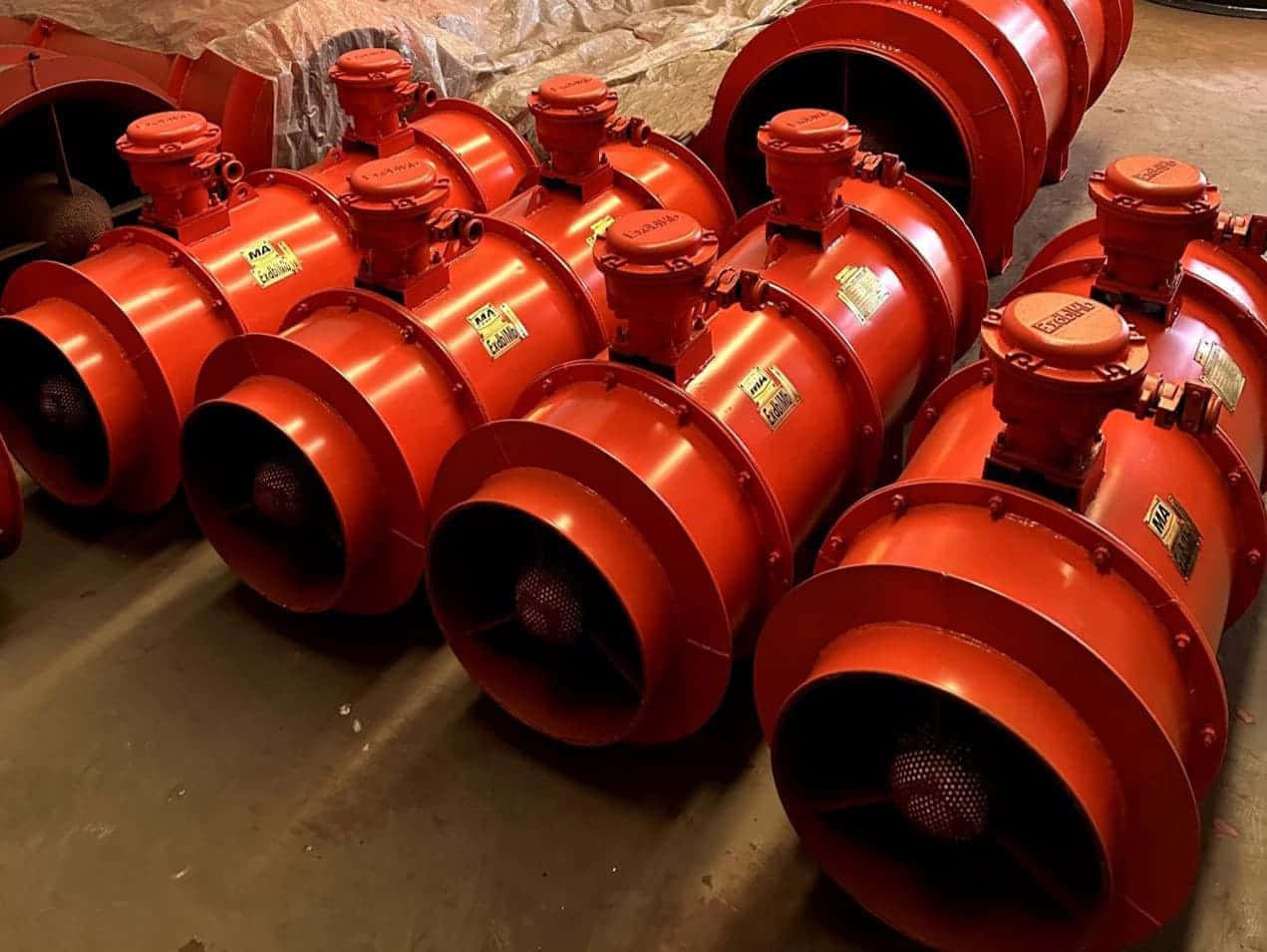

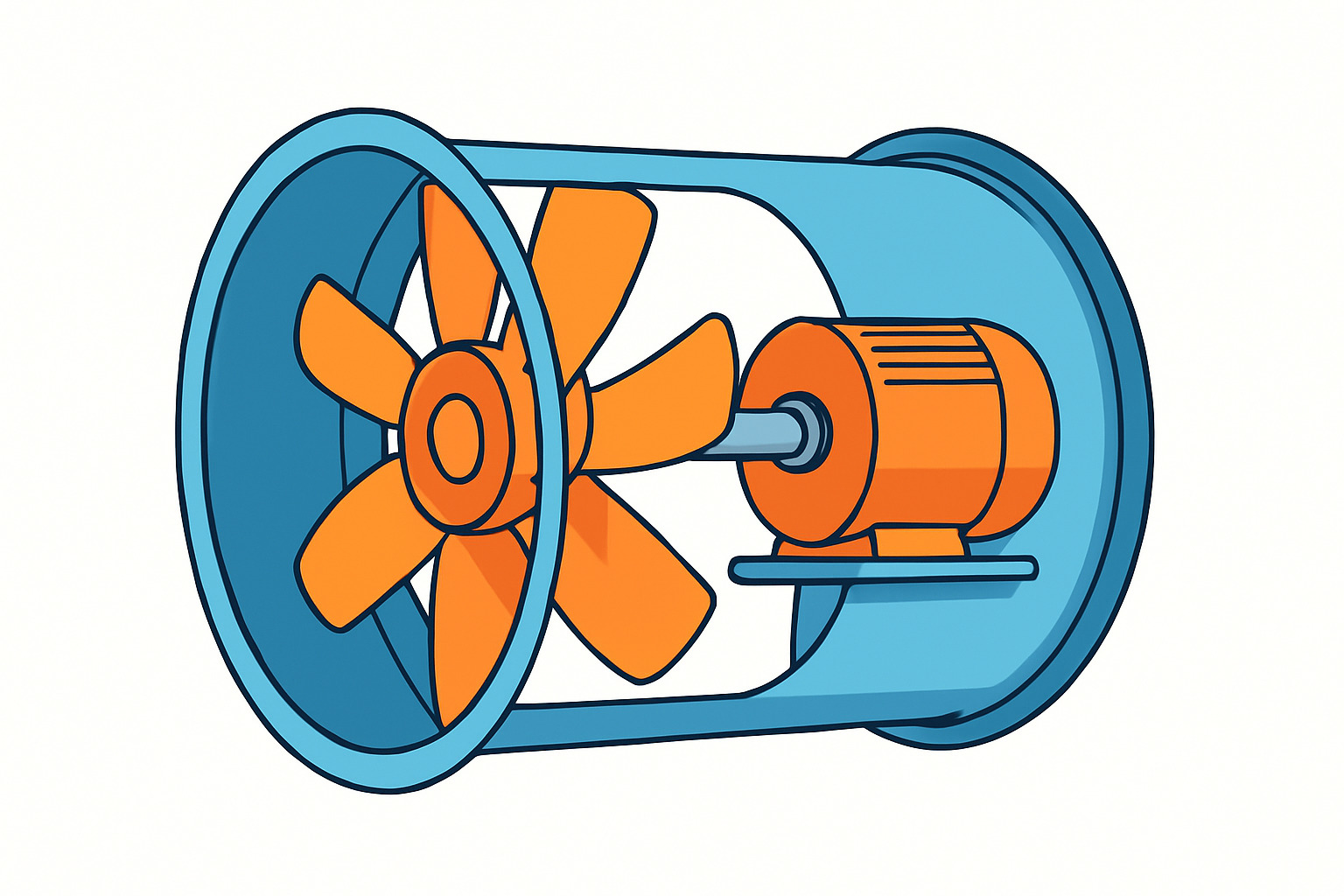
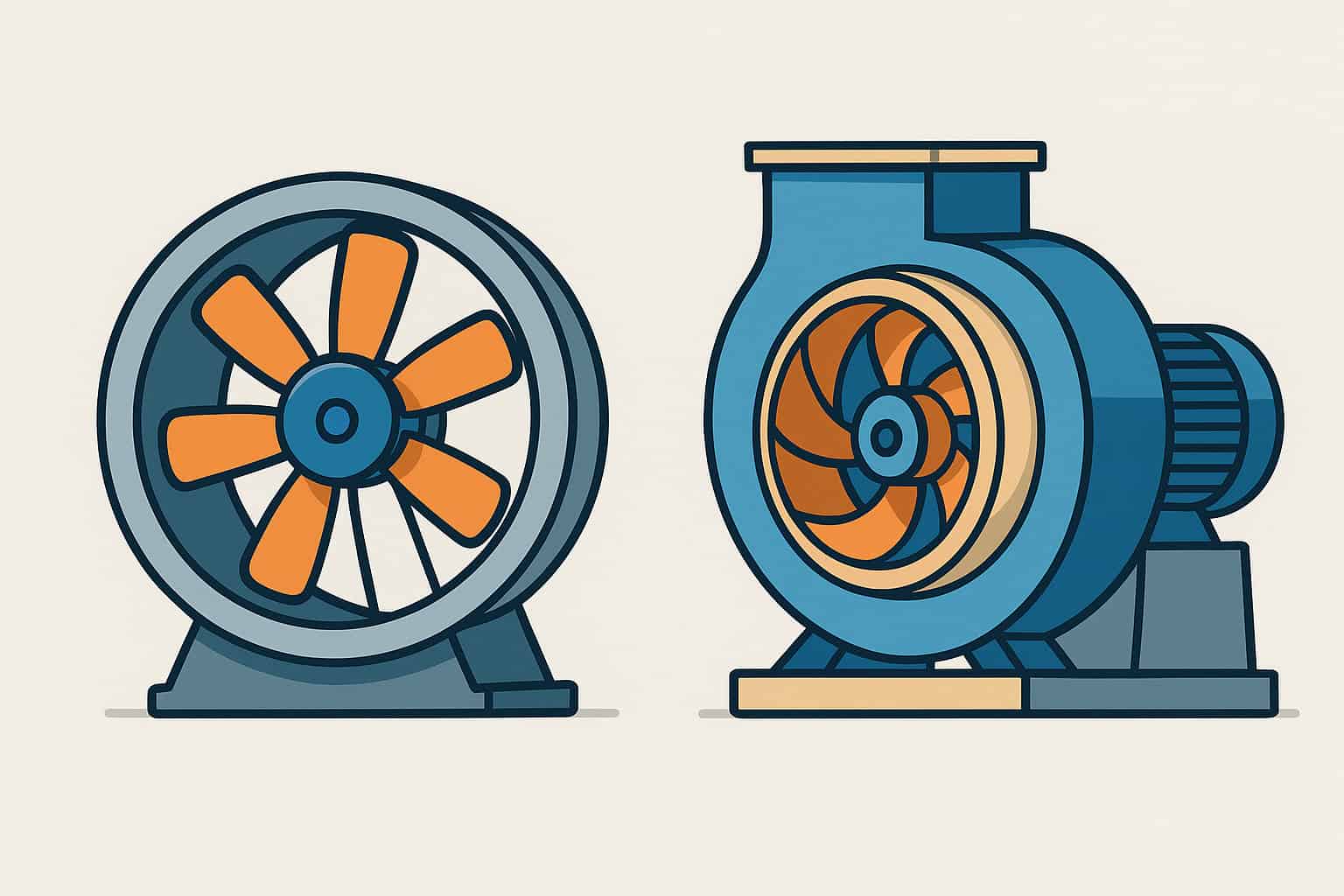
Installing an in line booster fan in underground mine duct ventilation is about more than finding extra space in the heading. The location determines how effectively the fan can overcome duct resistance, how stable the airflow will be, and how safe the installation is for people and equipment. A poorly placed booster fan can cause turbulence, leakage, and even recirculation, while a well placed fan helps maintain strong, predictable airflow at the face.
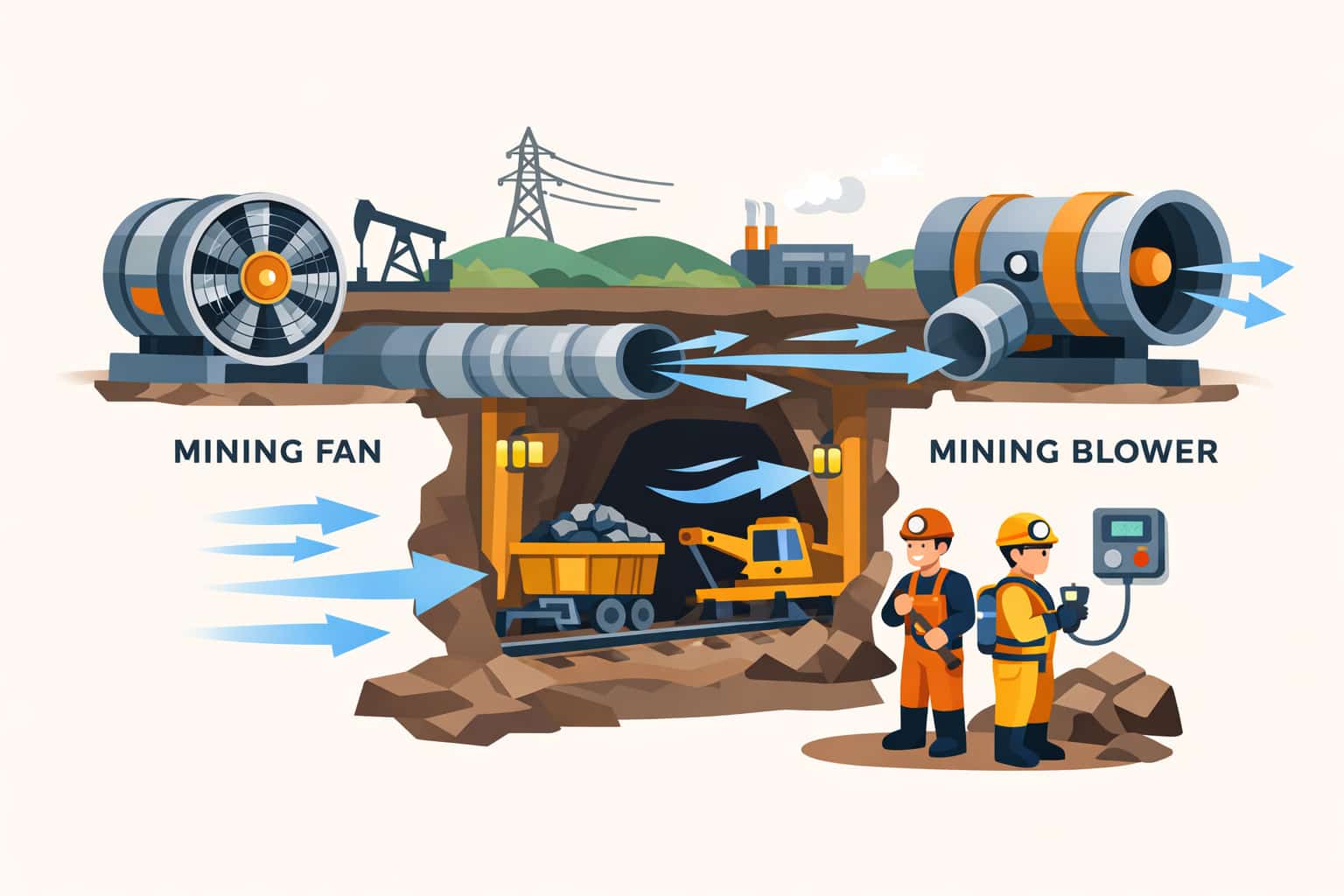
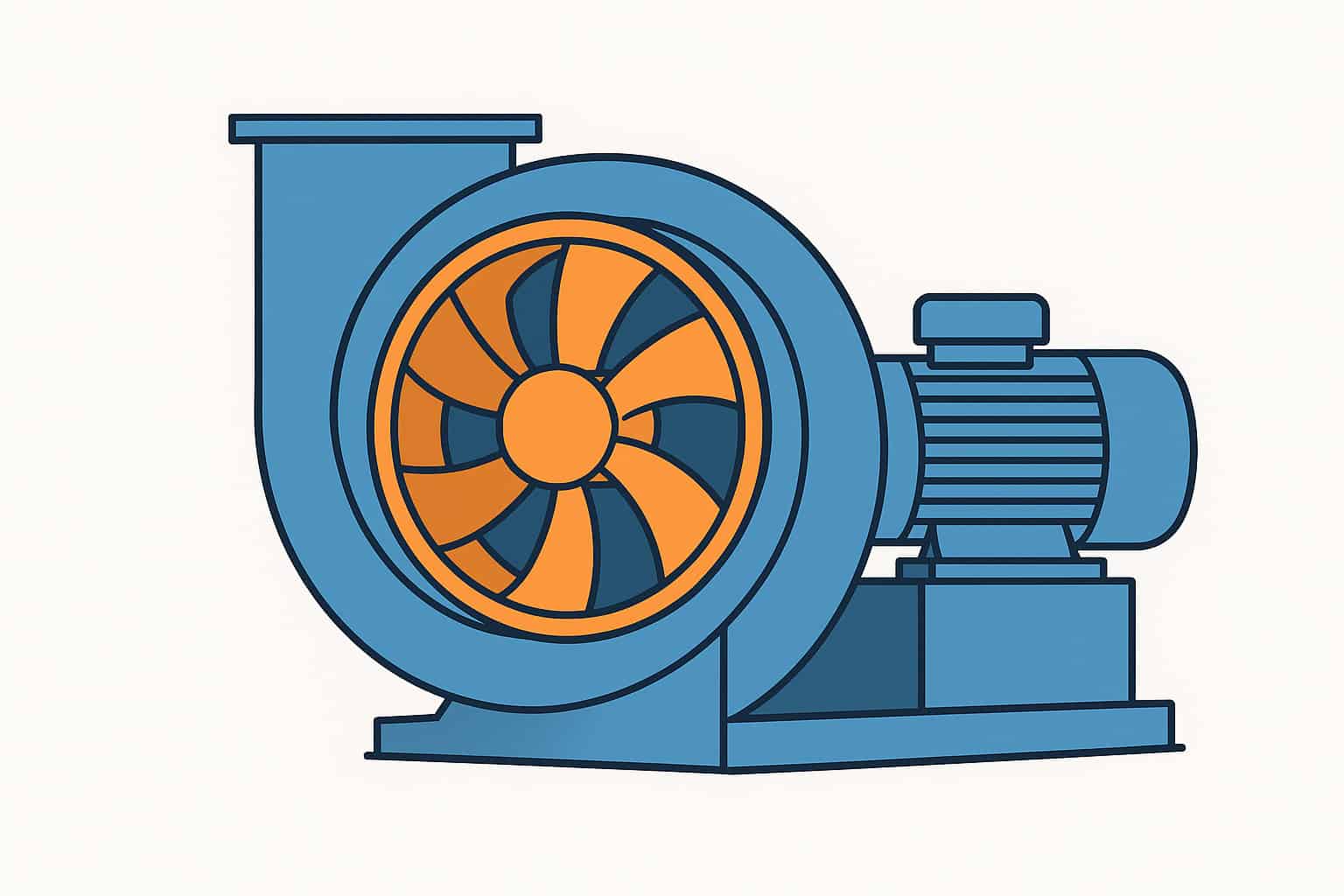
In a typical auxiliary ventilation system, a primary fan delivers air into a duct that extends toward the heading. As the duct is lengthened, friction and leakage reduce airflow at the face, and noise or heat may increase. An in line booster fan is inserted into the duct system to add pressure and restore airflow, especially in long or high resistance duct runs.
Good practice is to install the booster fan in a straight, stable section of duct rather than immediately at a bend or near a damaged joint. A straight section allows air to approach and leave the fan more uniformly, improving performance and reducing turbulence and noise. The fan should be supported securely and aligned with the duct so that there are no sharp steps or misalignments that create extra resistance.
The fan should also be located far enough from the face to avoid direct exposure to falling ground, blasting debris, or heavy traffic, while still being close enough that the added pressure benefits the remaining downstream duct. Many mines place in line booster fans in crosscuts or wider intersections where there is room for proper support, electrical connections, and safe access for maintenance. It is also important to keep the fan away from areas with high water spray or heavy dust accumulation that could quickly foul the motor or impeller.
From an airflow perspective, the location should be chosen based on an estimate of duct resistance and the required air quantity at the face. The booster fan should be positioned where its added pressure is most effective in overcoming the resistance of the remaining duct and face area. Engineers often use simple pressure drop calculations or more detailed modeling to choose a position that balances fan performance with practical installation constraints.
Finally, the installation should consider noise, vibration, and safety. The fan should be isolated from loose ground and supported so that vibration does not damage the duct or nearby structures. Electrical cables must be protected and routed to avoid mechanical damage. Guards, warning signs, and lockout facilities are necessary so that maintenance can be done safely.
In summary, an in line booster fan in underground mine duct ventilation should be installed in a straight, stable duct section, at a location that maximizes pressure benefit to the face while protecting the fan from damage and allowing safe access. Proper placement, support, and alignment are just as important as fan selection when the goal is reliable airflow in challenging headings.
