
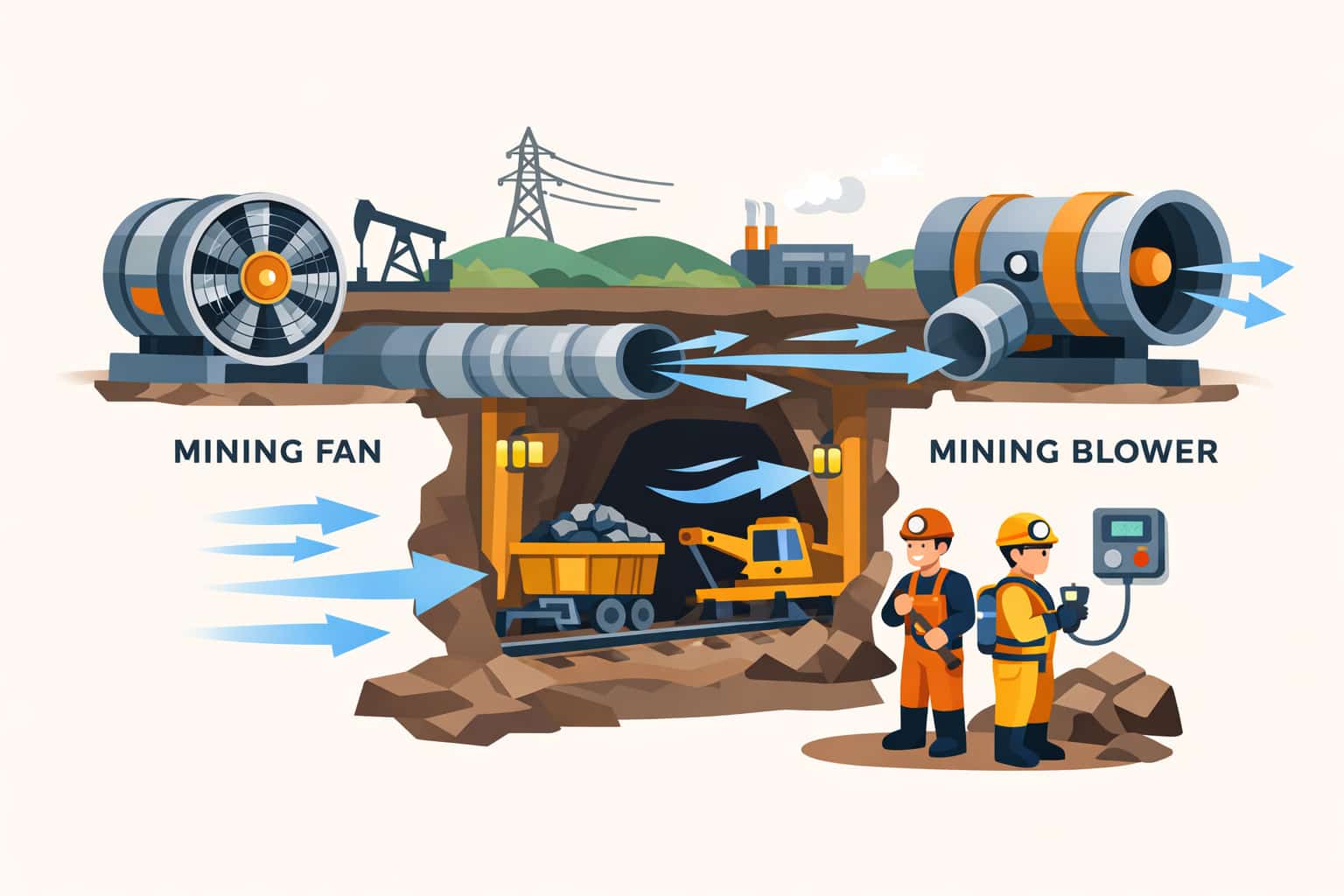

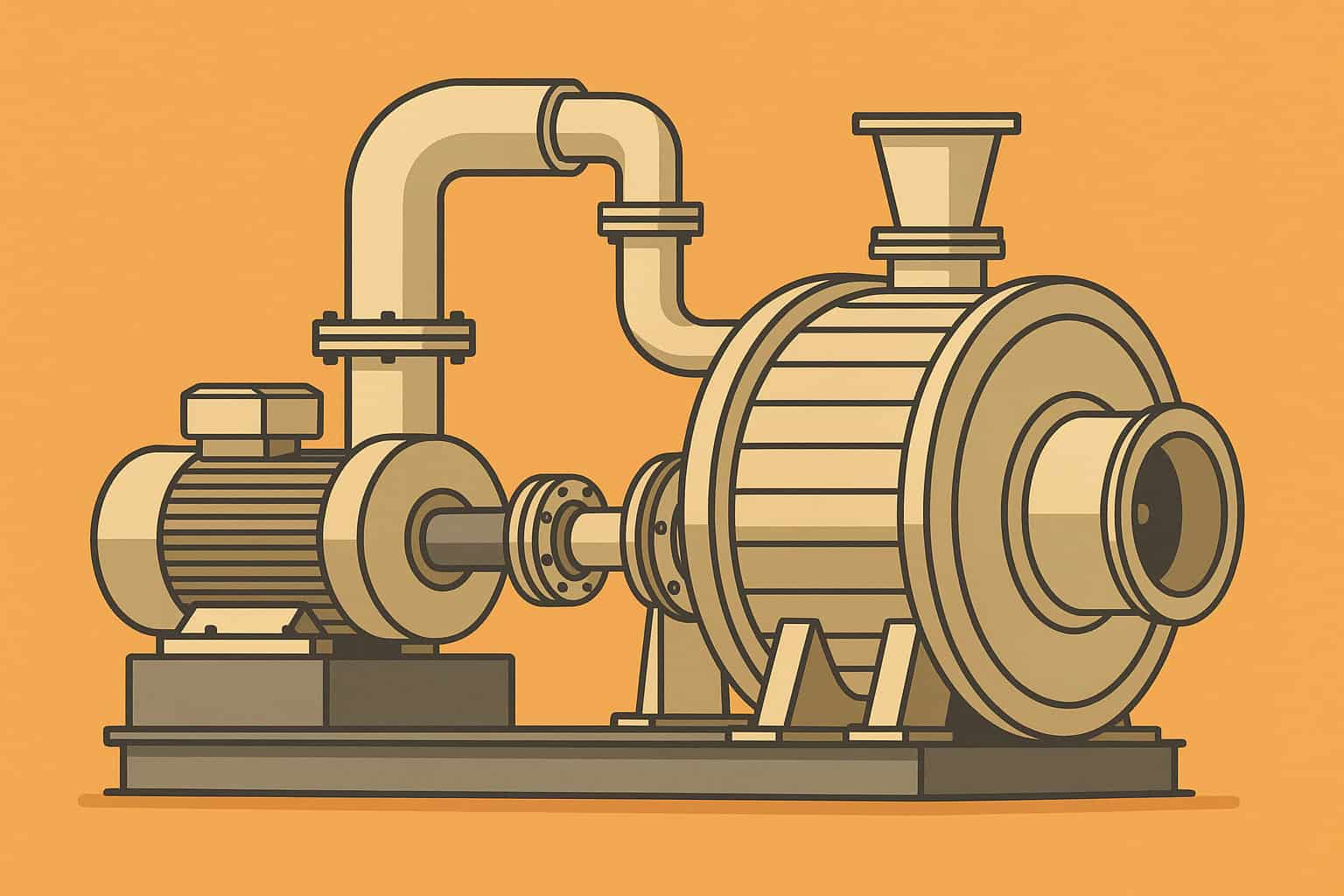

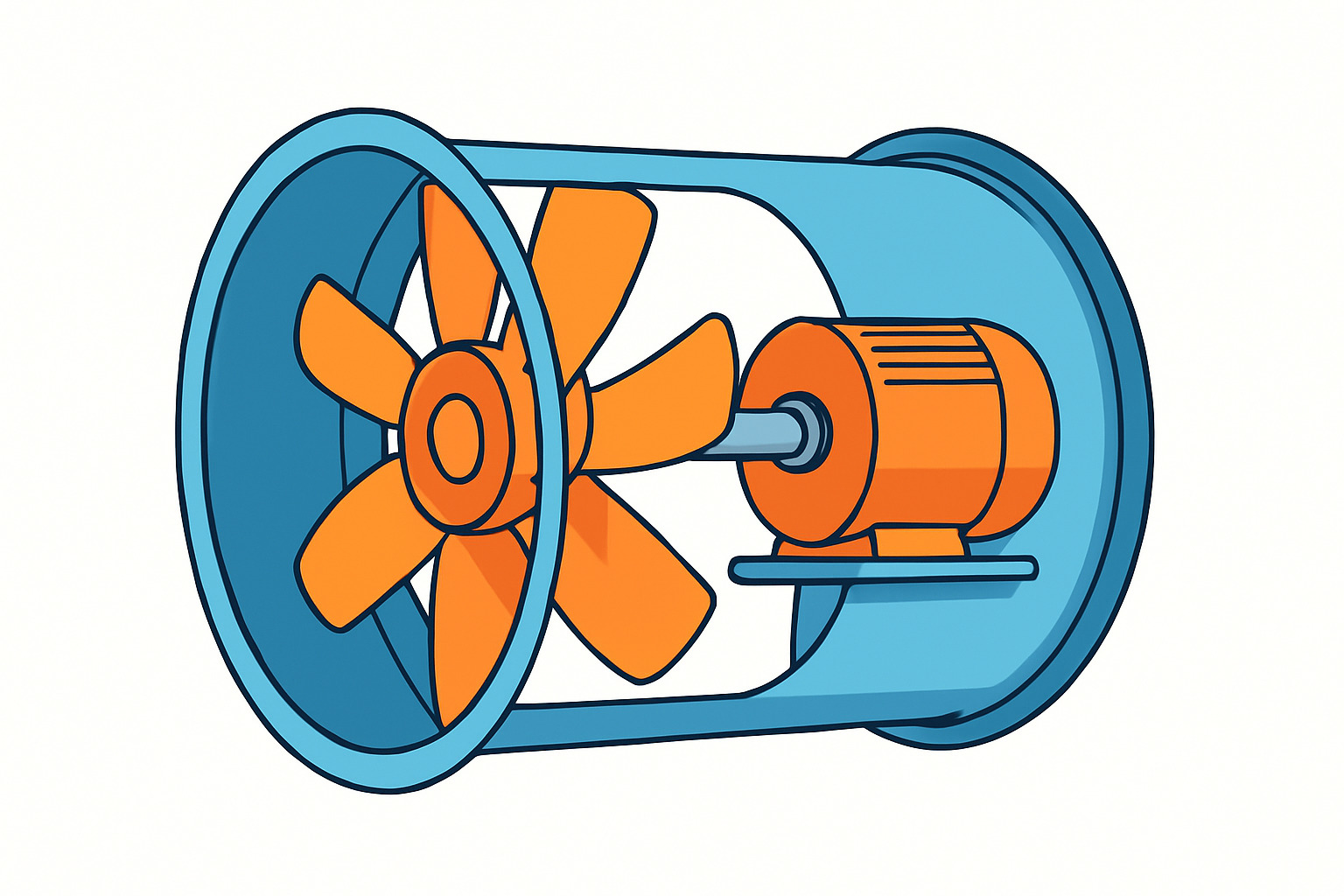
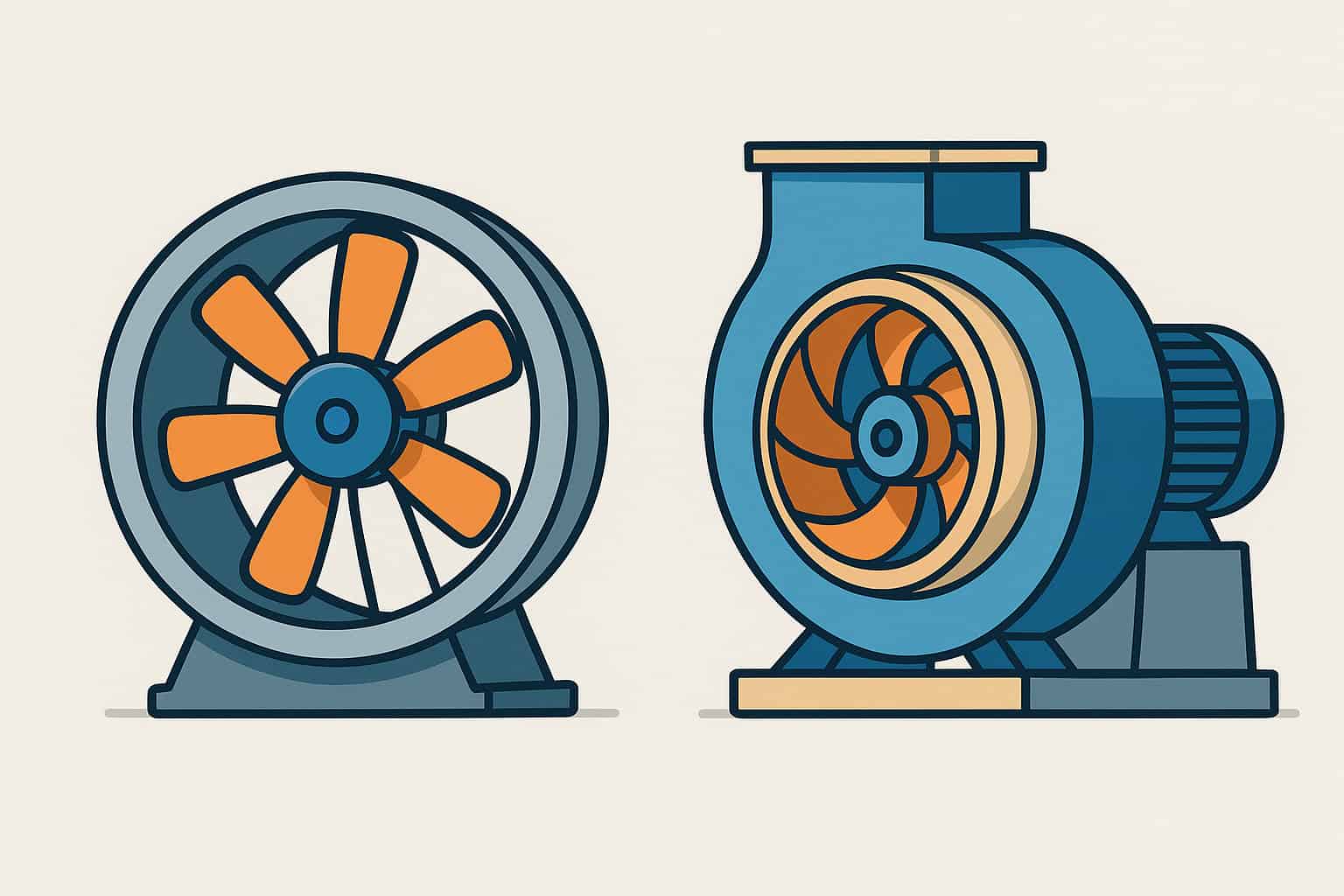
Neither a cross flow fan nor a centrifugal fan is universally better; each is better for specific applications. Cross flow fans are compact devices that produce a wide, uniform air stream at low pressure, while centrifugal fans are heavy-duty machines designed for higher static pressure and more demanding industrial and mining ventilation tasks.
Cross flow fans (also called tangential fans) have a long, narrow impeller with curved blades and a housing that allows air to pass through the impeller twice. Air enters along the length of the wheel, flows across it, and exits as a broad sheet of air. They are commonly used in air conditioners, fan-coil units, small heaters and electronic cooling where a uniform airflow over a heat exchanger or component is more important than high pressure. Cross flow fans are typically quiet, compact and suited to low-pressure duties in clean environments.
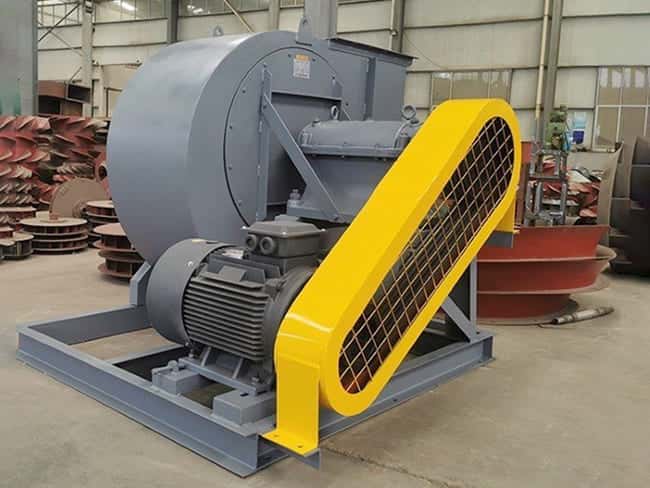
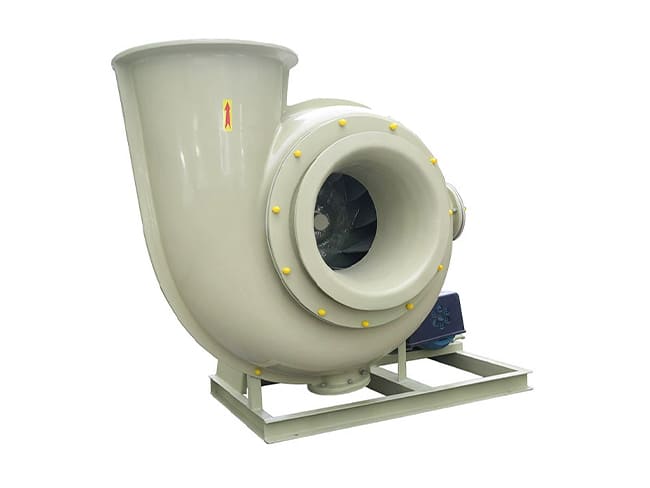
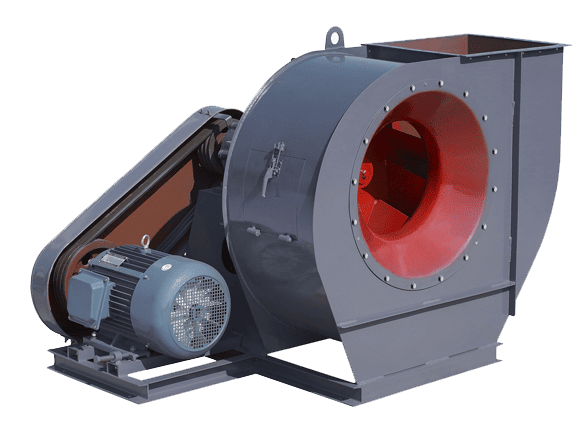
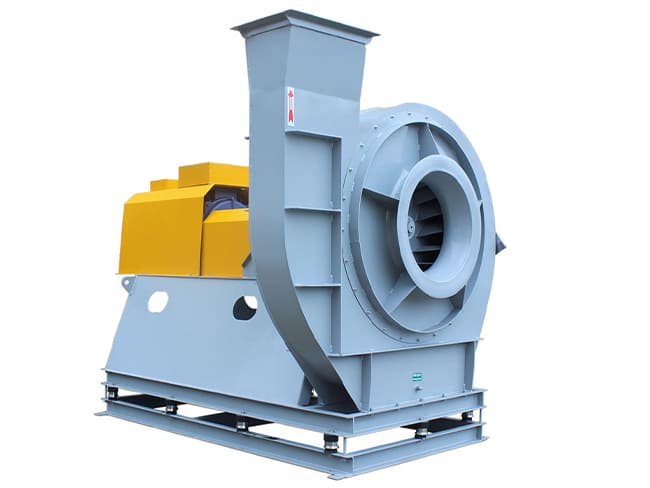
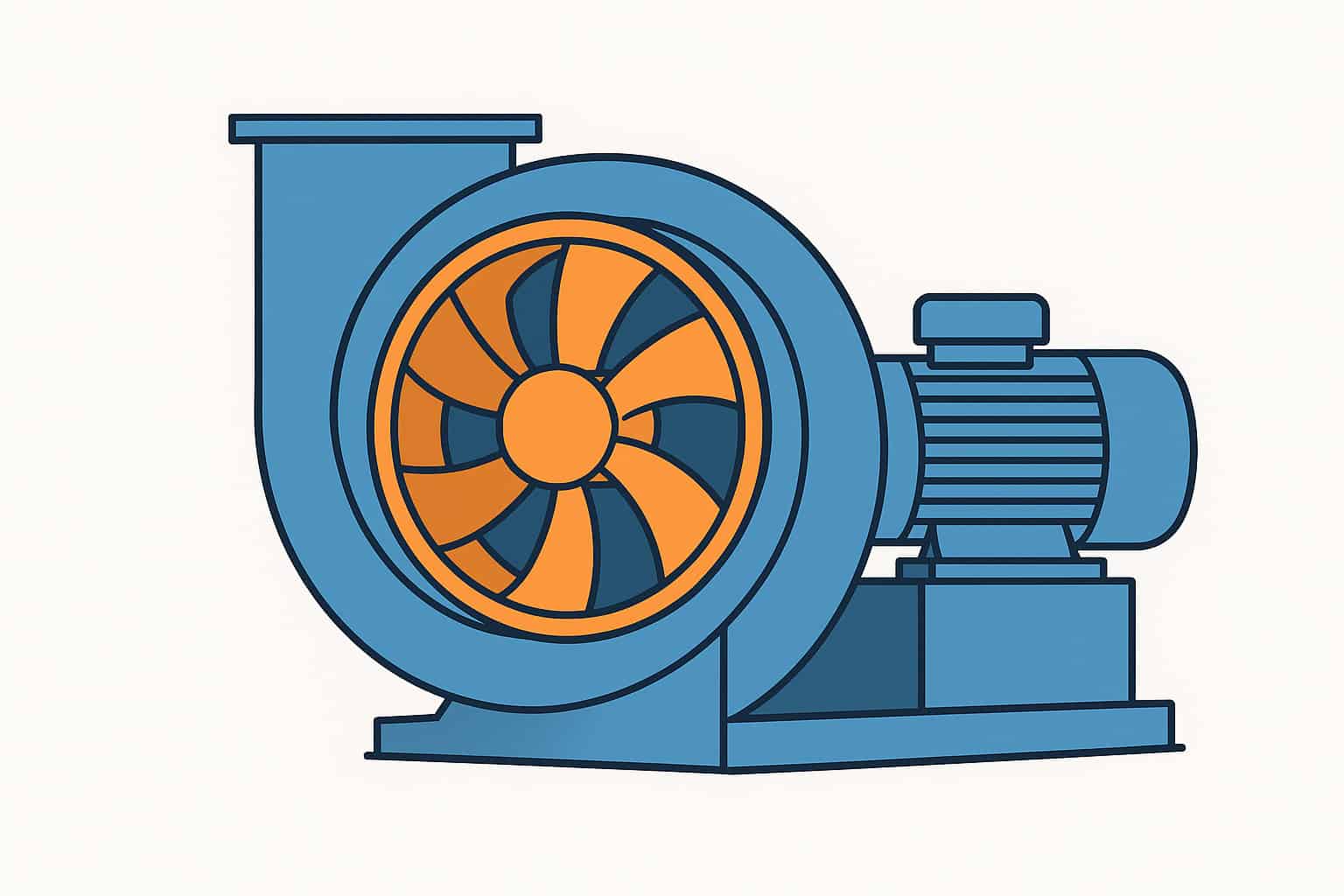
Centrifugal fans, on the other hand, draw air into the centre of a rotating impeller and discharge it radially into a scroll housing. This geometry allows them to generate significant static pressure, which is essential in systems with long ducts, filters, scrubbers, dampers and complex mine airways. Centrifugal fans are widely used in dust collection, furnace and kiln exhaust, process ventilation, local exhaust near crushers and conveyors, and many other industrial and mining applications.
When deciding which is better, you should first consider pressure and airflow requirements. If your application needs a gentle, evenly distributed airflow over a coil or electronics at very low pressure, a cross flow fan is often the best fit. But if you must overcome higher system resistance or move air through long or complicated ductwork, a centrifugal fan is far more suitable and robust.
Durability and air quality are also important. Cross flow fans are usually designed for relatively clean air and light-duty operation. They are not intended for high dust loading, abrasive particles or corrosive gases. Centrifugal fans can be engineered with radial blades, wear-resistant materials and special coatings to handle dirty, hot or corrosive air streams in harsh industrial and mining environments.
Energy efficiency and noise depend on matching the fan to the duty. A cross flow fan forced to operate at higher pressure than it was designed for will be inefficient and noisy. A centrifugal fan used on a very low-pressure system may be oversized and consume more energy than necessary. Proper selection, based on fan curves and system resistance, ensures that whichever fan type you choose operates near its best efficiency point.
In summary, cross flow fans are better for compact, low-pressure applications that require a uniform air curtain over coils or components, while centrifugal fans are better for higher-pressure, heavy-duty industrial and mining ventilation systems. The “better” choice is the one that matches your specific pressure, airflow and environmental conditions.