
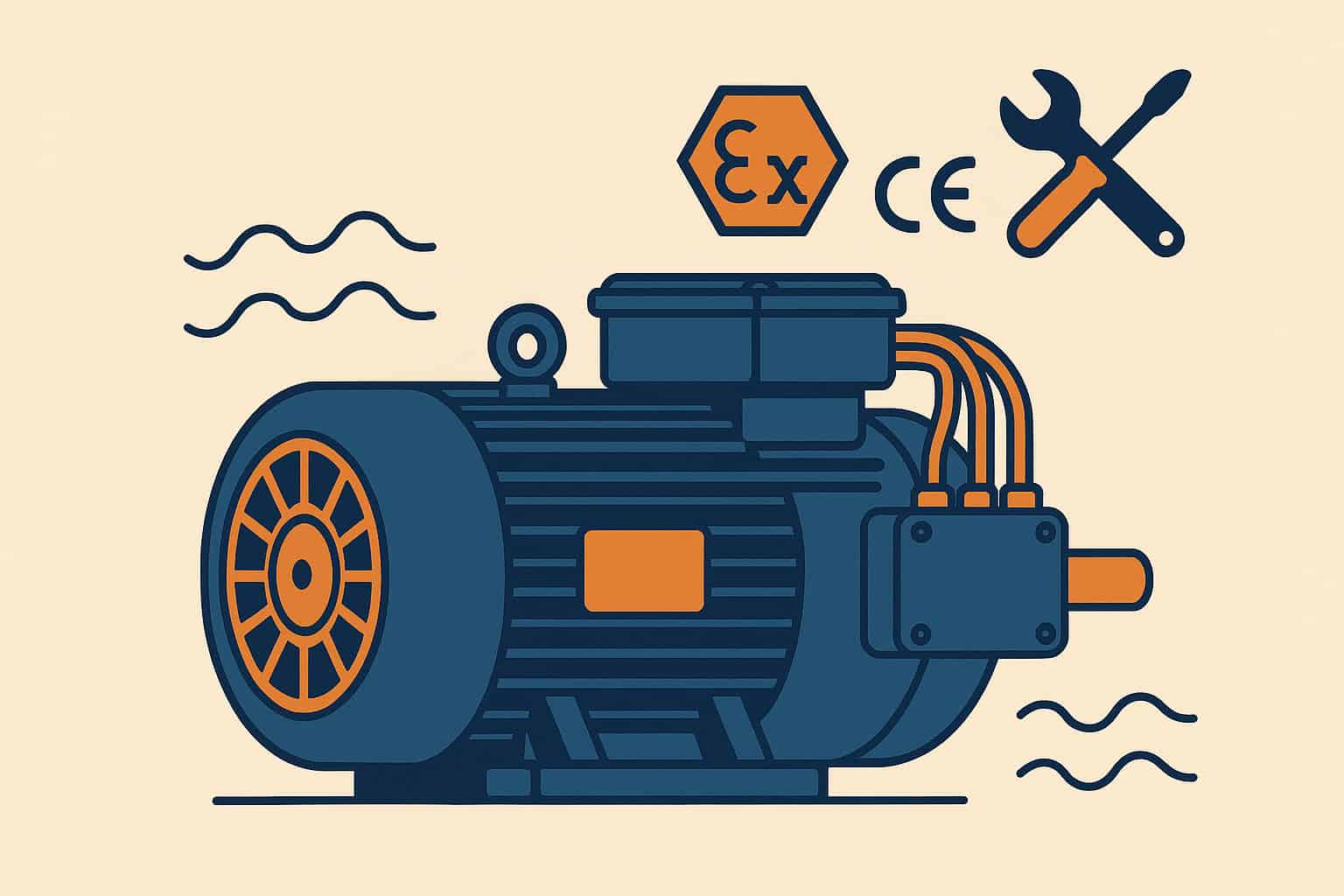
Fan motors usually burn out because they overheat for a long period of time. Heat damages the insulation on the windings, eventually causing short circuits or open circuits. In industrial and mining ventilation fans this is rarely a sudden mystery; it is normally the result of electrical, mechanical or environmental problems that have been present for some time.
One common reason is overloading and incorrect sizing. If a motor is too small for the fan duty, or if the fan is operated at higher speed or pressure than it was designed for, the motor draws more current than its nameplate rating. The excess current produces extra heat in the windings. If overload protection is missing, incorrectly set or repeatedly bypassed, this overheating continues until the insulation fails and the motor “burns out”.
Poor cooling and dirt build-up are another major cause. Most fan motors rely on their own small cooling fan and free air circulation over the frame to remove heat. In dusty plants and mines, fins and air passages can become clogged with dust and oil, greatly reducing heat dissipation. If the motor is installed in a confined, hot or poorly ventilated space, its temperature rises further. Over time, continuous operation at elevated temperature shortens insulation life and leads to failure.
Electrical supply problems also contribute to motor burn out. Low voltage, single-phasing and voltage imbalance all increase current in one or more phases. Motors running on poorly regulated networks or long undersized cables may operate for years with higher than normal winding temperature. If protective relays are absent or mis-calibrated, no one notices until the motor fails. Repeated rapid starts and stops, or frequent automatic restarts after power dips, also stress the motor thermally and mechanically.
On the mechanical side, worn or seized bearings can make the motor work far harder than it should. As friction increases, the motor must deliver more torque, drawing more current and heating the windings. Misalignment, bent shafts and unbalanced impellers create vibration that damages bearings and loosens connections, further increasing the risk of overheating and burn out.
In aggressive industrial and mining environments, moisture, chemicals and conductive dust can attack insulation and internal components. Water ingress or condensation inside the terminal box and motor frame can create tracking paths and partial discharges that slowly carbonise insulation. If motors are not properly sealed, space-heated or periodically dried out, this process eventually leads to electrical failure that looks like a “burnt” motor.
In summary, fan motors burn out because they run too hot for too long, due to overloading, poor cooling, supply problems, bearing issues, contamination or misuse. Good selection, correct protection settings, regular cleaning, lubrication and electrical testing greatly reduce the risk of burn out in industrial and mining ventilation fans.
