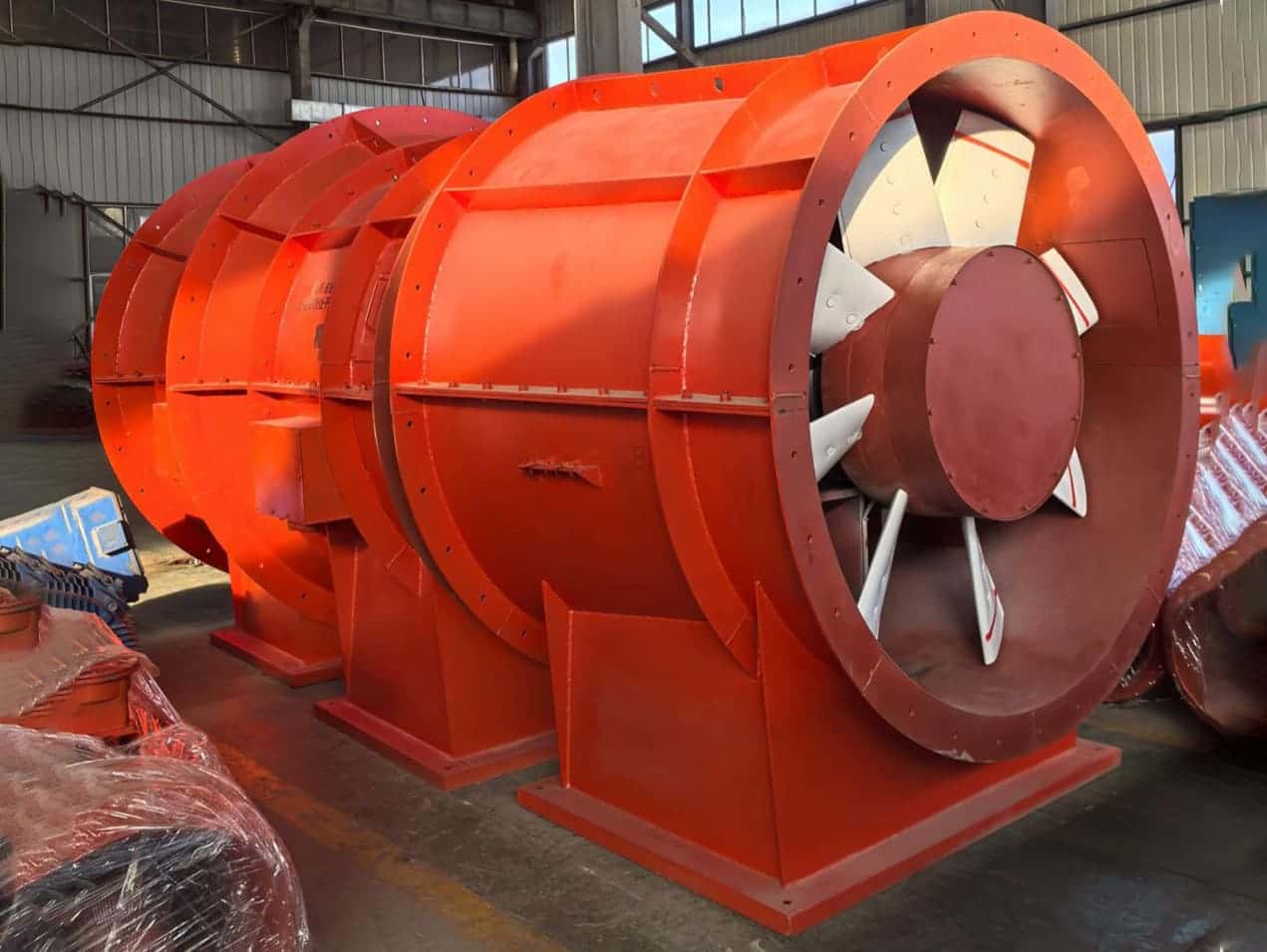
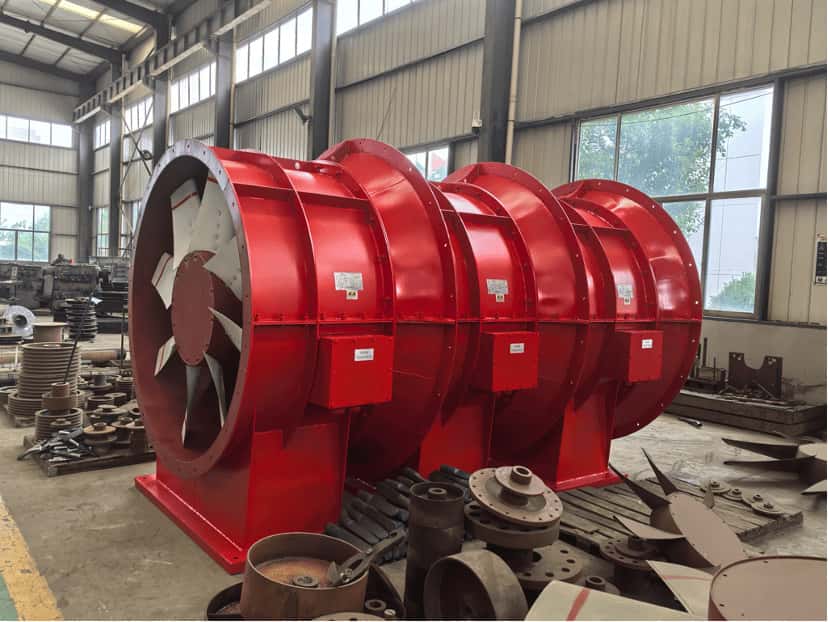
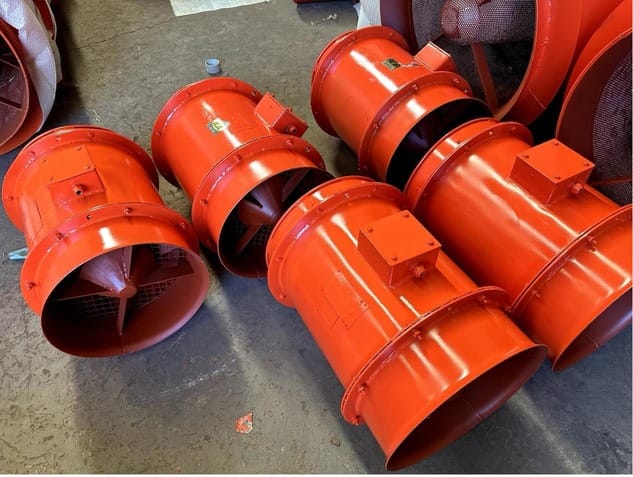
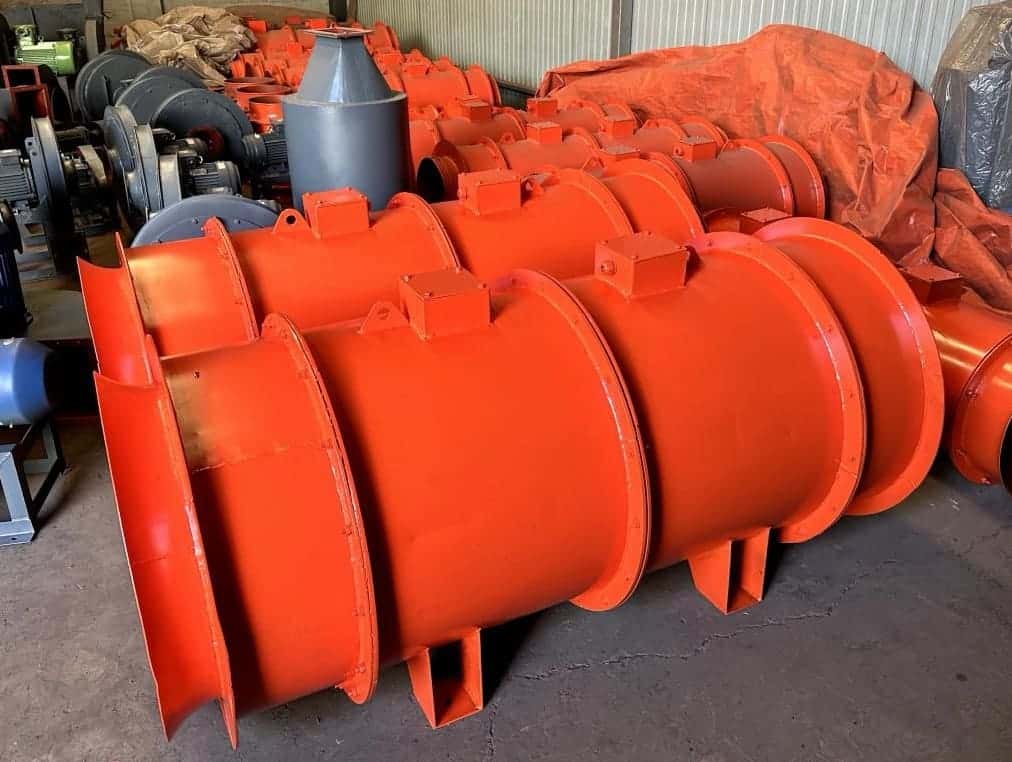
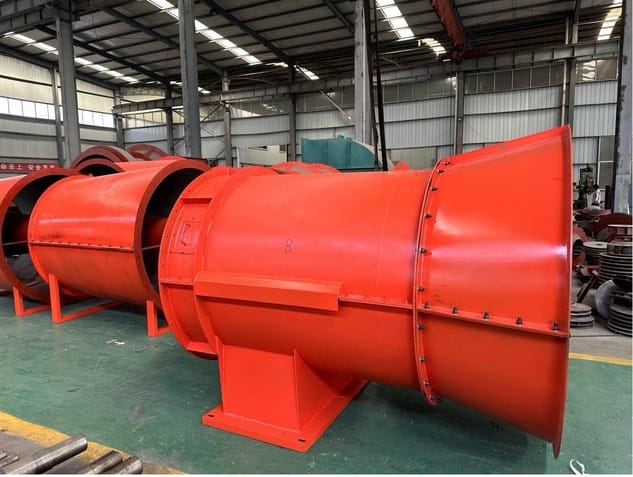
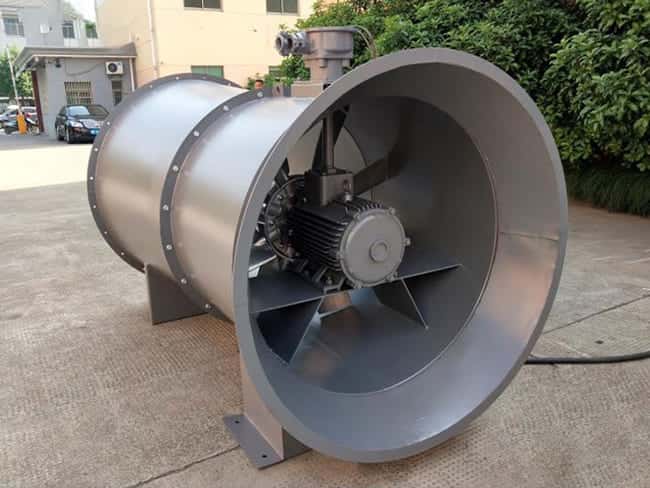
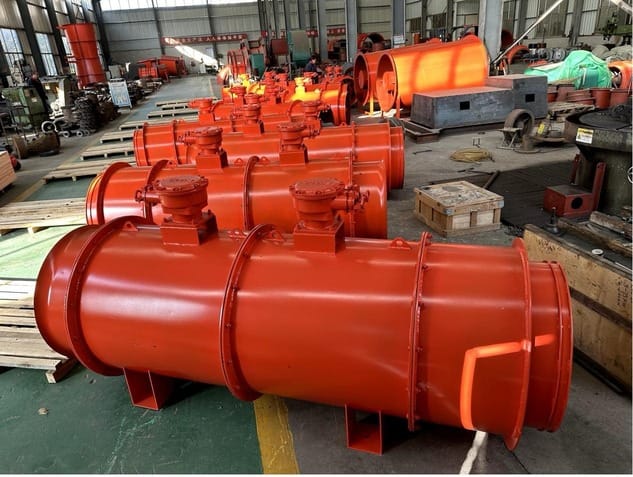
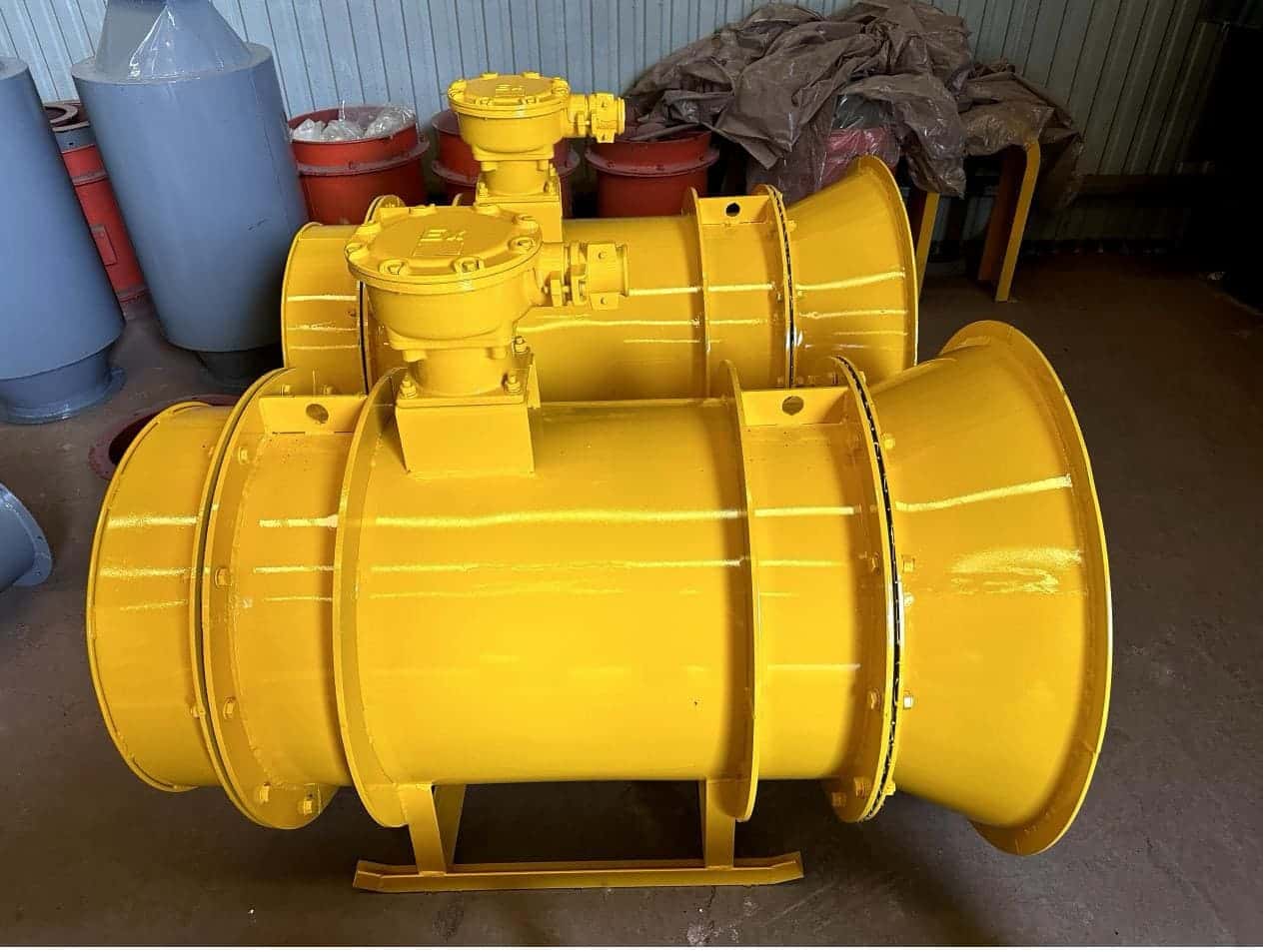
It is called an exhaust fan because its primary job is to exhaust air from a space. In ventilation engineering, “exhaust” means to remove used, stale, hot or contaminated air and discharge it to a safe location outside the building, tunnel or mine. The fan does not mainly push fresh air in; instead, it pulls unwanted air out and creates a slight negative pressure so that cleaner air flows in from other openings or from dedicated intake fans.
In a simple bathroom or kitchen, an exhaust fan draws moist or odorous air into the fan housing, through a short duct and out through a wall or roof cap. As this air is exhausted, replacement air enters from adjacent rooms or from outside, gradually restoring comfortable and healthy conditions. The same principle applies in workshops, warehouses and factories, where wall- or roof-mounted exhaust fans remove hot air, fumes and dust generated by processes, machinery and people.
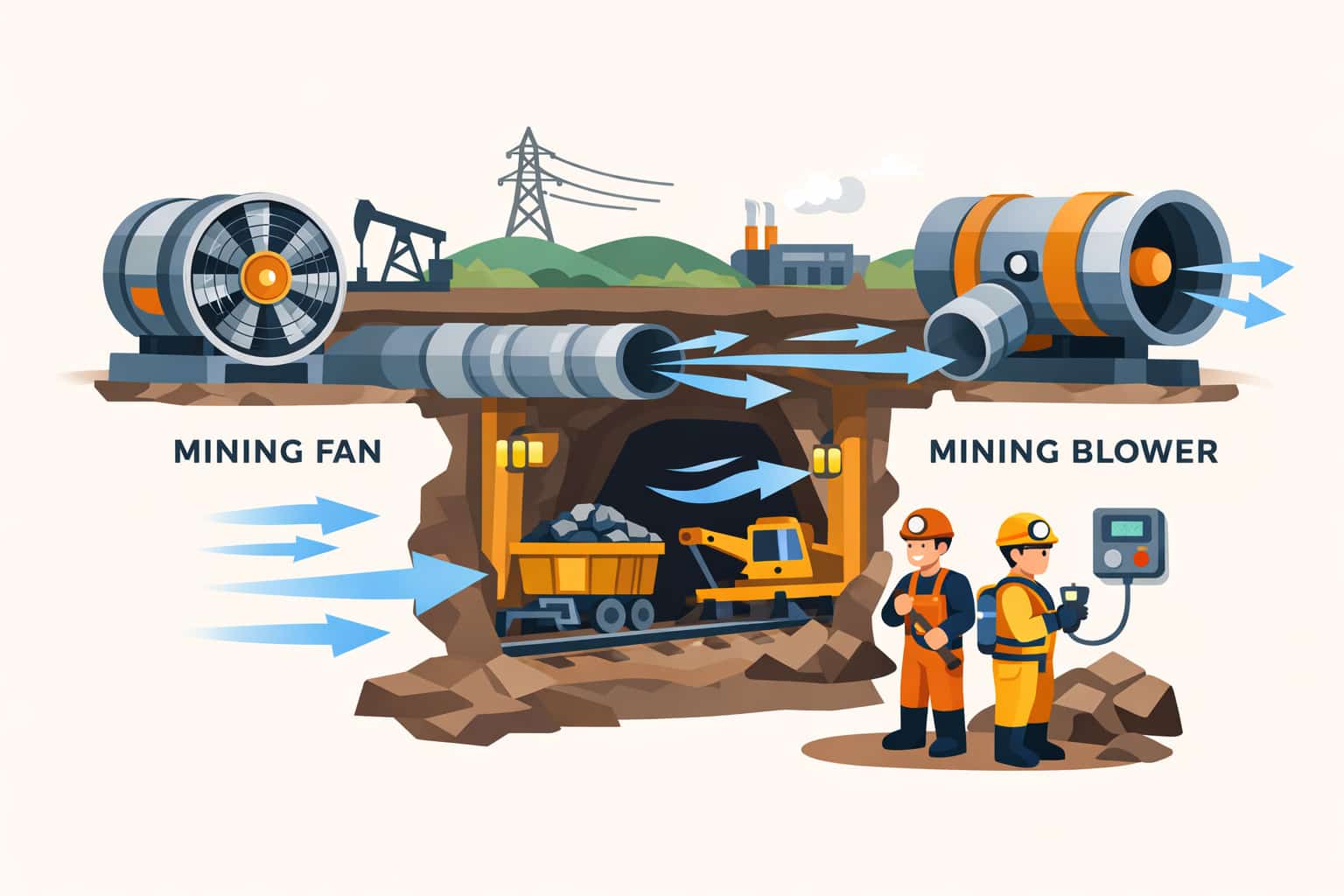
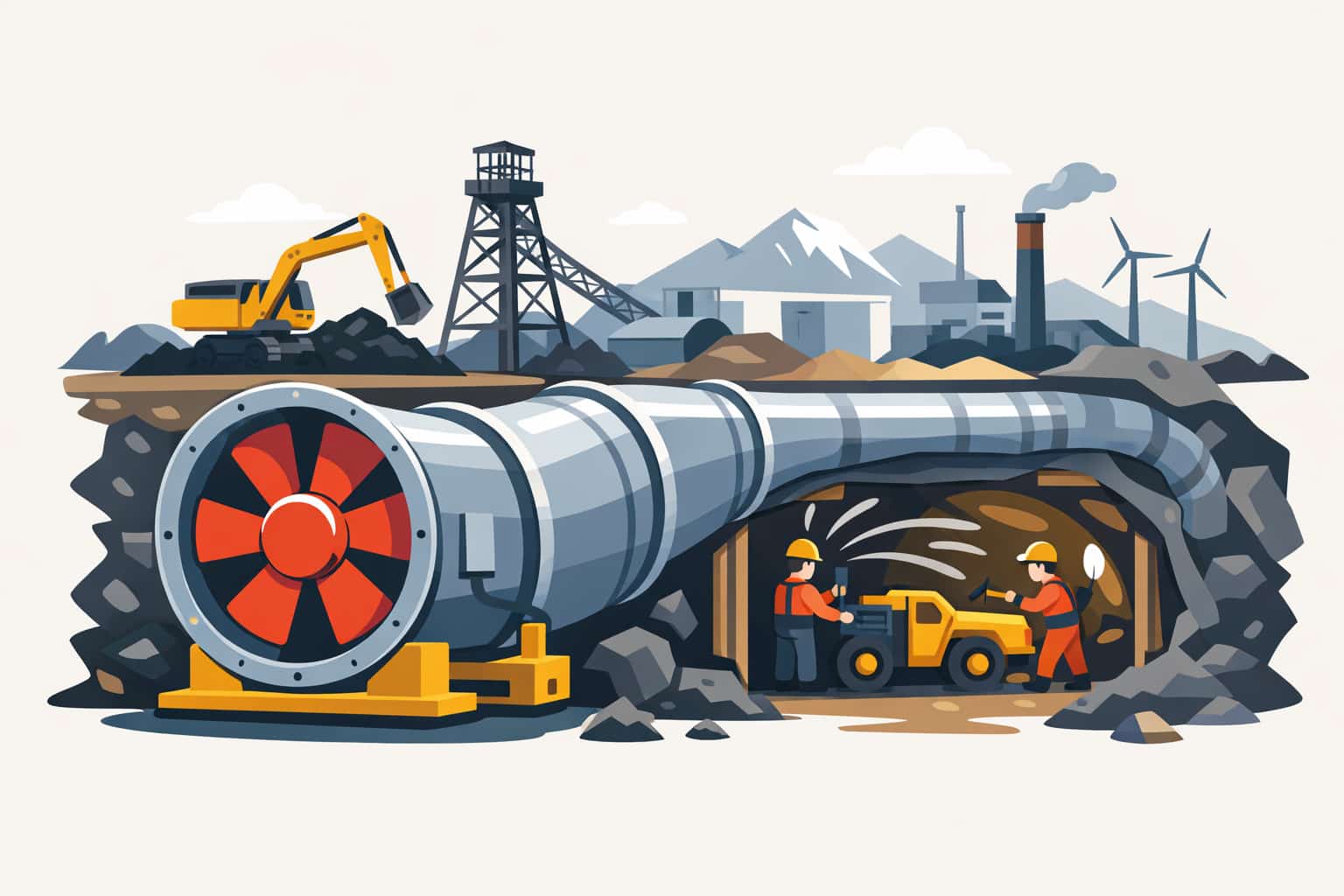
In industrial and mining ventilation, the word “exhaust” is used systematically in the design. Main mine fans are often configured as exhaust fans that pull air through the underground workings and discharge it into the atmosphere through an exhaust shaft or drift. This arrangement helps carry gases, dust and heat away from working faces and ensures that airflow follows a planned path from intake entries to exhaust raises. Calling these machines “exhaust fans” makes their function in the air circuit immediately clear.
The term also distinguishes exhaust fans from intake or supply fans, which push fresh air into a space. Supply fans pressurise a building or tunnel, while exhaust fans depressurise it. In many systems both types are used together: supply fans deliver conditioned air, and exhaust fans remove contaminants and maintain the desired pressure balance between clean and dirty zones.
Because their purpose is removal, exhaust fans are normally installed at or near the point where air is to leave the system: in exterior walls, on roofs, at the connection to an exhaust duct or on top of an exhaust shaft. Their housings, weather louvres and ductwork are designed to direct the exhausted air away from people, intakes and sensitive equipment.
In summary, it is called an exhaust fan because its defining function is to exhaust used air from the system, not to supply fresh air. The name reflects the direction of airflow and its role in the overall ventilation strategy for buildings, industrial plants and mines.