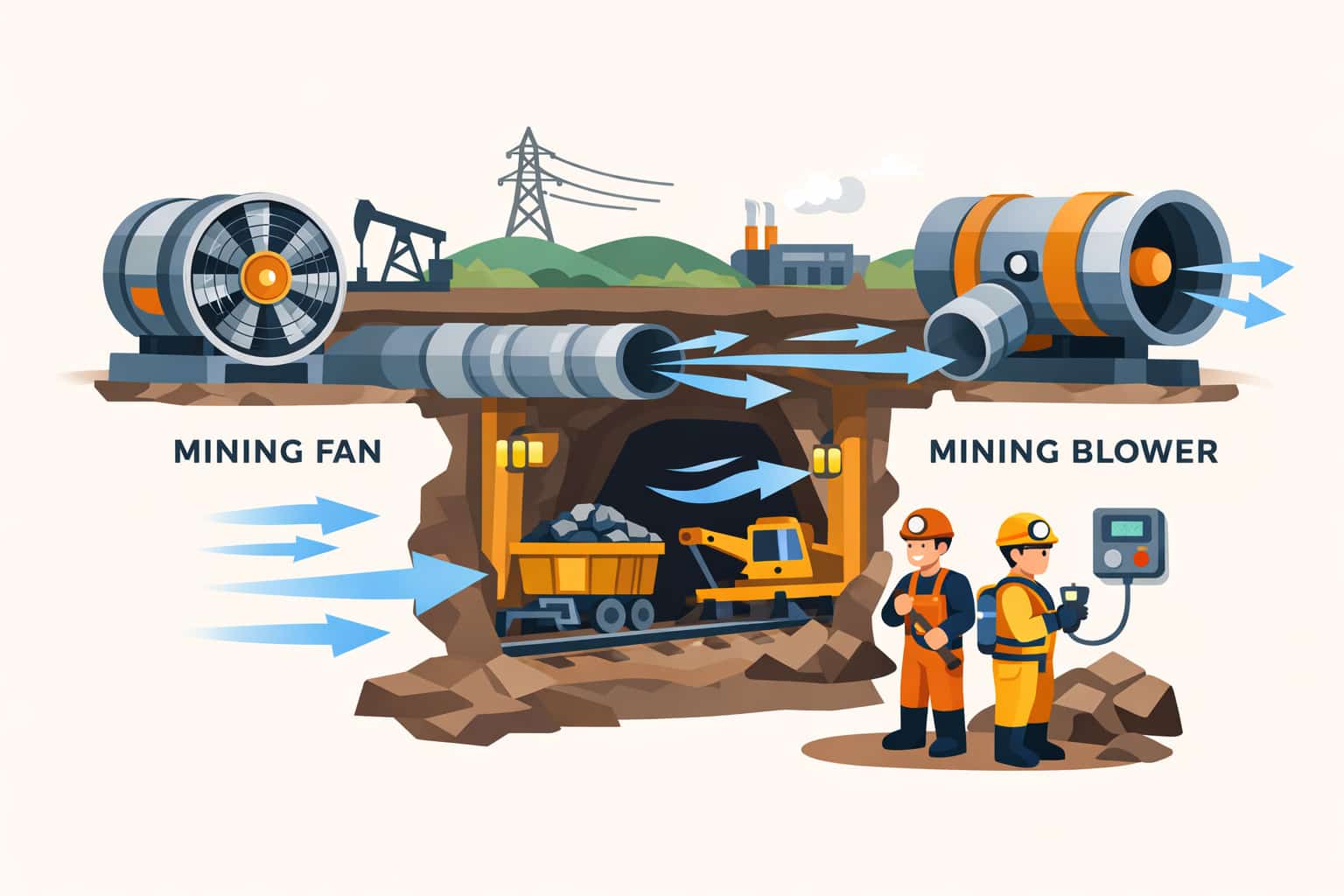
airflow measurement
Airflow measurement is the practical step that turns ventilation from “assumed” to “verified.” In mining ventilation, design intent and fan nameplates are not enough because system resistance and leakage change as headings advance. Measuring airflow at the right location—often near the end of duct or at a defined survey point—confirms whether the required ventilation plan targets are actually being met.
A common mistake is measuring where it is convenient (near the fan outlet) rather than where it matters (at the face). For auxiliary ducted ventilation, the key indicator is usually delivered airflow at or near the working face. If end-of-duct airflow is low, the cause is typically one of two categories: increased resistance (longer duct, more bends, restrictions) or increased leakage (poor joints, tears, damage). Measurement helps separate these causes and supports corrective action.
Good measurement practice includes:
- Define the measurement location and keep it consistent for trending and comparison.
- Record operating conditions (fan speed, duct length, number of bends, visible leakage condition).
- Track trends over time as headings advance; falling airflow often signals rising Ps demand or worsening leakage.
- Use results for duty-point checks by comparing delivered airflow with expected Q@Ps performance.
Measurement also improves selection accuracy. When a site can provide required airflow at the target point and realistic resistance/leakage information, suppliers can recommend equipment with proper margin instead of guessing. When combined with VFD control, airflow measurement supports stable ventilation by enabling speed adjustments as system resistance shifts.
Bottom line: airflow measurement is a core mining ventilation discipline. It validates performance, exposes leakage and loss drivers, and ensures that ventilation equipment delivers real results at the face—not just in specifications.
Contact Us
Contact Us