mine safety ventilation
Mine safety ventilation is the controlled delivery of airflow to maintain safe working conditions underground. The primary goals are to dilute and remove hazardous gases, control dust exposure, manage heat and humidity, and maintain acceptable air quality throughout the mine. Because mining systems change continuously, safety ventilation is not a one-time equipment choice—it is a verified performance requirement.
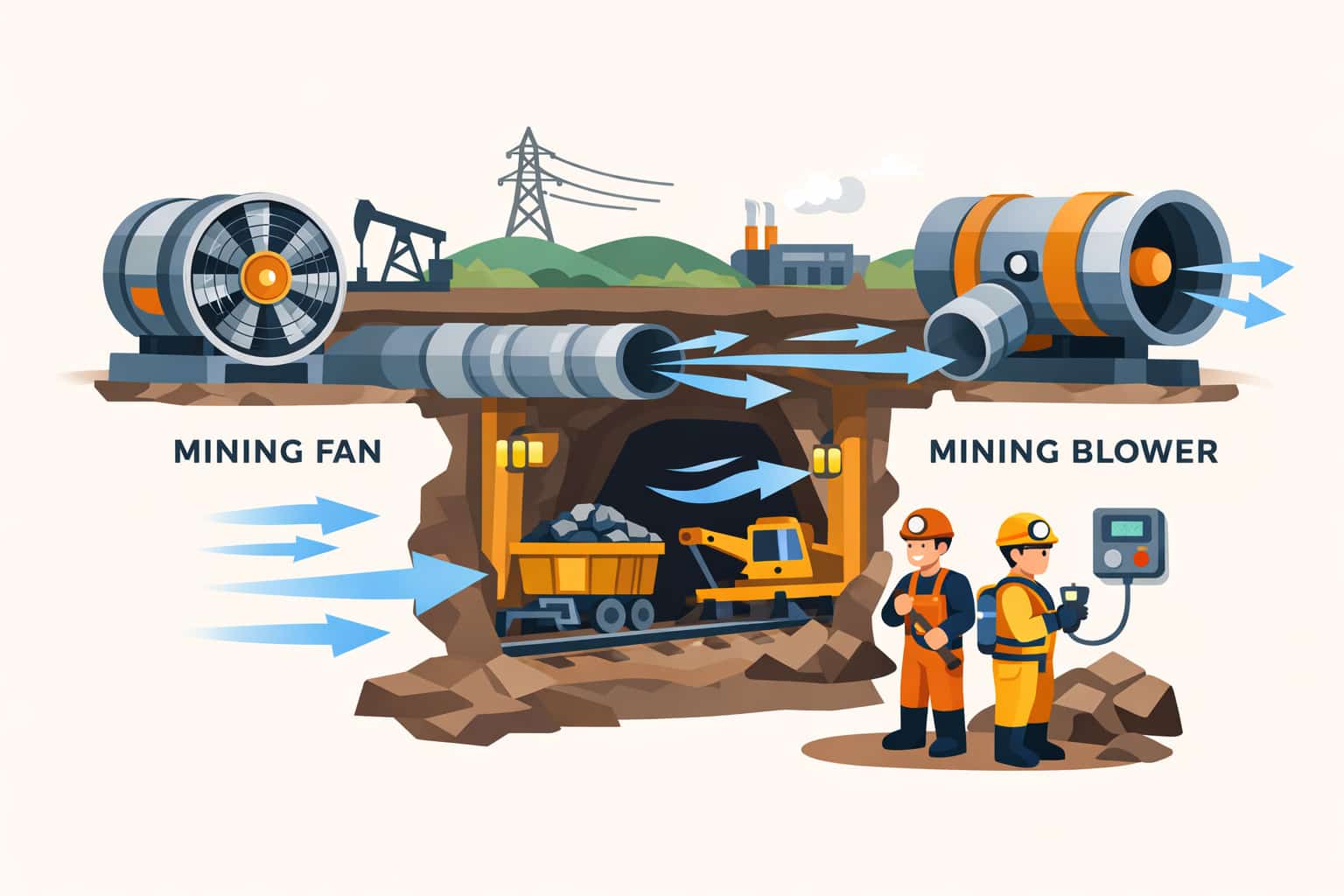
A safety-focused approach starts with clear airflow targets and duty points. In practice, what matters is not the label “fan” or “blower,” but whether the system can consistently deliver required Q@Ps at critical locations: working faces, development headings, and key districts. Auxiliary duct ventilation is especially sensitive, because duct leakage and pressure losses can reduce end-of-duct airflow below safe targets without obvious nameplate changes.
Key elements of mine safety ventilation typically include:
- Ventilation planning with defined airflow requirements, measurement points, and actions when targets are not met.
- Control of leakage through sound ducting practices, sealing, and maintenance of stoppings and doors.
- Monitoring and verification using routine airflow measurement and performance checks as the mine develops.
- Stable fan operation supported by correct duty-point sizing and appropriate control (often VFD) where resistance varies.
Safety ventilation also requires disciplined change management. Small modifications—duct extensions, new regulators, altered routes—can shift operating points and airflow distribution. Regular verification ensures the system is performing as designed and helps prevent recirculation, dead zones, and face airflow shortfalls.
Bottom line: mine safety ventilation is performance-based. It is achieved through verified airflow delivery, robust duct and network controls, and ongoing monitoring that keeps Q@Ps targets aligned with real mine conditions.
Contact Us
Contact Us