
Most price requests for mine ventilation fans start with a short message: “We need a 55 kW fan,” “Please quote a 75 kW fan,” or “Do you have a 90 kW model?”
Motor power matters, but it is not enough to prepare a reliable quotation. In mine ventilation, the same kW rating can lead to very different prices because the fan duty, pressure, safety requirement, control method, accessories, packing, and shipping scope may all be different.
A 75 kW fan may be a basic auxiliary fan body. Another 75 kW fan may include a flameproof motor, counter-rotating impellers, a silencer, a diffuser, a control cabinet, test documents, export packing, and spare parts. These are not the same supply scope.
So before comparing mine ventilation fan prices, first check what the quotation is based on: the required duty point, the safety requirement, the installation condition, and the supply scope.
Quick Answer: What Changes Mine Ventilation Fan Prices Most?
| Price Driver | What It Means | Why It Changes the Price |
|---|---|---|
| Performance duty | Airflow, pressure, operating point, and ventilation mode | It decides fan size, impeller design, motor power, casing strength, and efficiency range. |
| Safety requirement | Coal mine, gassy environment, flameproof motor, anti-spark design, or certificate requirement | Explosion-proof and flameproof requirements affect motor, structure, documents, and inspection scope. |
| Supply scope | Fan body only, fan package, or fan station-related supply | A complete package may include silencers, diffusers, control cabinets, VFDs, sensors, spare parts, and packing. |
| Site and delivery conditions | Installation position, duct data, destination country, packing, and shipping term | Large fans, export packing, wooden cases, container loading, and delivery terms can change the final cost. |
The key question is not simply “Which supplier is cheaper?” The better question is: are both suppliers quoting the same duty, the same safety level, and the same supply scope?
Need a mine fan price for your project? Send the required airflow, pressure, fan duty, mine type, power supply, explosion-proof requirement, accessories, and destination country. These details help prepare a clearer technical quotation.
Same kW, Different Price: What May Be Included?
Two suppliers may both quote a 75 kW mine fan, but the quotations may not describe the same supply scope.
| Quotation Item | Basic Fan Quote | More Complete Project Quote |
|---|---|---|
| Fan body | Included | Included |
| Motor | Standard motor | Motor matched to site voltage, duty, and flameproof requirement |
| Fan structure | Standard casing and impeller | Reinforced casing, counter-rotating design, or special configuration |
| Control | Not included or simple starter | Starter, soft starter, VFD, or control cabinet |
| Accessories | Usually excluded | Silencer, diffuser, duct connector, transition piece, protective cover |
| Testing | Basic factory inspection | Performance check, balancing, fan curve, vibration or noise data if required |
| Documentation | Limited | Technical data, certificate copies, packing list, operation guide |
| Packing | Basic packing | Ordinary wooden case, fumigation-free plywood case, steel frame, or reinforced export protection |
| Spare parts | Not included | Optional spare bearings, couplings, impeller parts, or motor parts |
| Shipping | Not included | Can be quoted by EXW, FOB, CIF, DAP, or another trade term |
This is why the lowest quoted price is not always the best offer. Before comparing prices, confirm whether you are comparing the same supply scope.
Fan Body, Fan Package, or Fan Station: What Are You Actually Buying?
Mine ventilation fan price depends heavily on the supply level.
| Supply Level | Typical Scope | Price Meaning |
|---|---|---|
| Fan body price | Casing, impeller, motor, and basic frame | Suitable only when the buyer already has accessories, control system, and installation arrangement. |
| Fan package price | Fan body plus silencer, diffuser, connector, control cabinet, sensors, spare parts, and packing | Closer to what many projects actually need for installation and operation. |
| Fan station-related cost | Fan package plus installation layout, foundation interface, fan house or shaft connection, standby arrangement, and site-specific accessories | Common for large main fan projects where the fan is part of a ventilation station. |
This distinction is especially important for main mine fans. A main fan is often part of a ventilation station, not just a single fan placed on the ground. If one quotation is for the fan body only and another includes station-related components, the prices will look very different.
Airflow and Pressure Are the First Price Drivers
The first technical question is simple: how much air must the fan move, and against how much resistance?
Airflow tells the supplier how much air volume the fan must deliver. Pressure tells the supplier how much resistance the fan must overcome through ducts, shafts, roadways, bends, leakage paths, regulators, silencers, or exhaust routes.
Higher airflow may require a larger impeller, larger casing, larger inlet and outlet size, or a different fan structure. Higher pressure may require stronger aerodynamic design, counter-rotating stages, higher motor power, stronger casing, and more careful noise and vibration control.
For an accurate price, the quotation should be based on the required duty point, not only the fan diameter or motor power.
• Required airflow, such as m³/s, m³/min, m³/h, or CFM.
• Required total pressure or static pressure, such as Pa, kPa, in. wg, or inH₂O.
• Expected operating point, not only maximum fan capacity.
• Duct diameter and duct length for auxiliary ventilation.
• Mine airway or shaft resistance for main ventilation.
• Continuous operation, intermittent operation, or standby duty.
If airflow and pressure are missing, the supplier can only estimate. A fast estimate may be convenient, but it is not a reliable technical price.
For long-distance duct ventilation, motor power alone cannot show whether the fan can deliver enough air to the working face. You can also read: Can a Mine Fan Send Air Over a Long Distance?
Main Fan, Auxiliary Fan, or Exhaust Fan: Why Duty Changes the Cost
A mine ventilation fan is priced according to its duty.
A main fan supports the overall mine ventilation system. It is often installed at a shaft collar, surface fan room, or main exhaust location. The price can be affected by large airflow demand, stable continuous operation, diffuser and silencer requirements, control or VFD options, installation interface, and duty or standby arrangement.
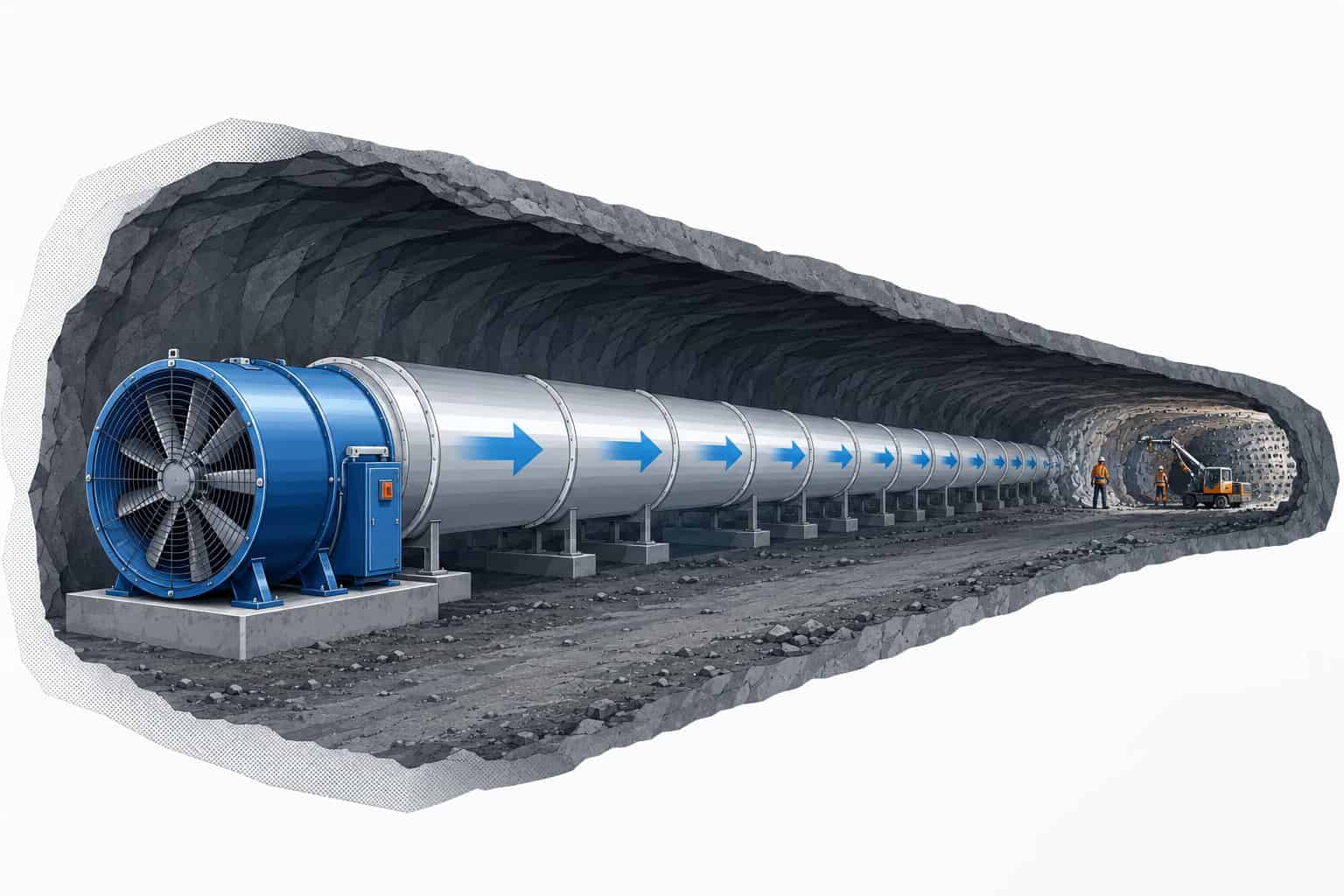
An auxiliary fan is usually installed closer to a working area and connected with ventilation ducting. Its price is strongly affected by duct diameter, duct length, pressure loss, forcing or exhaust mode, mobility requirements, and whether it must work in an explosion-risk environment.
An exhaust fan used for dust, fumes, return air, or contaminated air may need different material, sealing, anti-corrosion treatment, or protection depending on the site air condition.
A common procurement mistake is asking for “a mine fan price” without defining the duty. Main ventilation, local auxiliary ventilation, and exhaust ventilation solve different problems, so they are not priced in the same way.
Explosion-Proof and Coal Mine Safety Requirements
Explosion-proof or flameproof requirements can change the price significantly.
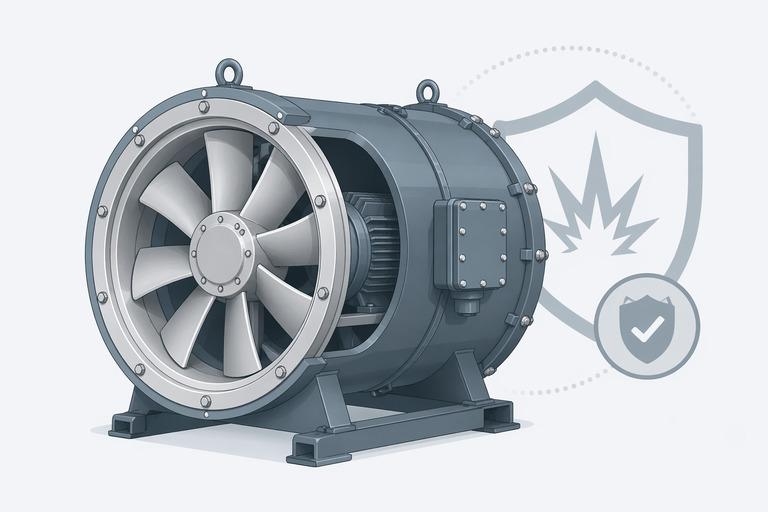
For coal mines and other gassy underground environments, the fan may need a flameproof motor, anti-spark structure, special electrical protection, approved cable entry, control cabinet requirements, and certificate documents. These are not small accessories. They affect the design, manufacturing process, inspection, and documentation.
Before asking for a price, confirm whether the fan will be used in a coal mine, metal mine, tunnel, or industrial site. Also confirm whether methane, explosive gas, or combustible dust may be present, whether flameproof or explosion-proof construction is required, and what certificate or local approval is needed.
If these details are not confirmed early, the first quotation may look attractive but become unusable after the safety review.
Explosion-proof selection should also be checked against the project specification and local mine safety requirements before the order is confirmed.
Motor, Starter, VFD, and Control Cabinet Options
The motor and control scope are major price factors. A quotation should match the buyer’s power supply, including voltage, frequency, phase, protection grade, insulation class, temperature condition, flameproof requirement, and local electrical standards.
Direct start is simple, but it can create higher starting current. Star-delta starting or soft starting may reduce starting impact. VFD control can adjust fan speed and airflow, but it increases initial equipment cost. Remote control or monitoring can add sensors, wiring, control logic, and communication modules.
When comparing quotations, check whether the price includes only fan and motor, or whether it includes starter, VFD, control cabinet, sensors, protection functions, and wiring interface.
Accessories That Often Change the Final Price
Many price differences come from accessories, not from the fan body itself.
Common accessories include silencers, diffusers, inlet cones, flexible connectors, duct transition pieces, control cabinets, VFDs, soft starters, gas sensors, temperature sensors, vibration sensors, pressure sensors, spare bearings, couplings, impeller parts, motor parts, foundation bolts, weather covers, rainproof structures, and protective mesh.
A low quotation may only include the fan body and motor. It may not include the parts needed for installation, noise control, electrical operation, export packing, or maintenance. Before comparing mine ventilation fan prices, ask every supplier to list what is included and what is excluded.
Testing, Fan Curves, Balancing, and Documentation
A mine fan is safety-related ventilation equipment. Testing and documentation are not just paperwork; they help confirm whether the fan can meet the required duty.
Depending on the project, a quotation may include factory performance check, dynamic balancing, noise and vibration check, motor test report, fan curve, performance data, explosion-proof documents, certificate copies, packing list, installation guide, and operation and maintenance documents.
These items add cost, but they reduce risk. A very low price without performance data, balancing, or documentation can become expensive if the fan cannot reach the required airflow, vibrates heavily, or fails project acceptance.
Materials, Coating, and Site Conditions
Mine fans often work in harsh environments. Dust, moisture, vibration, temperature changes, corrosive gas, and long operating hours can all affect service life.
Material and structure choices may include carbon steel housing, stainless steel or special material, standard coating, anti-corrosion coating, reinforced casing, special impeller material, anti-spark ring, heavy-duty base, skid, bracket, inspection door, drainage design, protective mesh, or weatherproofing.
A cheaper fan body may be enough for a clean, low-resistance industrial site. It may not be suitable for a humid underground mine, dusty return airway, corrosive exhaust path, or outdoor surface installation exposed to rain and temperature changes.
Custom Design and Production Schedule
Standard models are usually more economical than non-standard designs. Customization may still be necessary when the mine has special airflow, pressure, layout, installation, safety, or material requirements.
Customization can involve non-standard airflow or pressure, special installation dimensions, modified inlet or outlet direction, special duct connection, custom base or skid, special coating or material, special control requirements, export documents, local compliance requirements, or special packing for sea freight.
Production schedule can also affect cost. Urgent orders may require faster material preparation, workshop scheduling, testing priority, or logistics coordination. A buyer who provides complete technical information early usually receives a more accurate and more stable quotation.
Shipping, Export Packing, and Destination Cost
Mine ventilation fans can be large, heavy, and difficult to pack. Shipping can become a major part of the total cost, especially for large main fans, counter-rotating fans, silencers, control cabinets, and complete fan packages.
Not every shipment needs the same packing method. For short-distance truck delivery or domestic shipment, fan bodies may be protected with wrapping film and fixed on the truck with straps. This can reduce packing cost, but it is only suitable when the transport route, handling method, and customer requirement allow it.
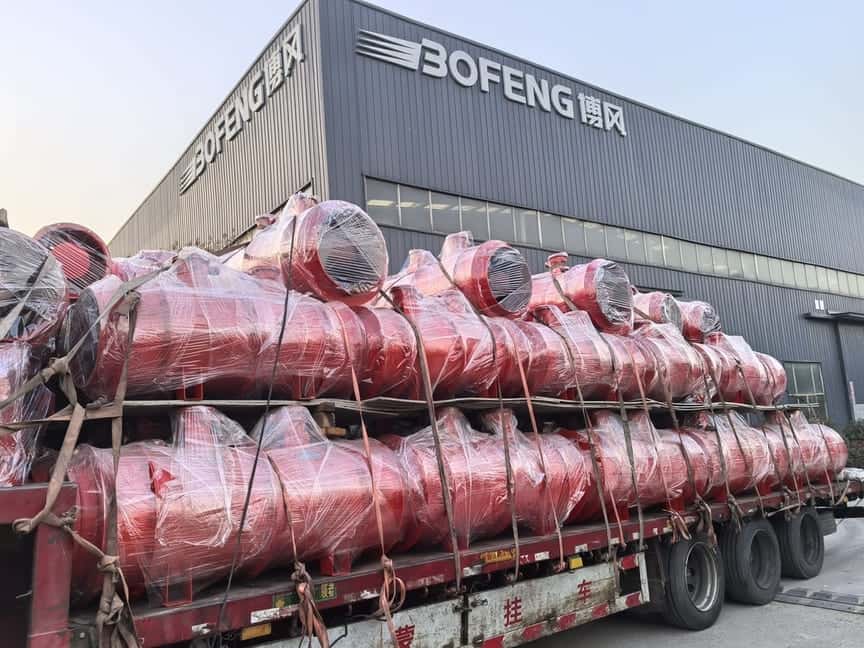
Mine ventilation fans can be wrapped and loaded directly on a truck for suitable domestic or short-distance delivery, depending on handling and transport conditions.
| Packing Method | Common Use | Cost Impact |
|---|---|---|
| Wrapping film + truck loading | Domestic delivery, short-distance truck transport, or projects where the customer accepts non-crated delivery | Usually lower packing cost, but protection level depends on handling and transport conditions. |
| Ordinary wooden case | Domestic shipment or some regional delivery where fumigation-free packing is not required | Higher packing cost than simple wrapping, with better protection for handling and storage. |
| Fumigation-free plywood case | International sea freight or export projects with customs and inspection requirements | Higher cost, but often safer for customs clearance and long-distance transport. |
| Reinforced packing or steel frame | Large fan bodies, motors, silencers, control cabinets, or heavy spare parts | Higher cost, but better protection during loading, container transport, and unloading. |
For export orders, packing can also affect the final cost. Mine ventilation fans may be packed with ordinary wooden cases, fumigation-free plywood cases, steel frames, or reinforced protection, depending on the destination country, shipping method, and customer requirement.
Ordinary wooden cases are commonly used for domestic or certain regional shipments, while fumigation-free plywood cases are often preferred for international sea freight because they can help simplify customs inspection and reduce the risk of packing-related delays.
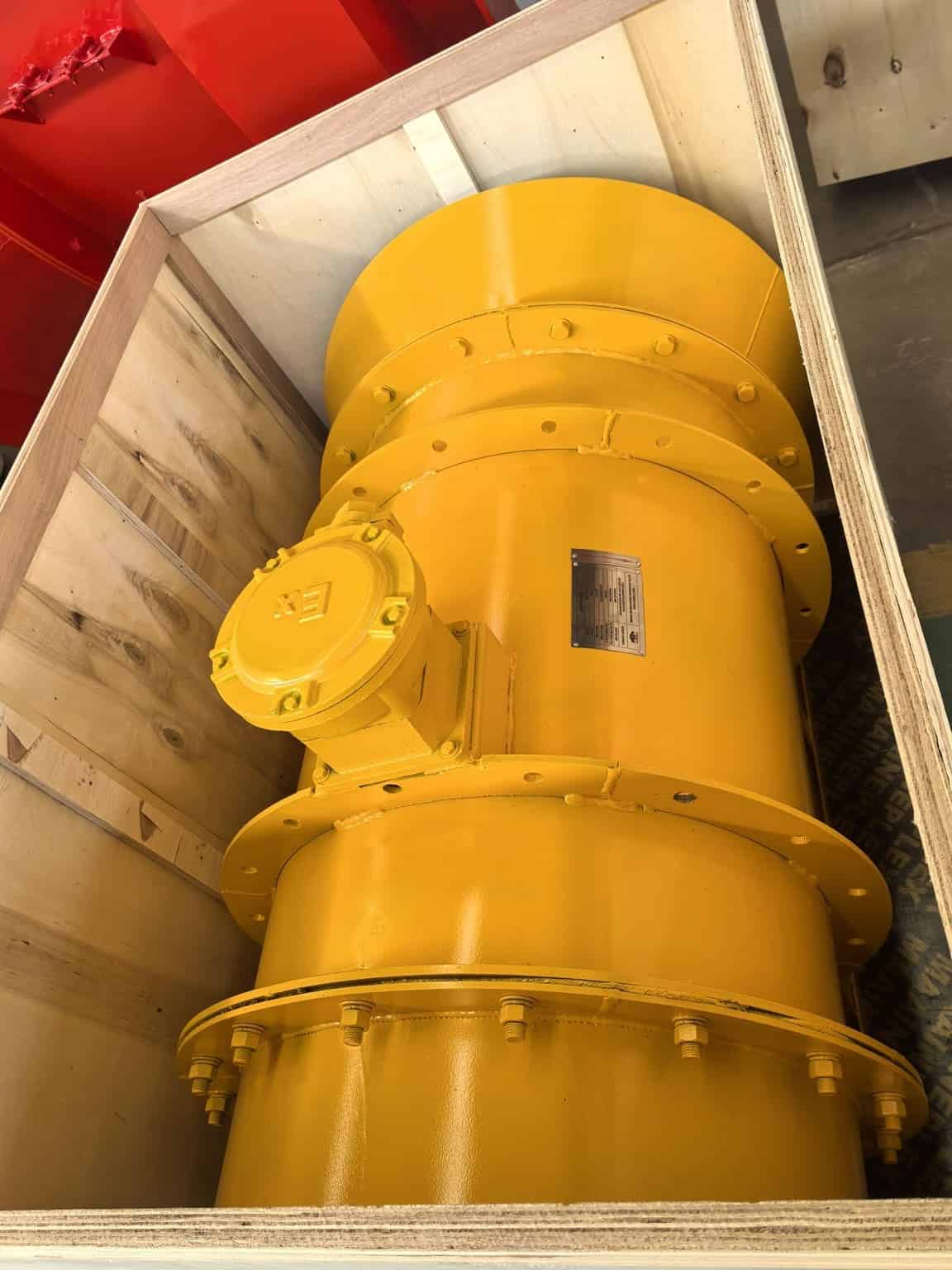
Mine ventilation fan export packing can use ordinary wooden cases or fumigation-free plywood cases according to shipping and customs requirements.
For large fan bodies, motors, silencers, control cabinets, and spare parts, reinforced packing may be required to protect the equipment during loading, container transport, and unloading at the project site.
Export quotation may be affected by fan size and weight, whether the fan is shipped assembled or disassembled, wooden case or reinforced packing, destination port, inland delivery point, trade term, spare parts packing, customs documents, and inspection requirements.
A low equipment price can lose its advantage if the shipping volume is too large or if the packing is not suitable for long-distance transport. For export projects, packing and delivery terms should be discussed before confirming the final price.
Initial Price vs. Total Operating Cost
The lowest purchase price is not always the lowest ventilation cost.
Mine fans can operate for long hours, sometimes continuously. Energy efficiency, motor matching, airflow control, maintenance access, bearing life, vibration level, spare parts availability, and downtime risk all affect the real cost over time.
A fan that is slightly cheaper at purchase but operates far from its efficient duty point may consume more power year after year. A fan without proper corrosion protection may require earlier repair. A fan without suitable control may waste energy when ventilation demand changes.
When evaluating mine ventilation fan prices, compare initial equipment cost, installation cost, energy consumption, maintenance cost, spare parts availability, downtime risk, safety risk, compliance risk, and expected service life.
Mine Fan Quotation Checklist: Information to Provide Before Pricing
Use this checklist before asking for a mine ventilation fan price. It helps the manufacturer prepare a quotation based on the real duty condition instead of guessing from motor power alone.
| Item | Information to Provide | Why It Matters | Example / Notes |
|---|---|---|---|
| Mine / project type | Coal mine, metal mine, tunnel, or industrial site | Different projects require different safety design, material, motor, and documents. | Underground coal mine / metal mine drift / tunnel project |
| Fan duty | Main ventilation, auxiliary ventilation, exhaust, intake, dust extraction, or standby | Duty decides structure, pressure range, accessories, and installation scope. | Auxiliary forcing fan for development heading |
| Required airflow | Air volume in m³/s, m³/min, m³/h, or CFM | Airflow is the first sizing factor for impeller, casing, inlet/outlet size, and motor selection. | 40 m³/s or 2,400 m³/min |
| Required pressure | Total pressure or static pressure in Pa, kPa, in. wg, or inH₂O | Pressure shows the resistance the fan must overcome. | 1,500 Pa static pressure |
| Operating point | Expected normal duty point, not only maximum capacity | The fan should be selected around the real working point. | 38 m³/s at 1,450 Pa |
| Installation location | Surface, underground, shaft collar, fan house, duct line, or mobile position | Location affects structure, weatherproofing, foundation, safety requirements, and maintenance access. | Surface fan house near return shaft |
| Duct or airway data | Duct diameter, duct length, airway resistance, bends, and leakage condition | Resistance data can strongly affect pressure demand and final fan selection. | 800 mm duct, 600 m length, flexible duct |
| Ventilation mode | Forcing, exhaust, or combined ventilation | Different modes need different fan arrangement and duct connection. | Forcing ventilation to blind heading |
| Site air condition | Clean, dusty, humid, corrosive, hot, or gas-bearing air | Air condition affects material, coating, sealing, and maintenance design. | Humid return air with dust |
| Explosion-proof requirement | Flameproof, explosion-proof, anti-spark design, or certificate requirement | Coal mines and gassy environments may need special motor, structure, certificate, and inspection scope. | Flameproof motor for underground coal mine |
| Power supply | Voltage, frequency, phase, and electrical standard | The motor and control cabinet must match the actual power system. | 380 V / 50 Hz / 3 phase or 660 V / 50 Hz |
| Control method | Direct start, star-delta, soft starter, VFD, local control, or remote monitoring | Control scope can change the quotation and operation flexibility. | VFD control with local control cabinet |
| Accessories and documents | Silencer, diffuser, connector, control cabinet, sensors, spare parts, fan curve, test report, certificate copies, and operation manual | Many price differences come from included or excluded accessories and documents. | Fan body + silencer + control cabinet + fan curve |
| Shipping information | Destination country, port, delivery address, packing requirement, and trade term | Large fans may have significant packing and freight cost. | FOB Qingdao / CIF Durban / DAP project site |
Have these details ready? You can send your airflow, pressure, duct or airway data, safety requirements, and shipping destination to Bofeng for a more accurate mine fan quotation.
Red Flags When Comparing Mine Fan Quotations
Before accepting a low price, check whether the quotation is technically complete.
Be careful if a mine fan quotation gives only a price without airflow and pressure data, lists motor power but not the expected duty point, does not say whether the fan is for main ventilation or auxiliary ventilation, does not identify whether the fan is explosion-proof, does not state included accessories, does not provide fan curve or performance data when required, does not clarify voltage and control method, or does not mention packing, shipping terms, or spare parts.
A low price without technical clarity is not a strong offer. It is only an incomplete offer.
Manufacturer Perspective: How We Prepare Mine Fan Quotations
As a mine ventilation fan manufacturer, Bofeng does not prepare a technical quotation only from motor power or fan diameter. The quotation process starts with the actual duty condition and the required supply scope.
Before recommending a model, we normally check airflow, pressure, mine type, ventilation mode, duct or airway resistance, power supply, safety requirements, installation layout, accessory scope, documentation needs, packing requirement, and shipping requirements.
This helps avoid two common problems: selecting a fan that is too small and cannot deliver the required airflow underground, or selecting an oversized fan that increases purchase cost and wastes energy during operation.
For standard mine ventilation duties, suitable main fans, auxiliary fans, axial-flow fans, mining blowers, or explosion-proof fan series can be recommended. For non-standard conditions, the fan can be configured according to required airflow, pressure, material, control method, and installation interface.
Technical note: Final fan selection should be confirmed according to the project duty point, site safety requirements, and installation conditions. The more complete your site information is, the more accurate the quotation will be.
Conclusion
Mine ventilation fan prices depend on much more than motor power or fan diameter. The real cost is shaped by airflow, pressure, fan duty, safety requirement, explosion-proof design, motor and control system, materials, accessories, testing, documentation, customization, packing, and shipping.
For a useful comparison, ask not only “What is the price?” but also: what duty point is this price based on, what is included and excluded, whether the fan is suitable for the mine environment, what testing and documentation are included, and what the fan will cost to operate and maintain over time.
A good mine fan quotation should make the technical scope clear. That clarity protects both the buyer and the project.
FAQ
Why do mine ventilation fan prices vary so much?
Prices vary because mine fans are selected according to airflow, pressure, fan duty, safety requirements, motor configuration, materials, controls, accessories, testing, documentation, packing, and shipping. Two fans with similar motor power may have very different cost structures.
Can I get a mine fan price by giving only motor power?
Motor power alone is not enough for accurate selection. A supplier also needs airflow, pressure, mine type, installation location, duct or airway resistance, power supply, and safety requirements.
Are explosion-proof mine fans more expensive?
Usually yes. Explosion-proof or flameproof mine fans may require a special motor, anti-spark structure, electrical protection, documentation, and inspection requirements. These factors increase manufacturing and compliance cost.
Why are two 75 kW mine fan quotations different?
They may include different scopes. One quote may cover only the fan body and motor, while another may include a flameproof motor, silencer, diffuser, control cabinet, test documents, spare parts, and export packing.
What is the best way to compare mine fan quotations?
Compare quotations by duty point, included accessories, fan curve, safety design, motor and control configuration, testing, documentation, shipping terms, and long-term operating cost—not only by the lowest purchase price.
Related Mine Ventilation Fan Pages
• Underground Mine Ventilation Fans
• Coal Mine Explosion-Proof Main Fans
• Coal Mine Local Ventilation Fans
• Can a Mine Fan Send Air Over a Long Distance?
• Request a Mine Fan Quotation