logo

Powering Ventilation, Driving Progress — Mining ventilation fans, mine fans & mining blowers for underground mines, tunnel ventilation, and industrial sites.

Request a Quote Request a Quote
Contact Info

+86 15863109911

No. 001, Industrial Park, Nanjiao Town, Zhoucun District, Zibo City, Shandong Province, P.R.China

Mon - Fri, 9am - 5pm

Mine Dust Extraction Fans

We supply mine dust extraction fans and mining fog cannons. Our range covers underground and surface dust-control applications, with KCS wet-type dust extraction and collection units for localized capture and fan-assisted misting equipment for dust suppression in open areas.

Explore the products below, then review their operating features, applications and selection requirements. Equipment configuration is assessed against the actual dust source and site layout, rather than selecting equipment by motor power or product name alone.

How Wet Dust Extraction Fans and Mining Fog Cannons Work

KCS Wet Extraction

Internal Wet Collection

A KCS wet-type mine dust extraction fan draws dust-laden air through a hood or suction duct. Inside the unit, water and the selected wet-collection stage capture particles. A demister or other separation stage removes entrained droplets before treated air follows the planned discharge route; collected solids leave with wastewater or slurry.

Depending on the supplied design, the wet-collection stage may use wetted filter media, vibrating-wire elements, spray scrubbing or a combination. These are not universal features: the supplied drawing and technical data should identify the actual collection, mist-separation and drainage arrangement.

Mining Fog Cannon

Fan-Assisted Spray Delivery

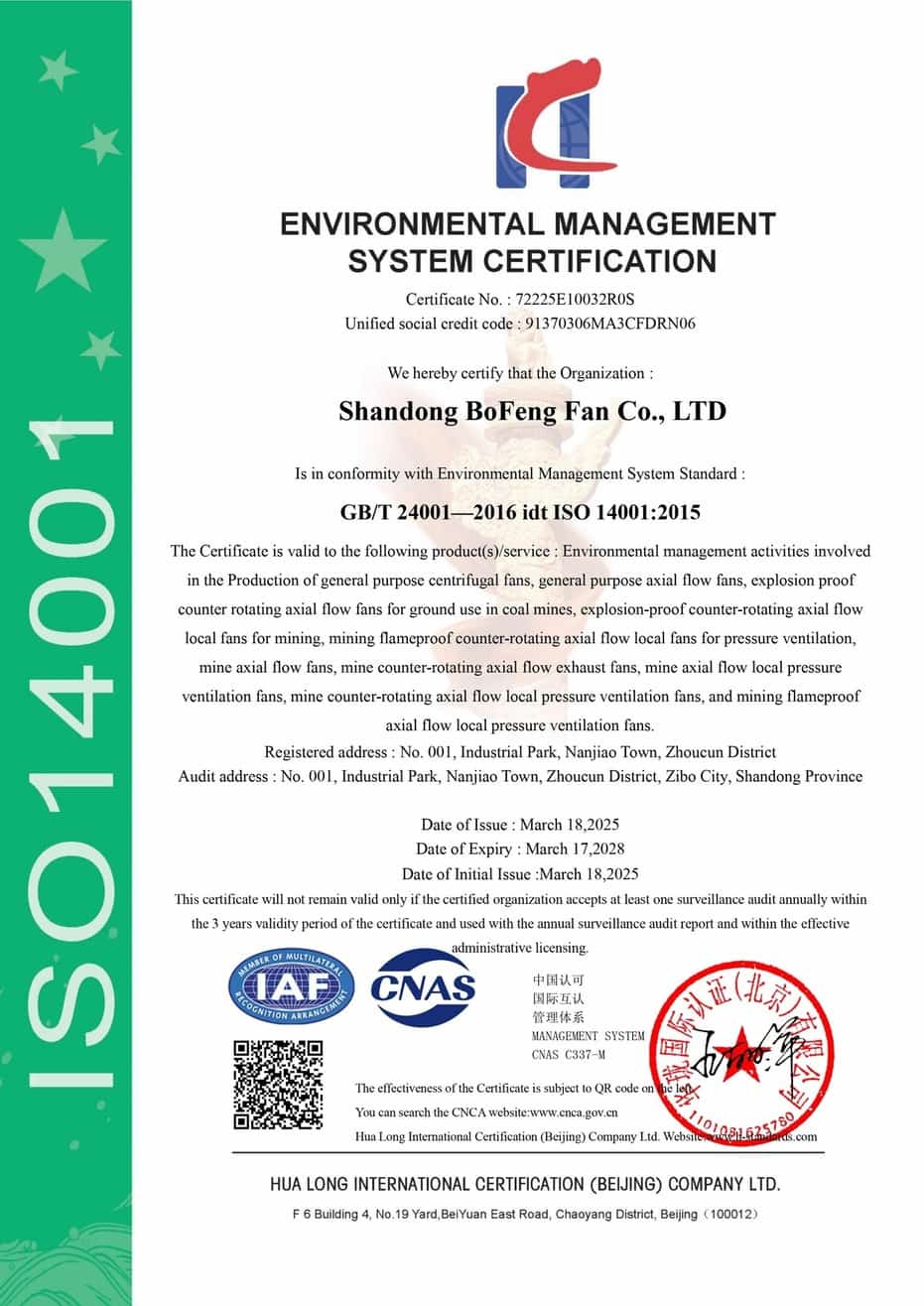
A mining fog cannon uses fan airflow to carry atomized water toward an open or semi-open dust-producing area. Effective contact between droplets and airborne particles promotes wetting, agglomeration and settling. Dust suppression takes place outside the equipment rather than inside an enclosed air-treatment chamber.

The spray direction should follow the active dust-release zone and local air movement. Wind, obstructions, installation height and changing material-handling positions affect useful coverage. Water-sensitive material, runoff and freezing conditions also need review before choosing a spray-based arrangement.

Mining Dust Control Applications

These application groups help identify the appropriate equipment and the site details that need review. Suitability is confirmed for the proposed installation, not assumed for every configuration.

KCS Wet Extraction

Underground and Localized Capture

01

Roadheading and Cutting Faces

For roadheaders and cutting operations, position the intake near the main dust cloud without obstructing the machine or personnel. Capture airflow must intercept the dusty stream; a high internal collection efficiency cannot compensate for dust that bypasses the inlet.

02

Underground Transfers and Loading

Belt-to-belt transfers, chute outlets and ore-loading points can use a partial enclosure connected to a suction duct. Collecting air at the release point is more useful than placing a fan at a distance from an uncontrolled dust cloud.

03

Crushers, Ore Bins and Drawpoints

Feed and discharge openings require a capture arrangement suited to their geometry and material flow. Large fixed installations need a system-level assessment; the word “mining” alone does not make an integrated KCS unit suitable for every crusher station.

04

Drilling and Shotcreting

Borehole collars, shotcrete feed openings and dry-material charging points may need dedicated capture hoods. Distinguish collection at one concentrated opening from treatment of a wider work area; some tasks call for a smaller, purpose-specific collection arrangement.

05

Machine-Mounted Extraction

When equipment moves with a roadheader, check the machine’s full movement envelope, total installed height, duct routing and service access. Drainage and mist separation need particular attention to limit outlet water carryover and deposits on fan components.

06

Metal and Non-Metal Underground Mines

Gold, copper, iron ore, limestone and other underground applications require review of dust composition and moisture behaviour. Silica content, corrosive water, slurry handling and any required mining approvals may affect material selection and the proposed configuration.

Mining Fog Cannon

Open-Area Spray Suppression

01

Open-Pit Mines and Quarries

Excavation, loader handling, dozing and waste-rock movement can release dust over changing work zones. Fog cannons provide targeted coverage of these open operations; placement should account for where the dust travels rather than spray toward the work area indiscriminately.

02

Truck Dumping and Receiving Hoppers

A large load entering a hopper can displace dusty air and create a short-lived plume. Mist can address escaped dust around the unloading zone, while a fixed hopper should retain suitable enclosure, local sprays or extraction at the opening.

03

Crushing and Screening Yards

Fog cannons can supplement controls around open crushers, vibrating screens and mobile processing plants. Dust generated inside enclosed equipment still needs treatment close to its source. Review the material’s allowable moisture before spraying around fine-product handling.

04

Conveyor Transfers and Loading Areas

Open stacking, reclaiming, truck-loading and rail-loading areas can benefit from spray directed at material drop zones. Fixed transfer chutes are different: sealing, correctly placed local nozzles or extraction should address their concentrated dust release.

05

Ore, Coal and Waste-Rock Stockpiles

Stacking and reclaiming create moving dust sources, while exposed dry surfaces can release windblown dust. Large permanent stockyards may combine fixed surface-wetting measures with targeted fog-cannon coverage rather than expecting one spray position to serve the whole yard.

06

Road Hotspots, Boundaries and Post-Blast Areas

Localized vehicle queues and boundary drift may need supplementary suppression. Long haul roads require road-surface control rather than fog cannons alone. Any post-blast use must follow blast-safety and clearance procedures; suppressing dust does not establish removal of blast gases.

Information Required for Equipment Selection

Send the information available for your project. A layout sketch, duct sketch or site photographs can support initial selection when the duty has not yet been calculated.

Detailed System Selection

KCS Wet-Type Mine Dust Extraction Fan

01
Application and dust material
Describe the task, material and whether dust is produced continuously or intermittently. Add concentration and particle-size information when available.
02
Processing airflow
State the required extraction airflow in m³/min, m³/s or m³/h. When unknown, provide local ventilation airflow and the layout as sizing information, not as an equivalent extraction requirement.
03
Ducting and pressure
Provide suction and discharge duct diameters, lengths, bends, reducers and hood dimensions. Include the required pressure in Pa, identifying static or total pressure when known.
04
Water supply and drainage
State available water pressure in MPa, flow in L/min and water quality. Describe drainage, slurry handling and any planned water recirculation.
05
Electrical and safety conditions
Provide voltage, frequency, phase, explosion-protection and mining-approval requirements, together with any specified starting method or interlocks.
06
Installation space and movement
Provide maximum dimensions, transport clearances, mounting method and maintenance access. Identify whether the unit moves with the working face.

Check the operating point. Request the airflow–pressure curve and confirm how much pressure remains for the external hood and duct at the selected airflow after internal losses. Maximum free-air volume and motor power alone are insufficient.

Preliminary Single-Unit Selection

Mining Fog Cannon

Initial single-unit selection starts with the following three parameters:

01
Coverage Area (m²)
The area that one unit needs to cover.
02
Spray Distance (m)
The required reach from the equipment to the target zone.
03
Supply Voltage (V)
The available site voltage; frequency and phase are confirmed with the proposed motor.

These values support preliminary selection. Water supply, mounting, rotation and control details are confirmed with the proposed configuration.

Certifications, Patents & Compliance

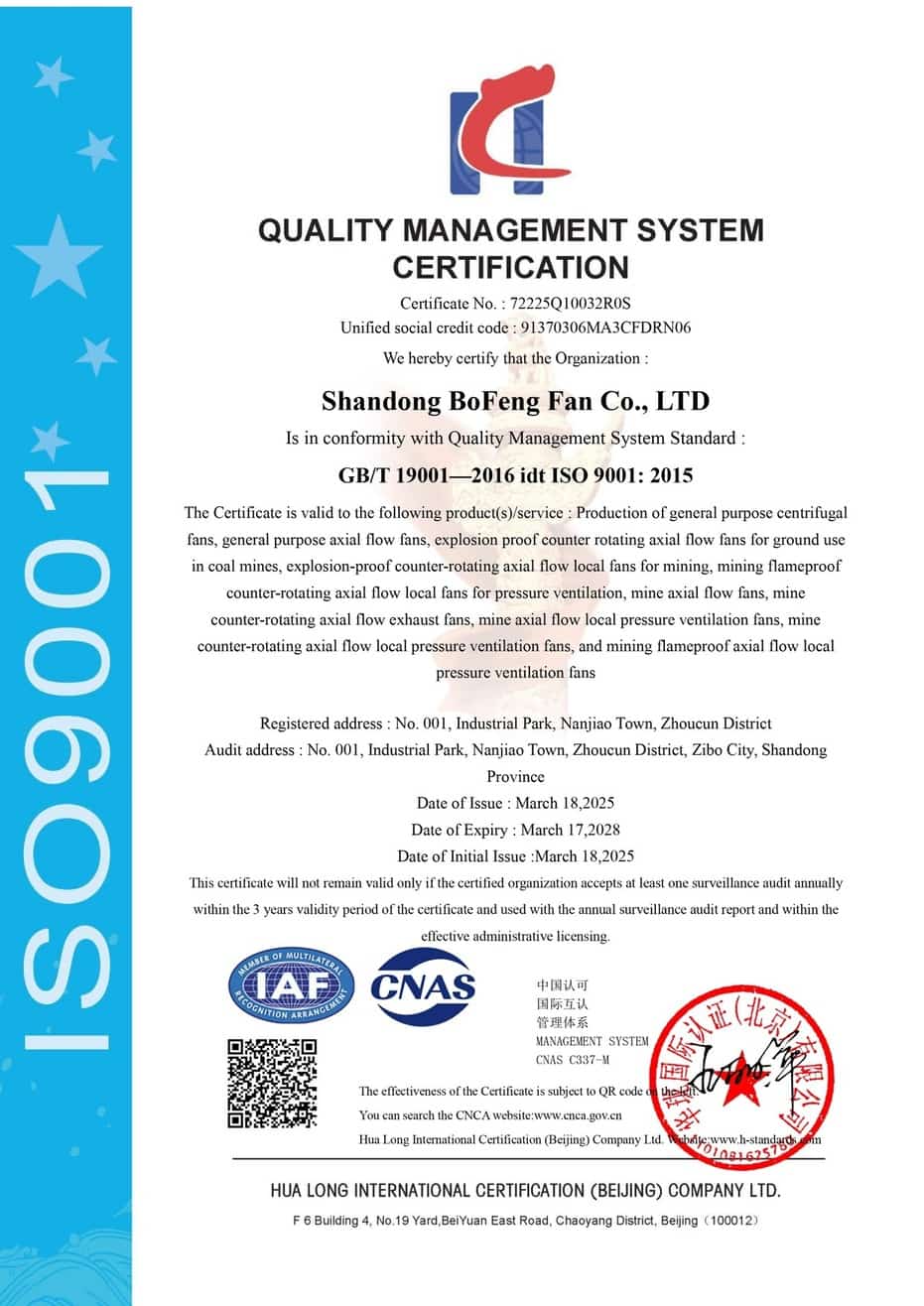
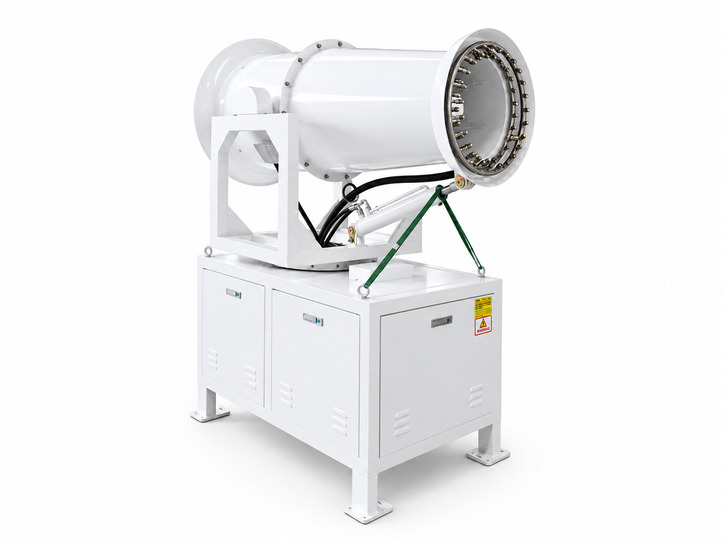
Selected certificates include CE, ISO 9001, ISO 14001 and ISO 45001. Additional documents such as MA/KA mining product certificates, patent certificates, inspection reports and technical files can be provided upon request for project review and supplier evaluation.

Frequently Asked Questions

No. A KCS unit extracts dust-laden air through a hood or duct and treats the air inside an enclosed wet collector. A fog cannon projects fine water mist into an open area. Their applications and selection parameters are different.
No. It is a localized dust capture and purification device. It must be coordinated with the mine ventilation arrangement so that dusty air reaches the inlet without causing short-circuit or recirculating airflow.
Provide the application and dust material, required processing airflow or local supply airflow, duct diameter and length, bends and hood arrangement, water pressure and flow, voltage and frequency, explosion-protection or approval requirements, and available installation space.
No universal value should be applied to every KCS configuration. Efficiency depends on the internal collector type, particle size, airflow, water conditions, test method and maintenance. Confirm total-dust and respirable-dust results from the exact supplied-model report.
For initial single-unit selection, provide the required coverage area in square metres, required spray distance in metres and available supply voltage. Water, mounting, rotation and control details can then be confirmed.
Inquiry WhatsApp Email Telegram WeChat
Top
Email WhatsApp Inquiry Telegram WeChat