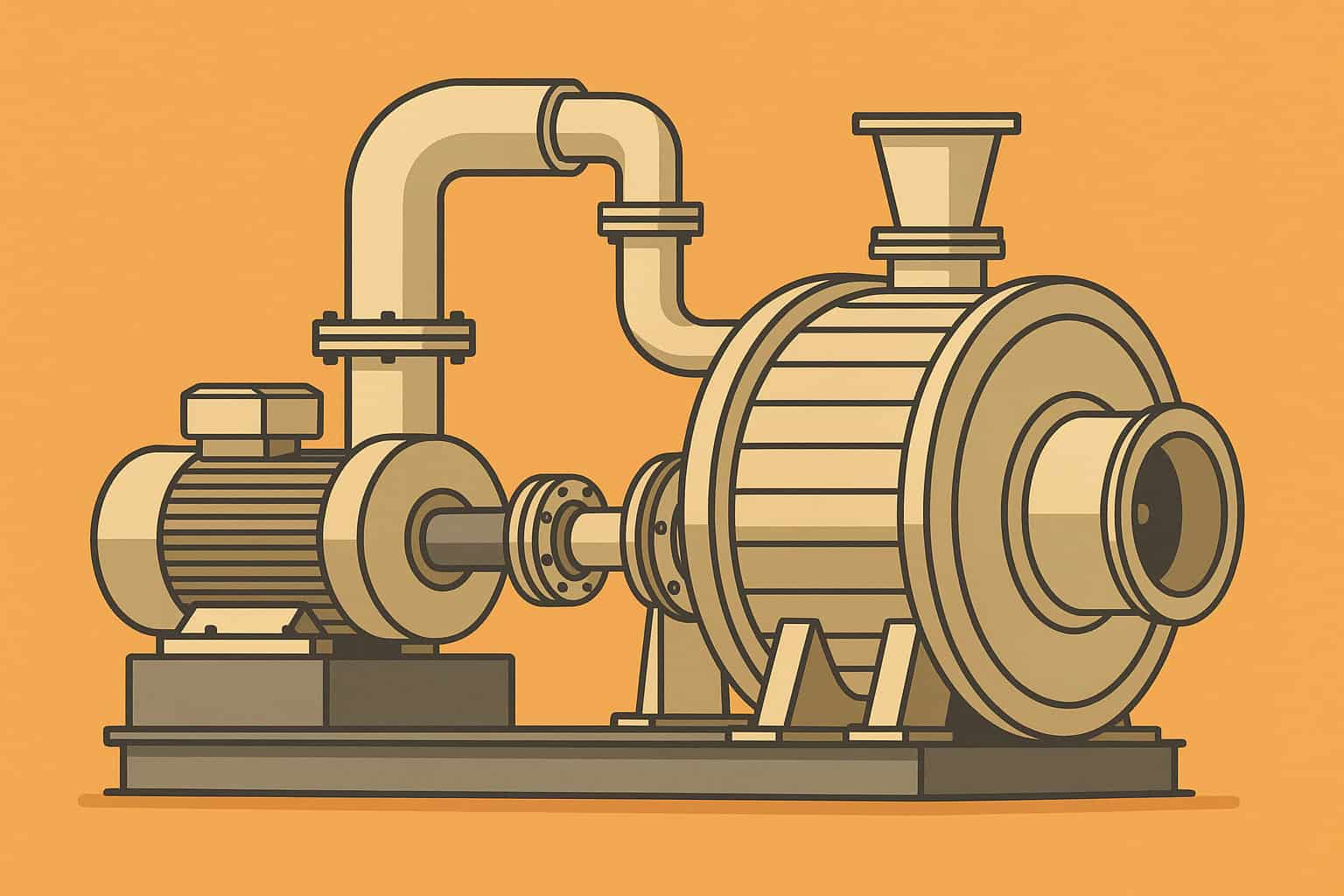
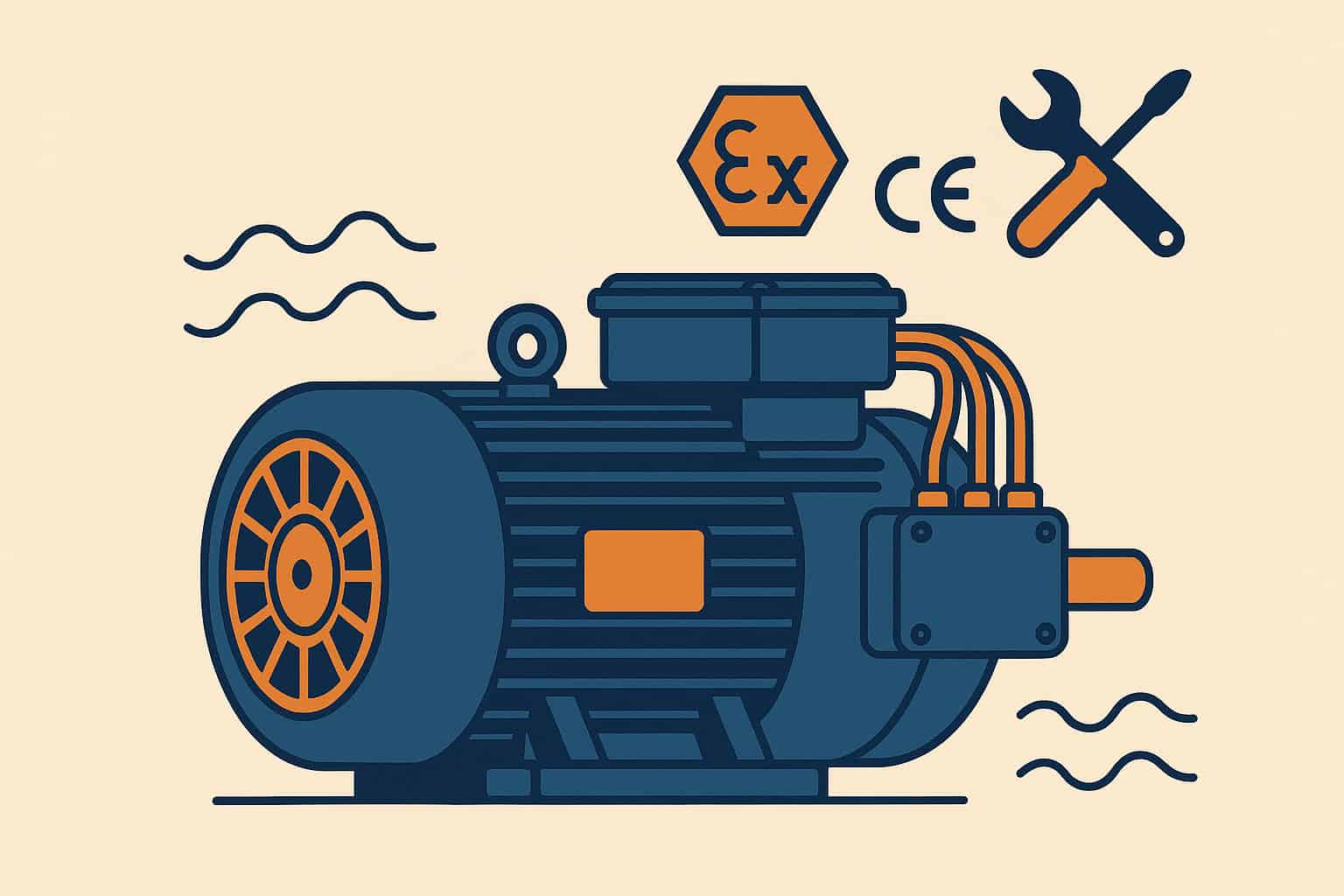
Explosion-proof motors are critical power units for equipment used in flammable or explosive environments. For underground mining projects, selecting mine ventilation fans also requires the motor, terminal box, cable entries, starter, controls, and monitoring devices to be matched to the same operating conditions and protection requirements. Proper selection, standardized wiring, and planned maintenance help reduce safety risks and support reliable service. This guide covers certification, wiring, maintenance, and system-level application considerations.
1. Certification Standards
Explosion-Proof Markings & Grades
Types include Ex d (flameproof), Ex e (increased safety), Ex p (pressurization), etc. Selection should match the on-site gas group (IIC/H2, IIA/B/C) and temperature class (T1–T6).Domestic & International Certifications
China: CQST (China National Quality Supervision and Test Center for Explosion Protected Electrical Products)
International: ATEX (EU), IECEx (IEC), UL (USA)
Protection & Anti-Corrosion Grades
Ingress protection: IP54–IP66 (dust and water resistance)
Corrosion protection: WF1–WF3, for high humidity/corrosive environments
2. Wiring Methods and Key Points
Terminal Box Layout
Choose side or top terminal boxes for convenient installation and inspection.Cables and Connectors
Use oil- and cold-resistant explosion-proof conduit and specialized cable glands.
Cable cross-section should be at least 20% above the rated motor current for better heat dissipation.Grounding and Equalizing
Strict grounding is mandatory: triple grounding (motor housing, frame, cable) for reliable continuity.
For Ex p pressurized types, leave a vent and connect to compressed air source.Sealing and Packing
Use dedicated explosion-proof packing in terminal boxes to ensure the integrity of flameproof joints.
After checking the packing, tighten bolts to specified torque—no looseness allowed.
3. Daily Maintenance Essentials
Inspection of Exterior & Fasteners
Check housing, terminal box, and end covers monthly for cracks or rust.
Keep bolts and terminal nuts at designed torque.Lubrication and Bearing Maintenance
Regularly replace or add grease as per manufacturer’s requirements.
Monitor bearing temperature; investigate if above normal.Vibration and Temperature Monitoring
Install portable or online vibration sensors, inspect monthly at minimum.
Record winding and housing temperatures—must not exceed rated T-class values.Cleaning & Anti-Corrosion
Clean cooling fins and vents regularly for efficient heat dissipation.
Apply rustproof coatings to steel components or replace damaged anti-corrosion parts as needed.
4. Selection & Application Advice
Working Conditions: Analyze site gas group, temperature class, humidity, and corrosive agents to choose the right type and materials.
Main ventilation applications: For surface or shaft-side exhaust duties, motor rating, starting method, duty and standby arrangements, monitoring, and site approval requirements should be reviewed when specifying coal mine explosion-proof main fans.
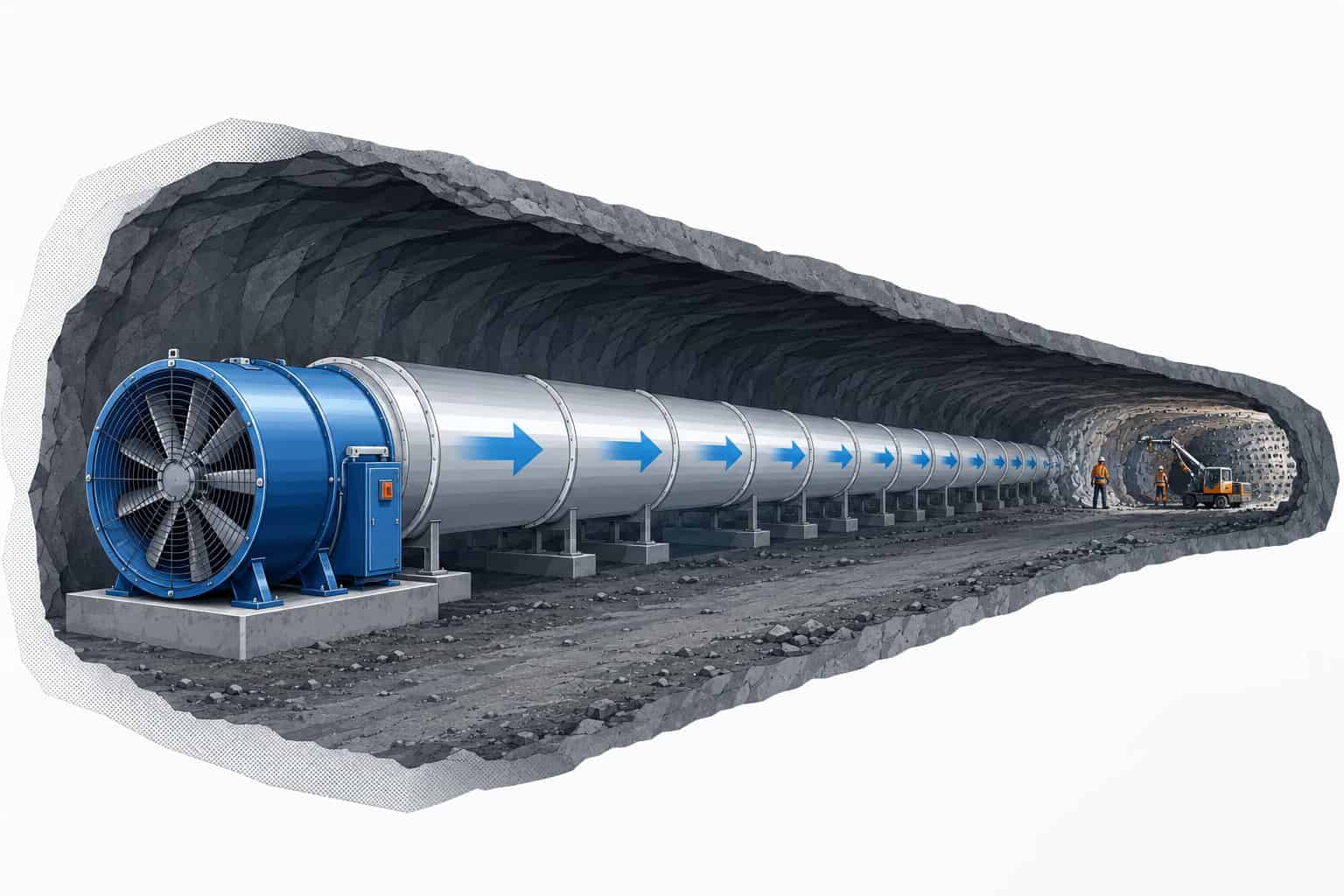
Local ventilation applications: For headings, development faces, and ducted ventilation, match the motor, terminal box, cable entries, starting frequency, and protection requirements to the operating duty of coal mine local ventilation fans.
Redundancy Design: For critical systems, use dual or backup motors.
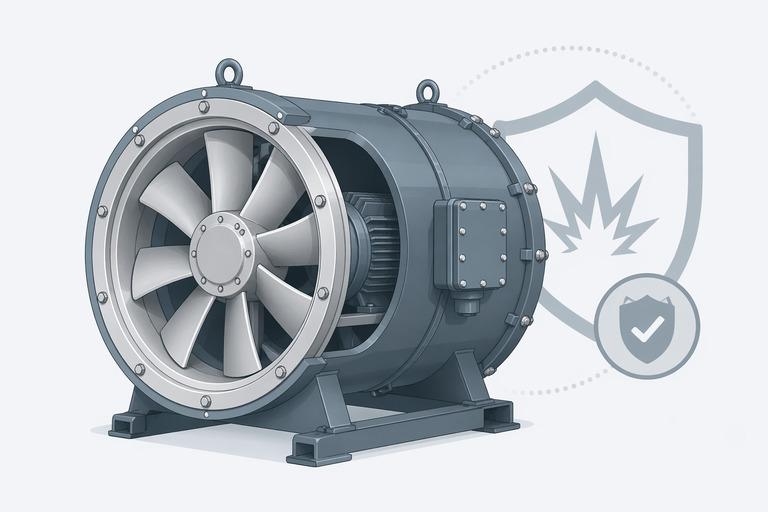
System Compatibility: Match the motor with the fan, VFD or soft starter, cable entries, controls, and monitoring devices so that the complete system meets the project requirements. Motor protection alone does not address every mechanical spark risk within the fan assembly. Material combinations, running clearances, bearing condition, structural rigidity, and vibration should also be reviewed as part of the anti-spark design in auxiliary mine fans.
Training & Records: Only certified personnel should operate; provide regular safety training and emergency drills.
By mastering certification, wiring, and maintenance of explosion-proof motors, you can ensure safe and reliable operation throughout the selection and O&M process, safeguarding production in explosive environments